
In this second blog on retail business expansion, our experienced team has highlighted specific steps and focus areas quintessential for retail expansion in 2026.
Step 5 – Careful Site Selection
Macro-Market Analysis
Macro-market analysis is carried out to identify broad target market locations like cities or localities. It is done based on demographics, psychographics, and market capacity.
Example: Suppose that a high-end jewellery brand is trying to evaluate two potential site locations for its new flagship store. Macro-screening reveals that City A has a median household income of USD 10,000 (INR 10 Lakhs approximately). For City B, the number is USD 6,000 (INR 6 Lakhs approximately). For a high-end jewellery brand, City A emerges as a more prospective option. If the differences between the options are not easily distinguishable, market capacity and density analysis helps take a deeper look.
Micro-Location and Catchment Analysis
Micro-location and catchment evaluation are carried out to identify and gauge specific locations like local markets, streets, market hubs, or malls.
Example: Suppose that the same jewellery brand has broadly selected a few micro-locations for further evaluation. Let us take one such location as X. It must now make an assessment of accessibility and the drivers of immediate footfall in Location X. It must begin by defining the primary, secondary, and tertiary catchment zones. For every catchment zone, it must determine the expected sales percentage and the time and distance required to reach the store. Co-tenancy is the next factor. The best-performing location(s) is/are chosen for further evaluation.
Building Structural Analysis
Here we are talking about the assessment of the structural features of the building. In structural features, some of the key considerations are floor areas, entrance and exit points, building load capacities, ceiling heights, utility services, placement of technical assets and machinery, docking and access to stockroom, certifications and audit.
Visibility Analysis
Physical visibility of site location is a crucial area of work in formulating retail expansion strategies. In visibility analysis, the key question is – how easily is the site visible from primary passing points? Even in a prime location, a site with poor visibility can have detrimental effects on the performance of stores. The longer and wider the window of visibility, the better it is.
Financial Analysis
Since the occupancy cost is always higher than the base rent, other costs such as municipality taxes, common maintenance, and other such semi-fixed, recurring costs should always be accounted for. Although the benchmark figure varies depending on the retail category, a common industry standard is occupancy costs being less than 7% to 12% of net sales.
The next big factor is payback period and ROI. This mostly covers the CapEx on site fit-out and improvisations. A maximum of 3 years is considered an ideal payback period.
Lease Negotiation and Regulatory Clearance
This could be considered the final stage of site finalisation. Business owners should bear in mind that a certain time is required to make the site ready for business. So, they should negotiate for a rent-free or discounted period. Secondly, because co-tenancy is a major decisive force in site selection, if they leave, there is also scope for negotiation in the event of such contingencies.
In the backdrop of everything, business owners should always investigate and seek to gather information on the status of applicable regulatory approvals for the site. No lease or tenancy agreement shall see the light of day if the site in question is on the wrong side of the law.
Step 6 – Develop NSO Playbook (New Store Opening)
Project Management and RACI (Responsibility, Accountability, Consultation, and Information)
- Appoint one NSO project manager for oversight and management.
- Form a cross-functional team for NSO implementation.
- Define RACI for every project milestone.
- Budget allocation and fund disbursement
Timelines and Backward Scheduling
- Fix the target opening date (Day 0)
- Establish critical path milestones (from lease handover to Day 0)
- Make room for potential delays, backup plans
Workflow Execution and Checklists
- Design and fit-out
- Tech stack/tech infra
- Supply chain and inventory
- Staffing
- Localised marketing
Step 7 – Build a Robust Control Tower (Centralised Monitoring and Management)
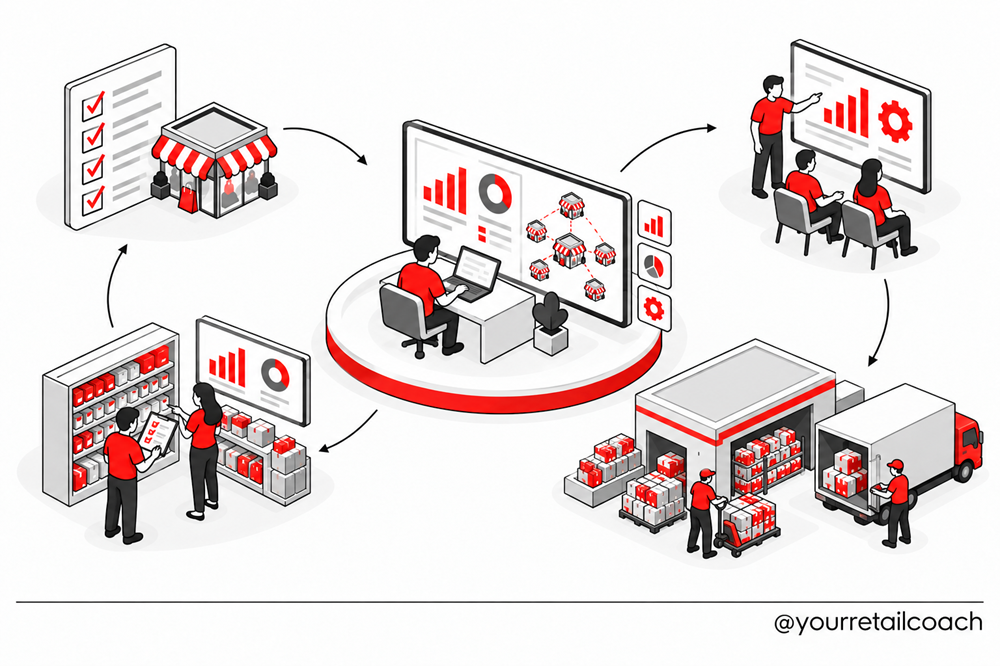
Control tower refers to a system of centralised monitoring and management of an entire network of stores. In the context of retail scale projects or an expanded store network, a robust control tower features:
- End-to-end visibility
- Escalation and exception management with real-time signals and alarms
- Informed decision support
- Cross-functional coordination
- Inter-store inventory management
- Virtual store audits
- Loss prevention and shrinkage mapping
- NSO rollout tracking
- Monitoring of SLA violations
- Staffing optimisation
For the first part one of this blog series – Steps 1 to 4 are covered in a preceding blog.
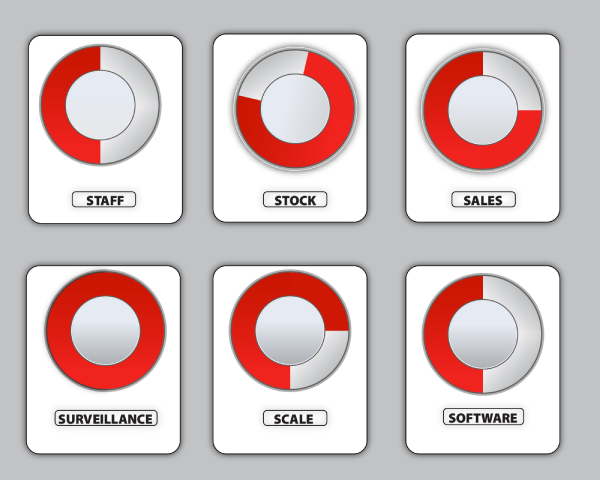
Retail Healthometer
Check the health of your business? Are you ready to organize & scale ?
Author Bio

Nikhil Agarwal
Chief Growth Officer
Nikhil is a calm and composed individual who has a master’s degree in international business and finance from the United Kingdom. Nikhil Agarwal has worked with 300+ retail e-commerce brands and companies from various sectors, since 2012, to define their growth strategy and achieve operational excellence. Nikhil & his team have remarkable success stories of helping brands achieve 10X growth.