
Every clothing brand that gets some traction eventually hears the same question: “Do you franchise?” It sounds like the market inviting you to grow. Often it is a trap, because apparel is one of the hardest categories to franchise well. Seasonal stock, markdown pressure, taste-driven demand. A franchisee in fashion carries far more commercial risk than one running a cafe or a salon, and any weakness in the brand’s systems shows up within a single season.
So what does it actually take to be ready? We put that question, and several harder ones, to Dr. Rupal Agarwal, Chief Strategy Officer and Co-Founder of Your Retail Coach (YRC), a retail and ecommerce consulting firm that helps brands build store operations, SOPs, supply chain models, and franchise frameworks across India, the Middle East, and Africa.
Most brands seem to stumble into franchising rather than plan for it. In your experience, why do clothing brands rush in, and what goes wrong?
Almost always, it starts with an enquiry. The brand is doing well in a city or two, someone with money approaches them wanting a franchise, and the founder reads that as proof the model is ready. It feels like the market pulling you forward. So they sign.
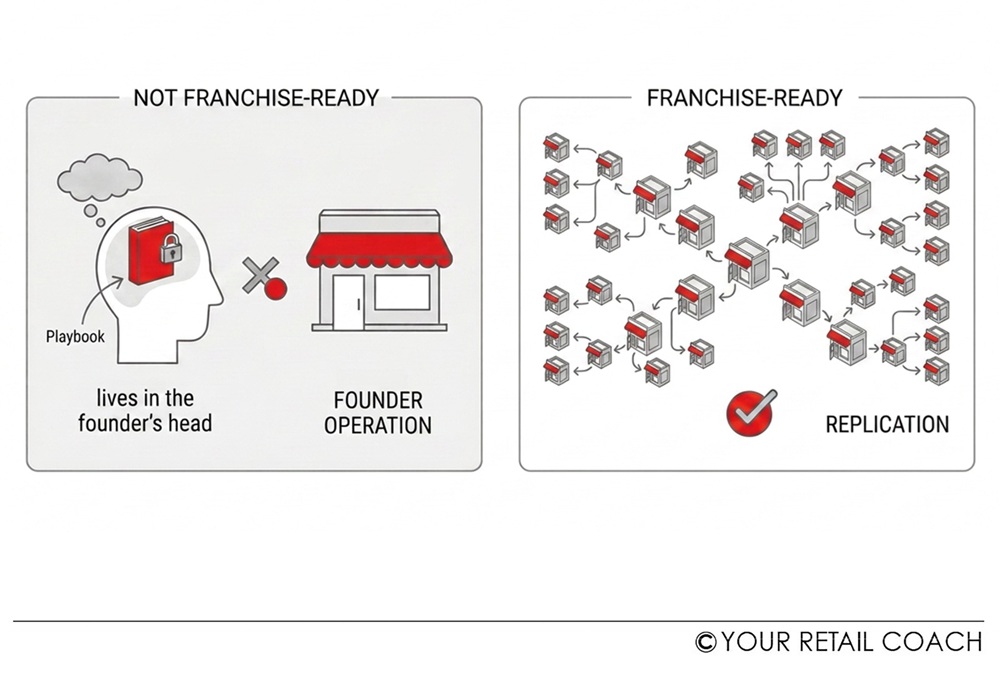
Then reality arrives. Nothing about how the stores actually run has ever been written down. The VM standards, the replenishment logic, how staff handle a return, when to discount and by how much. All of it sits in the founder’s head, or in the instincts of one very good store manager. The franchisee gets the brand name but not the operating system, and six months later their store looks and behaves nothing like the flagship. Each side blames the other.
The money side is usually just as shaky. I have sat across founders whose store “profits” existed only because nobody was counting their own salary. Add a franchisee’s rent, staff, and royalty on top of that, and the model falls apart.
Which brings us to the real question: what does ready actually mean?
Let us take that head-on. When YRC looks at a clothing brand and asks whether it is franchise-ready, what are you checking?
Three things, and you need all of them. We tell clients: prove it, package it, protect it.
Prove
Show the economics work in your own stores first. Real store-level P&Ls, the kind a sceptical outsider would accept, with honest rent, full staffing cost, shrinkage, and markdowns in the numbers. If the model only works in your oldest and best location, you have a good store. Not a franchisable format.
Package
Everything about how the store runs must exist as documents a stranger can execute. Operations manuals, SOPs, VM guides with photographs, training modules, a launch playbook. The test is blunt: could someone open and run your store using your documents plus a training period? If not, the packaging is unfinished.
Protect
Agreements, territories, royalty structure, brand usage rules, exit clauses, audit rights. This part feels boring until it is not. Weak sales hurt a franchise network slowly. Disputes kill it fast.
Stay with the numbers for a moment. What should a brand have proven at its own stores before offering the format to anyone?
Know your business at the level of one store, not a blended company view. Sales per square foot by season. Margin after markdowns, not before. Sell-through by category, inventory turns, staff cost against revenue, and how long the fit-out genuinely takes to pay back.
Then do the exercise most brands skip: rebuild that P&L from the franchisee’s chair. Take out your royalty, put in their rent and their capital cost, and ask whether a sensible operator earns a return worth the risk. This is where many founders get an unpleasant surprise. The store works for them because the brand has been quietly absorbing costs the franchisee never could.
One more thing. Prove it in more than one location, ideally more than one city tier. A format that works on a metro high street can fail quietly in a tier-two mall, and your franchisees will mostly come from those newer markets.
Once the economics hold up, the next fork in the road is FOFO versus FOCO. How do you help brands choose?
Ask yourself one question: where should the execution risk sit?
FOFO, where the franchisee owns and operates, scales faster and costs you less, because they bring capital and daily management. It works when the format is simple, thoroughly documented, and can survive some variation in operator quality. FOCO, where the franchisee invests but you run the store, protects the customer experience. For premium brands it is often the right call, because one badly run store does damage out of all proportion to its size.
My honest advice to brands starting out: keep operations closer to yourself than your instinct suggests. You can always loosen control later, once your training and audits have shown they hold standards from a distance. Getting control back after giving it away is another matter entirely.
Whatever the model, it has to run on shared systems. How much of readiness is really a technology question?
More than founders want to hear. A franchise network without shared systems is just a set of independent shops wearing the same logo.
The minimum: one POS across every store, live visibility of stock at every location, and daily reporting that does not depend on franchisees emailing spreadsheets when they remember. Add a proper loyalty and CRM setup so customer data belongs to the brand rather than fragmenting store by store.
And do not stop at installation. A system that store staff quietly bypass is worse than no system, because it gives you confidence in bad numbers. Build usage into training, audit it, and put consequences in the agreement.
None of this is about surveillance. It is about running the network on facts, because replenishment calls, markdown timing, and royalty reconciliation all turn into arguments the moment the numbers cannot be verified.
That visibility matters because of something unique to apparel: seasonal stock. Inventory ownership might be the biggest commercial decision in a clothing franchise. How should brands structure it?
It is, and it shapes everything else in the deal. The broad choices are outright purchase, sale or return, and consignment. Each puts the risk somewhere different.
Outright pushes stock risk onto the franchisee. Good for your cash flow, harder to sell as a proposition, because any experienced retailer knows what unsold winter stock looks like in March. If you go outright, you owe the franchisee disciplined buying support, mid-season rotation between stores, and a clear liquidation policy at season end.
Consignment keeps the risk with you. Easier to recruit partners, and you keep control of assortment and pricing. But your working capital now sits on someone else’s shop floor, so your inventory governance has to be genuinely strong.
Neither answer is right for everyone. What matters is choosing deliberately, pricing the choice honestly into the margins, and enforcing it through systems rather than goodwill.
Say a brand has done all of this. What should the first ninety days of a new franchise store look like?
Scripted, almost boringly so. Handover and fit-out against a checklist. Staff hired to defined profiles and trained before opening day, not after. Opening stock allocated from your assortment plan, not the franchisee’s personal taste. Launch marketing run jointly.
Then a steady rhythm. Your people on the floor through launch week. Weekly reviews for the first quarter, tracking a handful of measures: daily sales against plan, conversion, stock accuracy, customer satisfaction, staff retention. Watch that last one closely. Early staff churn is one of the most reliable signals of a store heading for trouble. Close the quarter with a formal audit.
A franchisee’s first store sets their habits for every store after it. Whatever you leave vague in those ninety days becomes permanent.
Last question. A founder reading this wants to franchise within a year. What should the next twelve months look like?
Build evidence, not a pipeline of enquiries. Get honest store-level P&Ls. Run one company store as a true pilot of the exact format you plan to franchise, at the fit-out cost a partner would actually pay. Write the manuals while running it, then test them the hard way: have someone outside the founding team open and operate purely from the documents.
Alongside that, design the commercial architecture. Margins, territories, agreement terms, the inventory model, all stress-tested from the franchisee’s side of the table.
The philosophy behind all of it is simple. You are not selling franchises. You are selling a proven system with your brand on it, and the system has to exist before the sale.
Looking to Start a Clothing Brand? The Real Launch Roadmap (Design → Sales → Scale) …. here
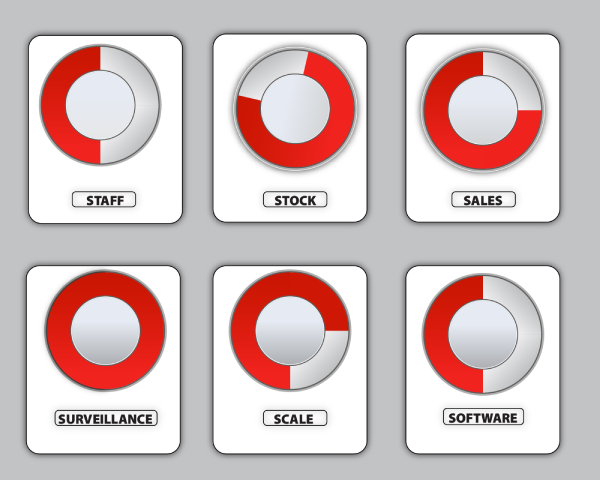
Retail Healthometer
Check the health of your business? Are you ready to organize & scale ?
Author Bio

Nikhil Agarwal
Chief Growth Officer