
E-commerce has gone from being a useful option to a global economic engine that drives billions of customer journeys every day. As online shopping has grown, the processes that make it possible to deliver goods have become much more complicated. Speed, accuracy, openness, and the ability to grow are no longer things that give you an edge over your competitors; they are things you need to do business.
This is why Business Process Management (BPM) is so important now.
Companies that deal with the stresses of modern e-commerce, like launching new products all the time, fulfilling orders through multiple channels, meeting customer expectations in real time, and dealing with constant operational changes. All these need structured and data-driven ways to improve.
Signavio BPM for e-commerce, process mining for e-commerce, and online retail journey mapping are some of the tools that help brands see, standardise, and grow their businesses much more efficiently.
Why BPM Matters More Than Ever
Compared to regular stores, the e-commerce world is very chaotic. The number of orders changes every hour, warehouses work alongside digital shopfronts, and customer experiences depend on invisible back-end orchestration. BPM adds a level of governance and openness that makes this changing environment more stable.
Important reasons why BPM is necessary:
- Orders are more complicated because they can be fulfilled through multiple channels.
- Customers want faster delivery and real-time visibility more and more.
- Costs of doing business are going up, especially for last-mile delivery.
- Problems with integrating new tools, partners, and automation technologies
- Competition around the world that pushes for constant improvement and efficiency
- Regulatory and compliance issues, especially when it comes to handling data and shipping goods across borders
BPM is no longer an option; it is now a part of the strategy.
Fulfilment Has Become a Competitive Differentiator
In the past, e-commerce companies set themselves apart by offering better products or using digital marketing. Today, market leaders are known for their great fulfillment. People will stay loyal to a business if their orders arrive quickly, safely, and as promised.
Problems that businesses have to deal with without BPM:
- Processes that are not connected between sales, warehouse, and logistics
- Unnecessary delays caused by manual workarounds
- Not being able to see bottlenecks until customers complain
- Errors keep happening because the process isn’t always followed the same way.
- No single view of the whole online shopping experience
BPM lets businesses turn operational reliability into a competitive edge, which has a direct effect on sales, profits, and how people see the brand.
How BPM Enhances Online Retail Process Optimisation
To improve online shopping, businesses need to fully understand their processes, such as how orders are processed, where delays happen, and how limited resources affect fulfillment. BPM gives you the structure and tools you need to do this.
The main benefits of BPM for e-commerce are:
- Standardised processes for fulfilling orders across all channels
- Monitoring operational KPIs in real time
- Workflows that run on their own and get rid of unnecessary manual tasks
- Clear documentation that supports training and growth
- Quickly making changes for seasonal or demand-driven reasons
- The ability to smoothly coordinate people, robots, and systems
BPM is the plan that links all the parts of digital commerce, from product listings to delivery.
The Foundation for Improving Digital Commerce Experiences
Journey mapping for online stores is a good fit with BPM since it links how well a firm performs with what customers want. Journey mapping displays every step a customer takes, from the time they view a product to the time they get it. This customer-focused vision demonstrates the difference between what brands say they will do and what they actually do.
Journey mapping helps firms uncover issues like sluggish updates on deliveries, confusing return procedures, variable package quality, or poor communication between warehouse workers and logistics providers. It also shows how delays in one element of the process can affect the full customer journey.
Journey mapping and BPM work together to make sure that changes to processes directly make customers happier. This is a terrific approach for stores to figure out which projects will have the most effect on their sales and brand.
Signavio BPM for E-Commerce
SAP Signavio has become a top BPM platform, particularly for online retailers who are planning to manage rapid operations. The collaborative modelling environment allows cross-functional teams to design fulfillment processes across sales, inventories, warehouses, shipping, and post-purchase support in a standardized way. The process governance capabilities in Signavio ensure that any changes are documented, tracked, and compliant, mitigating operational risk due to rapid growth or pro-active market expansion with any risk.
Retailers benefit from the analytics features with real-time visibility into key performance indicators, such as order accuracy, fulfilment cycle time, warehouse throughput, SLA performance, and more. Due to deep integration with SAP ERP and supply chain technologies, Signavio becomes the central hub that connects customer journeys in sites, to operational workflows, to data insights and analytics. For e-commerce organisations who require agility and predictability, Signavio BPM provides a foundation for managing everyday operations with confidence, alongside managing peak season pressures.
Process Mining in E-Commerce For Turning Data into Operational Intelligence
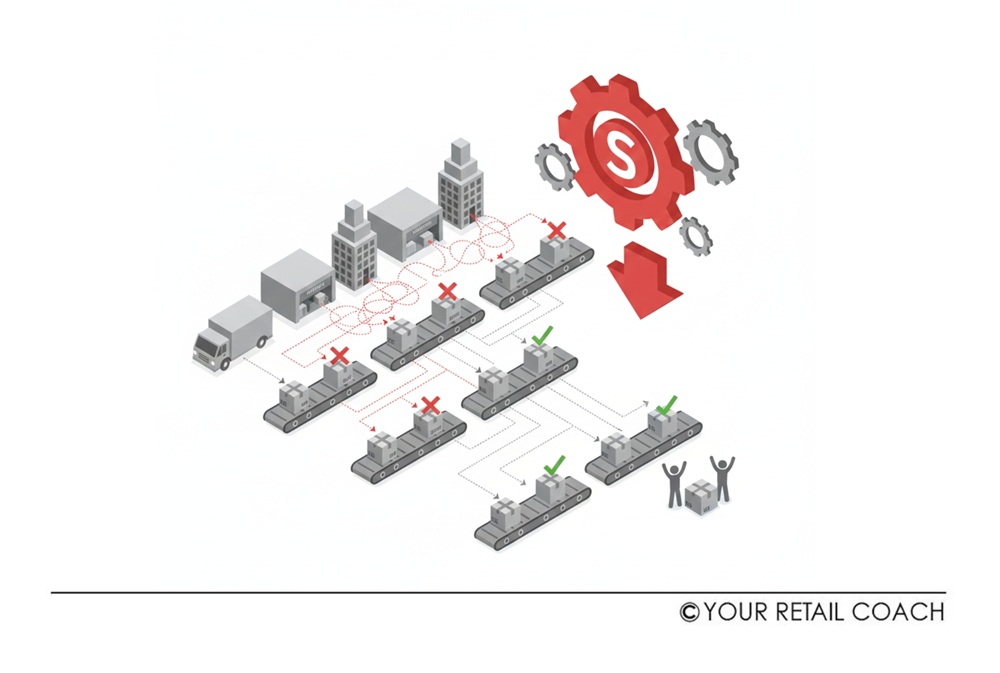
High transaction levels found in online retail produce valuable process data but are usually not used effectively. Process mining for e-commerce takes this data to reconstruct the actual execution paths of orders and, in doing so, expose what is truly occurring in fulfilment operations rather than the assumptions of teams. Process mining shows hidden bottlenecks, recognises inefficient variation practices, exposes rework loops, and quantifies severance across the entire order to delivery lifecycle.
Retailers can utilise this information to streamline workflows, eliminate manual dependencies and improve resource planning, and make decisions about automation investments, all with an evidence-based framework in mind. Process mining also supports real-time monitoring, allowing the organisation to respond instantaneously when SLA violations and system outages take place. Process mining turns raw data into intelligence for organisations and enhances BPM from theoretical modelling approaches to real operational transformation on the ground.
Digital Commerce Process Excellence
Achieving excellence in digital commerce processes is the tactical achievement of leveraging the discipline of business process management with customer-centric design and data-driven enhancements. It guarantees that organizations have visibility into their entire fulfilment network, that processes are executed consistently and that systems are integrated and work well together.
Organizations that seek process excellence develop operational capabilities that can scale without sacrificing quality or speed. They foster cultures where “continuous improvement” becomes part of the daily lexicon and where automation is applied intentionally as an enhancement to efficiency rather than as a band aid to close operational ineffectiveness. Excellence in process also guarantees that operational improvements relate directly to customer outcomes by reducing complaints, improving on-time delivery and enhancing brand confidence. In a world where margins are increasingly thin and competition is high, digital commerce process excellence transforms into significant capabilities demonstrating sustainable growth.
Where BPM Delivers the Strongest Value in Fulfilment Operations
BPM creates transformational value across all layers of the fulfillment ecosystem. In order management, it enables workflow efficiency that reduces manual interventions that often lead to errors and delays. In inventory management, it achieves accurate, real-time visibility to avoid overselling or stock-outs.
In warehouses, BPM creates more efficient picking, packing and despatch processes to enable teams to pick and pack faster with fewer errors. In shipping orchestration, BPM enables better alignment of carriers to delivery needs and reduces costly last mile inefficiencies. At returns, BPM creates order in the otherwise chaotic reverse-logistics fulfilment process. BPM reduces the labour to process returns back into inventory to protect margins. In addition to enhanced returns, BPM improves customer service by automating notifications and updates, improving issue fixes, and ensuring consistency in communications.
Throughout all of these back-end fulfillment processes, BPM enables even better collaboration with outsourced third party logistics partners, supplier partners, carrier partners or other hubs in the fulfillment ecosystem. The combined result of this integration increases the predictability and resiliency of the fulfilment network.
Retail Healthometer
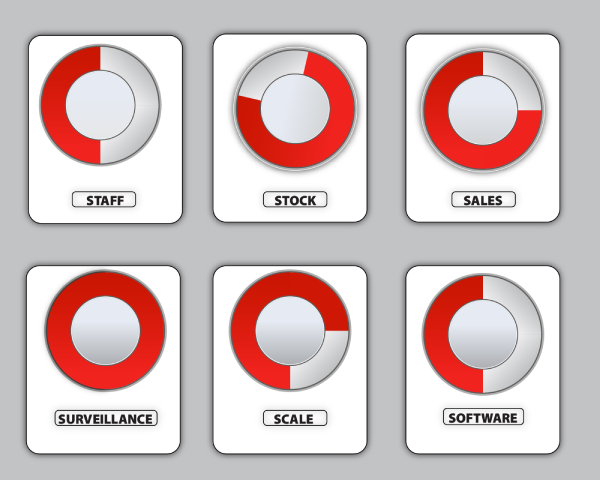
Check the health of your business? Are you ready to organize & scale ?
Author Bio

Nikhil Agarwal
Chief Growth Officer
Nikhil is a calm and composed individual who has a master’s degree in international business and finance from the United Kingdom. Nikhil Agarwal has worked with 300+ retail e-commerce brands and companies from various sectors, since 2012, to define their growth strategy and achieve operational excellence. Nikhil & his team have remarkable success stories of helping brands achieve 10X growth.