
Digital transformation in retail often falls short of expectations when businesses don’t realize how to bring together process management, IT architecture, and worker adoption. The truth is, investments in technology tools and systems will rarely deliver up to their potential if you fail to bring balance to your digital transformation strategy. In real-world practice, retail CIOs view the reality of failure through:
- Work process visibility and governance were absent
- Technology/business alignment through LeanIX was ignored
- Worker adoption gaps with solutions like WalkMe could have supported
Retailers often underestimate the depth of the fragmentation caused by operational workflows, unwieldy, siloed IT landscapes, and ineffective adoption strategies when planning the depth of appearance of these programs. An effective digital blueprint typically begins with Signavio transformation mapping to define how things get done using whatever exists today, and a LeanIX technology alignment defining the architectural landscape, and WalkMe enabling adoption to address the issue of user gaps, which ensures there is governance of retail IT governance and reduces CIO failure prevention scenarios.
To put it simply, transformation fails when technology runs away from people and processes, and the winning formula is aligning process visibility, architecture alignment, and user adoption from the ground with transparency in alignment.
Why Signavio Defines Transformation Success in Process Mapping
Digital transformation efforts struggle in retail when organizations overlook process mapping and points of definition. Signavio transformation mapping allows retailers to assess their existing workflows organizationally, addressing inefficiencies and creating a data-informed path forward.
Retail processes often overlap inventory, supply chain, check-out, and customer engagement processes. If organizations do not have clear visibility, any new system, whether ERP, POS, or ecommerce will be applied over broken workflows to the detriment of all stakeholders in retail experiences. Signavio clearly establishes each business process’s outcome in the following ways:
- All processes are documented from end-to-end.
- Business processes are benchmarked against best practices.
- Gaps and redundancies are analyzed
- Business processes are ultimately optimized for a digital transformation to occur.
For retailers, process visibility should not be optional; it is the first step to visible outcomes. Signavio produces transformation roadmaps and structures the process so that both users and IT stakeholders can avoid speculation that allows imperfections in workflows to continue to exist and transform less than successfully.
Example: A retailer deploys an advanced ERP system without fixing obvious broken order fulfillment processes and, as a result, the workflows contribute to delays and cost overruns. With Signavio, retailers can reverse engineer their new processes against the organization’s customer experience goals so that there is less risk with the changes being made more sustainable- good for the organization and the consumer.
The Role of LeanIX in IT-Business Alignment
Retail IT transformation fails to meet business objectives when IT systems diverge from business goals. LeanIX IT-business alignment prevents this disconnect between business drivers and IT portfolio by mapping the IT landscape against business needs.
Retailers generally operate as a series of fragmented databases by geography, lineage, and overlapping SaaS applications. LeanIX provides retailers with clarity by:
- Establishing a single view of applications connected to stores and the supply chain
- Highlighting redundant applications and risks in the IT ecosystem
- Positioning CIOs to map agreed IT decisions with business priority
- Facilitating governance in retail IT (for example, compliance, cloud spend optimization)
Retailers that operate IT systems with no knowledge of, or insight into their architecture, may not realize they are making duplicate IT decisions with no understanding of the cost of failure, or the likely failure one action could create later. LeanIX provides the CIO with consistency on which technology spend supports differing business objectives; for example, an omnichannel experience, a real-time view of inventory, and predictive analytics.
For example, if a retailer embarks on an e-commerce platform implementation without knowing the existing IT systems, the retailer may encounter an integration nightmare. LeanIX allows the CIO to avoid this chaos by ensuring selections of systems and technologies are aligned to the enterprise architecture. LeanIX builds resilience by preventing failure at the strategy level.
Why WalkMe Closes the Gap in Terms of Adoption Challenges
Most digital transformations in retail fail simply because employees do not utilize the new/transformative systems correctly. To address this, WalkMe provides solutions called WalkMe adoption gap retail solutions that help guide users through on-screen assistance, training, and engagement tools.
Even if organizations have taken great care to map processes and get IT aligned, if the employees do not actually engage the systems, nothing gets done. WalkMe facilitates the following:
Step-by-step onboarding for new tools;
- Contextual training direct within applications;
- Tracking performance to measure adoption success;
- Adaptive and personalized learning paths based on roles in retail.
If adoption does not take place (returning to manual processes), you have allowed for shadow IT and unproductive practices; productivity is a motivation for staff from store clerk/associate to back-office business analyst. WalkMe ensures you get your staff, wherever they reside, to engage digital tools with confidence.
For example, a retailer implements a new POS system to benefit the customer experience; they could have employees engaged (the priority) before performance wades in the sands of time, and engagement wanes, a complaint, long lines, and unhappy customers in anticipation of a new shopping experience. Using WalkMe’s interactive guidance, organizations ensure errors are reduced and/or minimized and customer-facing efficiency is captured; that is the goal of Return on Investment (ROI).
Governance and CIO Failure Prevention in Retail IT
When retail CIOs miss governance and oversight on transformation initiatives, they fail. Governance ensures consensus on process, architecture, and adoption on the whole scope of digital initiatives.
Governance for retail IT is summed up by:
- Standardizing processes with Signavio and the signavio tool suite.
- Keeping productive visibility of IT with LeanIX.
- Keep workforce adoption/theory useful its determined by usage with WalkMe.
- Monitoring KPI’s – determined performance of the transformation initiative.
CIO’s need governance frameworks that bring these tools together and take silo-based decisions out of the mix and recursive measurement of what is happening, so that marginal gains can be made. If governance is not put in place it can result in project chaos, escalating costs and unmet transformation ambition.
For example: A retailer can purchase multiple CRM and ERP systems with no governance or oversight, this leads to conflicting data and a car crash of operational failure because of the silo in retail technology choice. Governance-first is how retailers need to operate to respectfully prevent CIO failure, being an IT decision is only part of the decision to front-end with the correct business rationale for purchase and with usage/operations/tech model metrics.
Governance is not a single step exercise – it is the binding glue to enable sustainable digital transformation for the retail business.
The Unified Retail Transformation Blueprint
Successful digital transformation in retail hinges upon treating process, architecture, and adoption/education as interdependent pillars of a unified whole. Signavio provides clarity around the retail process, LeanIX delivers IT-business alignment, and WalkMe secures employee adoption. Together they represent a strong governance mechanism on which a cohesive retail transformation framework can be built. By using this framework CIOs move away from isolated and non-connected approaches that deliver no measurable progress.
All efforts will deliver tangible, measurable benefits from a better customer journey to overall operational resiliency. Retailers, rather than investing in diversity and isolated mini-escalations, can use a connected framework to deliver a sustainable future-proofed business strategy, and to foster opportunities for future growth.
About YRC
YRC (Your Retail Coach) is dedicated to helping retailers worldwide make better business decisions using SAP Signavio and proven business transformation frameworks. YRC has decades of retail industry subject matter expertise and process excellence that connects strategy with technology. We help retailers adapt quicker, operate smarter, and provide a better experience for their customers.
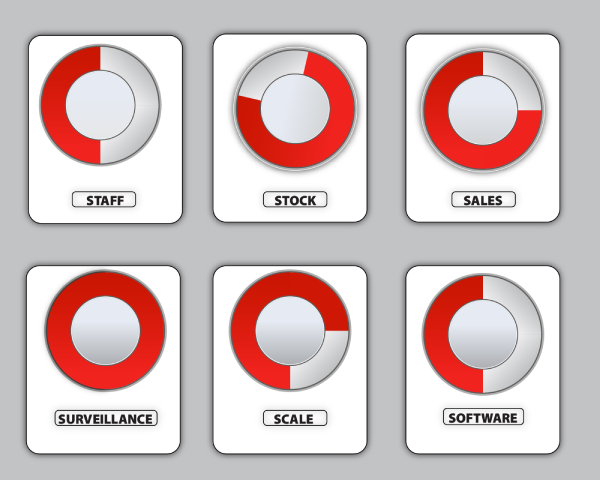
Retail Healthometer
Check the health of your business? Are you ready to organize & scale ?
Author Bio

Nikhil Agarwal
Chief Growth Officer
Nikhil is a calm and composed individual who has a master’s degree in international business and finance from the United Kingdom. Nikhil Agarwal has worked with 300+ retail e-commerce brands and companies from various sectors, since 2012, to define their growth strategy and achieve operational excellence. Nikhil & his team have remarkable success stories of helping brands achieve 10X growth.