
Business Owners Should Care about Organised and Unorganised Retail Because an Unorganised System Cannot Be Easily Scaled
Unorganised businesses are often seen working without centralised inventory management. This makes their inventory levels unpredictable, leading to frequent stockouts or overstocking. Without rigid control over the flow of inventory, it becomes challenging to think of starting new stores.
In retail, margins can vary from sector to sector, but one thing that must not be compromised is the business owners’ efforts to safeguard their margins. Containing these retail hidden costs is especially critical for multi-store or SME retailers who count on volume sales.
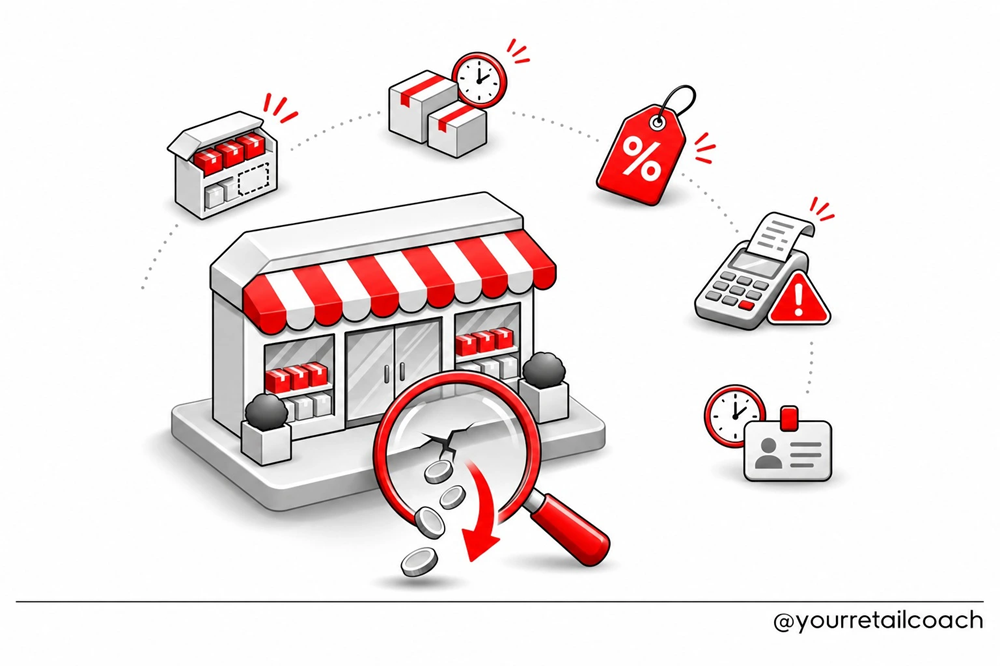
In this blog, YRC’s experienced team of retail consultants highlights five top sources of cash and profitability leakage in multi-store retailing, along with solutions to fix these retail cash leaks and profitability drains.
Inventory Discrepancies
Stock disagreements are seldom just about shoplifting. More often, it’s a noiseless operational drain that slowly hollows out your net margins. In any busy retail store, inventory disappears at multiple points long before a customer ever picks up a product.
The first leak starts right at the loading dock. Consider this scenario. Suppose that a shipment has arrived and the receiving area gets jammed. Your team rushes to clear space. Now suppose that the supplier’s invoice says fifty pieces, whereas there are only forty-four pieces in the box. If your team accepts that delivery without counting, you would end up paying for inventory that never arrived. Within a span of a few weeks, such discrepancies add up to serious money.
Inside the store, damaged or expired stock creates another issue. When something is dropped during shelving or broken in handling, floor staff tend to push it into backrooms and keep the formal write-off process for later. That item stays live in your records as available. It misrepresents your reorder triggers or creates ghost stock.
Then there is the billing counter. Without strong checks and balances in the system, the POS terminal becomes an easy spot for quiet drips. It takes an unauthorised price discount, a rejected item after handing over a paper receipt, or a fake cash return for stock to slip out the door or for cash reconciliation to go off the mark.
How to Fix It
Blind Counting at Receiving: Have your team count incoming inventory blindly, without access to the supplier’s delivery statement first. Once they log the real count, compare it with the purchase order.
Disable Manual Overrides Without Authorisation: Disable manual price changes, cancellation of items, and returns in your billing software. Make approval by a store manager or team leader mandatory to execute exceptions.
Weekly Cycle Counts: Don’t wait for a year-end audit. Run small, randomised inventory counts every week. Focus on high-value items, fast movers, and categories that are prone to loss or misplacement.
Recommendation: Retail SOP implementation, SOP-IT integration, SOP compliance
Supply Chain Inefficiencies
Profits can silently diminish because of supply chain inefficiencies. Since business earnings rely heavily on suave, predictable movement of inventory, profit margins are chipped away by holdups, extra handling, or poor inventory allocation before an item is placed on a display shelf in stores.
A massive profit drain is created by chaotic replenishment and disorderly inventory transfers between retail locations. When inventory is not tracked effectively by system software, a bestseller is completely depleted by one store outlet while boxes of that same product are left sitting untouched in the back room of another.
On the other side, cash flow is continually exhausted by slow-moving and archaic inventory sitting around backrooms. Money that could be used for high-demand articles is locked up in low-demand or slow-moving products.
Logistics-side seepages are also caused during basic handling and storage operations. Crumpled cartons and damaged stock are caused by cramped warehouses, chaotic storage rooms, and rough handling during transportation. As a result, items are forced to be treated as open-box goods or scrapped completely.
How to Fix It
Automated Reordering: Automatic reorders are activated by system algorithms based on actual sales trends and min-max limits instead of being fathomed by store managers. Replenishment orders are automatically spawned by software systems whenever inventory falls below minimum safety stock.
Stock Balancing: Centralised data management is used to identify low-velocity SKUs early. Balanced stock distribution across locations is centrally maintained. Excess inventory is transferred to high-performing outlets before local or regional demand drops.
Early Clearance: Product shelf age is prudently observed using batch tracking. Stagnant floor space is quickly freed for profitable SKUs/product lines. Inventory velocity is consistently sustained across all categories. Old product lines are systematically phased out.
Recommendation: Retail SOP implementation, SOP-IT integration, SOP compliance
Unchecked Discounting
On paper, pricing methods seem simple, but on the store floor, margins wear out item by item by gaps in processes and unauthorised price cuts.
A key source of profit drain is the misapplication of price cuts by frontline sales staff. When wide-ranging authority to allow manual discounts is given to store managers or sales staff to improve conversions, this authority often turns into a habit rather than a judiciously used tool for conversion.
Another continuous profit leak is caused by price-tag mismatches between physical shelves and IT systems. For example, when promotional campaigns are over and promotional price tags remain unchanged by floor staff, it can cause confusion, slow down, or even loss of margins.
Also, expensive pricing mistakes arise because of human errors during manual inputs or price lookups. The problem arises when high-margin or costlier items/variants are identified as entry-level merchandise.
How to Fix It
Centralised POS Rules: Hard limits on price adjustments are embedded directly into POS software. Manual changes of unit prices are disallowed by system rules, so price overrides cannot be executed by floor staff. Manual price entries are entirely obstructed by system rules. System alerts are immediately issued by POS terminals whenever any unauthorised pricing change is attempted.
Price Integrity Audits: Assign weekly compliance audits to floor teams. Random shelf merchandise is scanned with handheld devices to cross-check pricing accuracy. Shelf tag audits are planned for every corner and category. Pricing files are updated at the start of the day.
Barcode Enforcement: Manual price lookup entries at checkout counters are entirely eradicated. Products are scanned strictly via physical tags to avoid the scope of human error. Manual overrides are limited to sanctioned employees. Premium goods are identified by scanners before payment processing is completed.
Recommendation: Retail SOP implementation, SOP-IT integration, SOP compliance
Outdated Staff Scheduling
After inventory, wages and salaries constitute the biggest operating expenditure for any business. Conventional shift planning strategies and tactics are no longer effective in today’s retail environment. If you insist on relying on old-fashioned methods of staffing or scheduling, eventually you are going to lose money because of idle hours, along with losing sales opportunities during the busy hours.
Team leaders or branch managers often rely on the same weekly schedules for stretches on end. While this tactic may work half of the time, in the other half, it will make you lose money. A roster that works for one store may not work in another store because of hyperlocal factors.
Economic leakage can also take place in a store because of gaps in attendance and poor work allocation. When you are manually keeping track of attendance or verbally assigning duties, you risk becoming unorganised.
How to Fix It
Align Shifts with Traffic: Use periodic footfall patterns and POS heat maps to create dynamic rosters, ensuring the key sales personnel are on the floor when they are most needed.
Digital Attendance: Remove paper-based timesheets for biometric or digital clock-in tools to bring precision in shift hour count, thwart buddy-punching, and keep overtime within the permitted rules.
Define Off-Peak Work: Give daily checklists for low-traffic windows to utilise sluggish business hours as a productive window for organising and streamlining the systems.
Recommendation: Retail SOP implementation, SOP-IT integration, SOP compliance
Overhead Waste
Expenditure on housekeeping, facility maintenance, and other administrative overheads seldom gets the kind of attention business owners usually pay towards sales and revenue. These expenses are often overlooked, but they carry significant financial ramifications.
At the top of the list is the power bill. Many retail outlets continue to run air conditioners and lighting systems at full throttle even after the visiting time for customers is over. For the opening and closing activities, these systems need not run at full power.
Other administrative expenses like receipt paper, shopping bags, bubble wrap, packing boxes, price tags, and cleaning supplies are often treated as insignificant. But at the end of the day, these materials cost money, and if there is wastage across all locations for a stretched period, it unnecessarily inflates administrative expenses.
How to Fix It
Use automatic timers or smart thermostats for lighting and air conditioning systems so that they automatically adjust or turn off during opening set-up, closing, and after hours.
Set an overhead budget for every store based on its sales volume and profitability. Make the store manager accountable for keeping the expenses within the budget and judiciously managing the allocated stock of office and maintenance supplies.
Enforce SLAs for periodic service and repair of air conditioning units, backup generators, and other electrical and electronics assets and systems to avoid any costly emergency repair as well as to optimise the lifespan of these assets.
Recommendation: Retail SOP implementation, SOP-IT integration, SOP compliance
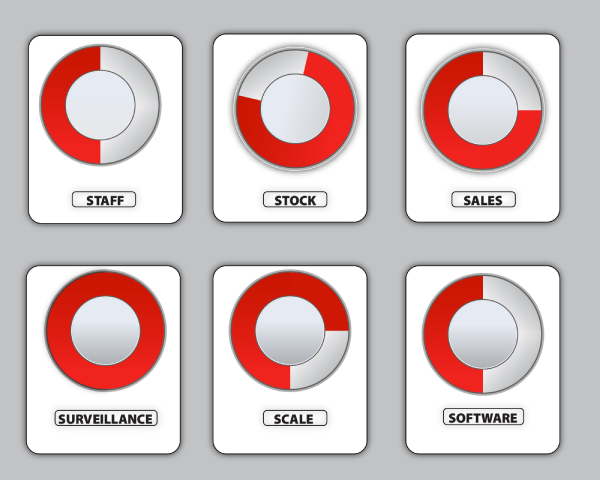
Retail Healthometer
Check the health of your business? Are you ready to organize & scale ?
Author Bio

Nikhil Agarwal
Chief Growth Officer