
A rider stands outside the shutter with one foot on the pedal. Inside, an order is still one item short. The missing item is a packet of bread.
However, the bread was listed in stock but it was not on the shelf. Now the rider is waiting and the customer watches the app. Eventually, the ten-minute promise is already broken.
This is the real story of q-commerce. Speed is not won on the road. It is won inside four walls, one small decision at a time.
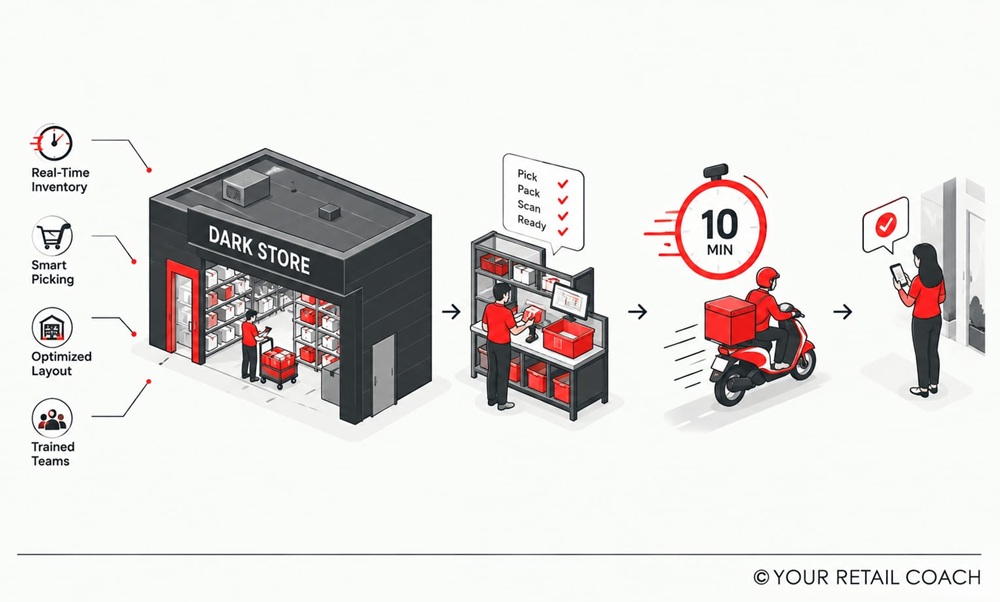
This blog explains the quick commerce operations behind a dark store that runs fast and still makes money.
Ten Minutes Delivery Is an Operations Problem
Many people think fast delivery is about fast riders. It is not. A rider can save a minute on the road. A messy store can lose three minutes before the order is even packed.
Q-commerce runs on a tight promise. The customer expects speed and accuracy together. A late order earns a bad rating. A wrong order earns a refund. Both hurt profit.
This is why dark store operations matter more than any delivery trick. The store is the engine. The rider is only the wheel.
Speed can have a hidden cost. When you have a store that runs without a system, the chances of errors rise to a great extent. You may very frequently encounter wrong items or damaged goods. There will be more instances of refunds that quietly eat the profit. The entire process turns upside down.
The Clock Matters the Most
If you want to see your dark store on the better side of profits, then think of every order as a clock. Every minute dedicated to each step of the process, counts. If there is even one stage that takes a bit longer, the deliveries would get delayed and the promise may not be fulfilled.
There will be slight differences in the numbers of different stores. An important point is to have accountability at each stage.
Inventory Accuracy
A fast team cannot pick what is not there. Accurate stock is the base of all quick commerce operations.
- Check every delivery at the dock. Count, scan and inspect before storing. Reject damaged goods at once.
- Count moving items every day and count the remaining items on a set schedule. Correct any mismatches on the day.
- Sell stock that’s older first. Flag items that are close to expiry early and place them on a clearance list.
- Set rules for items that are out of stock. Offer a match and ask the customer first.
- Give every item one home. Pickers should never have to hunt.
A single phantom item can stall a whole order. Clean stock data is the cheapest way to protect speed.
Picking and Packing That Never Slow Down
Most of the clock is spent in the pick and pack stage. Small fixes here add up fast.
- Make sure the items that sell the most are placed close to the picking area so they’re easy to get. Put the items in lower areas and the delicate items, in higher areas.
- Every week check the placement of items.
- Make sure the routes are set up so that the people picking the items move in one direction and do not go back the way.
- This is a great approach where you can combine small orders that come from the same area. These could be clubbed into one picking trip.
- A quick final look at each bag stops errors from leaving the door.
Review pick times by item and by picker every week. Patterns show up quickly. Often one badly placed item causes most of the delay.
Rider and Handover Control
Riders are a shared resource. When they wait, you pay for idle time. When they are missing, orders pile up.
- Timing: Ascertain that the riders are called when packing starts
- Zoning: Track the riders that are in the nearby areas so that they can be assigned deliveries for the areas nearby.
- Handover: When handing over happens, the bay area needs to be clear. This will cut down on the time taken to move out of the store with the packet.
- Backup: The abrupt occurrences like heavy traffic or rains should be accounted for. Ascertain that the team has a fall back plan in such scenarios.
The Numbers That Run the Business
The KPIs you have at the end of every cycle will indicate the direction of the dark store. Keep these numbers ready and also share the details with your team. A team review of the situation and the KPIs can help make things smoother for the next cycle.
- Pick time, pack time, rider wait time and total order fulfilment speed.
- Order accuracy, missing items and customer complaints.
- Stock accuracy, availability of top items and wastage.
- Labour per order, delivery cost per order and total cost per order.
How a Dark Store Turns a Profit
Fast alone does not make money. Each order must leave something behind after all costs are paid.
- Raise the basket value with smart bundles and well-placed add-ons. Bigger baskets spread the fixed cost of picking and delivery.
- Handling costs can cut seconds in stages of picking and packing. Fewer touches mean lower labour per order.
- More orders in the same area lower the delivery cost of each one.
- Better forecasting and expiry control protect your margin.
- Fill quiet hours with planned tasks like restocking and counts. Staff and space earn money only when work flows.
A Day in the Life of a Well-Run Store
A profitable store follows a daily rhythm. Here is how one day can look.
- Morning: Receive stock, run counts and check temperatures. Brief the team on the day’s targets.
- Afternoon: Use the quieter hours for restocking and clearing near-expiry items. Fix issues spotted the day before.
- Evening: Expect the peak. Keep every station staffed, batching ready and riders in their zones.
- Night: Wind down with a quick review. Record the numbers and note what went wrong.
Common Operational Failures
- The app shows items that are not on the shelf.
- Staff levels ignore peak hours, so orders queue up or people sit idle.
- Riders wait while packers finish.
- Too much stock of slow items and too little of fast ones.
- Problems repeat because nobody reviews the numbers.
How Retail Consultants Help
Running a dark store well takes discipline. Most teams know the theory. They struggle to apply it every single day.
Experienced retail consultants audit your floor and time each stage. They find hidden delays and set clear targets. They build dashboards and train your teams. They also rework layouts, shifts and stock rules, so quick commerce operations stay fast as volumes grow. They can also run a short pilot in one store before you roll changes out to many.
Final Thoughts
Ten-minute delivery depends on getting the basics right. Make sure the stock is always up to date. Choose the items. Pack them correctly. Hand them over fast, as possible. Watch the process. Always look for ways to get better. The faster the store runs the quicker the rider can start the delivery.
About YRC
Your Retail Coach is a trusted business consulting firm. YRC helps brands improve commerce operations. From layout and stock control, to staffing, rider flow and cost tracking Your Retail Coach covers every detail.
FAQs
What are quick commerce operations?
Quick commerce operations are the tasks that help a store deliver orders in just a few minutes. These tasks include:
- managing stock picking items
- packing them
- hiring staff
- handing over to riders
- keeping track of orders.
Good daily processes make sure everything moves fast. Is done right while making sure costs stay under control.
How are dark store operations different from regular retail stores?
In a dark store, there are no walk-in shoppers. This is because the operations only cater to online orders. The layout and stock are organized in a way that is apt for rapid picking and dispatch. The staff needs to be accurate and quick. Also, since there are no customers, there is no concept of footfall that needs to be measured.
How can I improve my speed of order fulfillment?
You can start by timing each stage from order to handover. Fix the slowest stage first. The next steps would be to improve stock accuracy and shelf placement. You will also need to pick routes and rider timing. An important aspect would be to review daily numbers with your team.
What makes q-commerce profitable?
Q-commerce becomes profitable when order volume stays steady and baskets stay healthy. This translates to low handling costs. Good forecasting reduces wastage. Dense delivery zones cut rider costs. Disciplined dark store operations keep errors and refunds from eating into Q-commerce margin.
Retail Healthometer
Check the health of your business? Are you ready to organize & scale ?
Author Bio

Nikhil Agarwal
Chief Growth Officer