
It has been estimated that over 80% of all AI ventures do not yield the expected commercial gains. This means that the failure rates in these endeavors are nearly double the average rate of failures among conventional IT projects. However, the majority of these failures can be attributed not to the technology utilized in the projects, but to messy data contacts, and workflows that have not been documented properly.
Grocery stores emerging in 2026 are learning the same bitter lessons. The supermarket has all the tools of modern technology, including computer vision checkout systems, engineering dynamic pricing, and automated restocking, but many of them are being overwhelmed by poorly organized operations.
Thus, the outcome is costly pilot projects that do not expand beyond one key store. The actual tale of grocery retail in 2026 is not about which algorithm wins but rather focuses on which companies have established their infrastructure and have formulated a Franchise Business Model and clear SOPs before turning to AI.
A Supermarket’s Cautionary Tale
Imagine that there is a chain of supermarkets of medium size. This chain has twenty-two stores in three states. The founder feels that it will be time for the fastest ones to succeed in 2026. The board unanimously makes the decision to allocate a seven-figure budget to the AI project in a single meeting. The budget will be spent on computer vision checkout, dynamic pricing application, and an automated replenishing machine. But no one has even thought about how products are moved from the back of the store to the shelves at that moment.
In a span of four months, the pricing engine has started offering different prices for the same carton of milk in two stores located fifteen kilometres from each other. The replenishment bot keeps ordering pallets of a product which has secretly been discontinued by the merchandising team since last quarter. Shrinkage increases. Store managers stop believing the dashboards and go by their gut feeling.
The AI wasn’t wrong. The workflows feeding it were never defined in the first place. That gap, between ambition and operational readiness, is exactly what is separating the supermarket chains that will thrive in 2026 from the ones still explaining away disappointing pilot results.
This is not an isolated story. Across the grocery sector, the pattern repeats with almost boring predictability: leadership sees a competitor announce an AI initiative, fast-tracks a similar budget, and only discovers months later that three different stores were following three different versions of the same “standard” process all along.
Trend 1: Retail Analytics Becomes the Nervous System of the Store
By 2026, retail analytics has stopped being a monthly report that sits in someone’s inbox. It has become the live nervous system of the supermarket floor, feeding decisions in near real time.
- Demand sensing that adjusts orders for weather, local events, and footfall, not just last year’s sales
- Shrinkage pattern detection that flags unusual voids, discounts, or returns by till and by shift
- Planogram compliance scoring that tells a category manager exactly which stores drift from the layout
The problem is that retail analytics relies on the credibility of the data it is provided with. Retailers that overlook setting up standardized SKU masters, data collection, and inventory counts in all stores create dashboards that are not trusted, which is exactly the mistake our retailer made.
Trend 2: Franchise-Led Expansion Accelerates Supermarket Footprints
Although the company’s own expansions have slowed down due to issues related to real estate and investment, the grocery retail sector is expected to adopt the franchise model in 2026. Formerly, supermarket chains insisted on owning all operations; at present, they are looking to implement a franchise strategy that allows for rapid expansion without excessive financial strain.
- The FOFO (Franchise-Owned Franchise-Operated) format for smaller-scale grocery stores.
- The FOCO (Franchise-Owned Company-Operated) format where brand uniformity is more significant than local flexibility.
- Master franchise structures for entering new cities or countries without opening a local office first
- Financial models built for both the franchisor and the franchisee, so both sides are actually making money
Trend 3: SOPs Become the Real Differentiator
The discomforting reality that many retailers are finally grasping is that SOP is far more crucial to attaining success in 2026 than ever-advancing AI technology.
Every individual brought on board as a franchisee, store manager, or seasonal worker should know it.
- Receiving and GRN protocols have to match the ERP requirements, irrespective of convenience.
- Shelf replenishment schedules must depend on foot traffic data rather than following a fixed morning plan for stocking shelves and filling the store with inventory.
- There must be rules for handling exceptions caused by damaged goods, differences in price, and complaints from customers.
- Onboarding schedules must ensure that a new employee is effective in a matter of days rather than requiring weeks.
Chains scaling through franchising cannot rely on tribal knowledge. SOPs are what let a franchisee three cities away run the store exactly the way head office intended. Without that groundwork, inconsistencies are enhanced that already exist on the shop floor.
Trend 4: ERP Implementation Ties the Omnichannel Grocery Stack Together
Supermarkets in 2026 are no longer just physical aisles. Quick commerce, online grocery, and dark stores all draw from the same inventory, which means a clean ERP implementation has become the backbone rather than a back-office project.
- Single source of truth for pricing, so the in-store shelf and the delivery app never disagree
- Real-time inventory visibility across the store, the dark store, and the warehouse
- Automated purchase orders that respect supplier lead times instead of guessing
- Audit trails that make compliance and loss prevention far less painful
A rushed ERP implementation, layered onto undocumented processes, tends to reproduce the chaos in digital form. A properly sequenced one, built after workflows and SOPs are settled, becomes the platform every future AI initiative can safely stand on.
Rebuilding Before Rebooting AI
Back to our supermarket chain. After a rocky first year, its leadership called in Your Retail Coach. The engagement did not start with more algorithms. It started with as-is process mapping across receiving, replenishment, pricing, and store audits, store by store, until the hidden bottlenecks were finally visible on paper.
From there, the chain rebuilt its SOPs, resequenced its ERP implementation so data flowed correctly before automation touched it, and only then reintroduced the AI tools it had originally rushed. Retail analytics dashboards started matching what store managers saw with their own eyes. The chain also revisited its franchise business model, using the newly documented SOPs as the backbone of a franchise expansion strategy that has since added stores in two new states, this time without the chaos.
Why YRC
YRC approaches supermarket transformation the way a process consultant should: workflows and SOPs first, technology second. That sequencing is the unique value proposition behind every engagement, whether the client needs a franchise business model built from scratch, a franchise expansion strategy for entering new cities, or an ERP implementation that finally talks to the shop floor. YRC’s certified experts diagnose the hidden bottlenecks a rushed AI rollout will always trip over, then design SOPs precise enough for any franchisee to follow. The result is retail analytics leadership can finally trust, and AI initiatives that scale instead of stalling after a single pilot.
About YRC
Your Retail Coach (YRC) is a retail and business consulting firm that has spent over a decade helping supermarket, grocery, and franchise brands turn ambition into operational reality across India, the Middle East, Africa, and beyond.
- 25+ industries served across retail and e-commerce
- Certified experts in franchise, financial, process, and technology consulting
- Proven frameworks for franchise business model design and franchise expansion strategy
- Hands-on support for SOPs, ERP implementation, and retail analytics rollouts
- Recognised by Clutch as a top-rated franchise consulting firm based on client reviews
FAQs
What is the biggest supermarket retail trend for 2026?
A prominent change is that supermarkets now mix up the franchise business model and strict SOPs before adding AI and retail analytics into the mix instead of going for automation first, and organizing the business afterwards.
How does a franchise business model help supermarkets expand faster?
The franchise business model provides the possibility of sharing local market knowledge and capital risk with partners. When combined with a clear franchise strategy of expansion, this model enables supermarket brands to open new stores without exhausting their own balance sheets.
Why do SOPs matter more than AI for grocery retail success?
SOPs guarantee that every single outlet, franchisee, and new employee uses the same methodology. If SOPs are absent, then AI and retail analytics tools are fed inconsistent and unreliable data.
What role does ERP implementation play in supermarket operations?
The implementation of ERP provides supermarkets with a single source of truth concerning pricing and inventory across stores, dark stores, and delivery applications, which becomes important as retail analytics and AI tools rely on that data.
How does YRC help supermarkets adopt AI without wasting money?
YRC defines SOPs, maps existing workflows, and puts together the sequence of implementing the ERP system accurately before recommending any AI and retail analytics tool so that the automation is ensured to be built on a solid base.
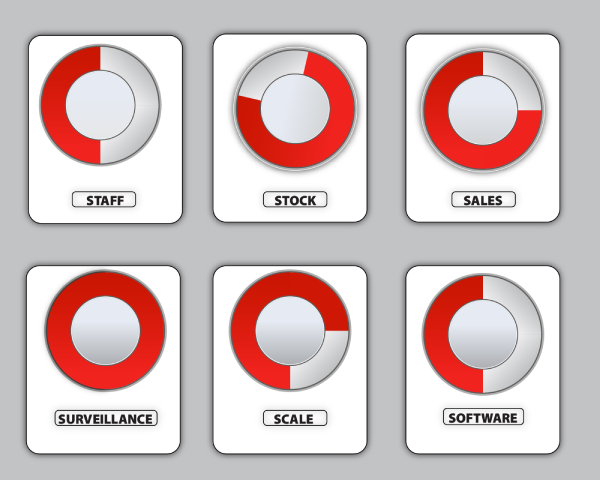
Retail Healthometer
Check the health of your business? Are you ready to organize & scale ?
Author Bio

Nikhil Agarwal
Chief Growth Officer