
When branching out into new regions, it’s important to have a defined market entry strategy. If you’re a retail brand moving into new and developing parts of the world, such as Africa and the Middle East, a strategy of entry to market is even more valuable since there are so many different behaviours, competition, and market conditions. Brands want to gain global growth for various reasons, but having an intention for market entry strategy, could enhance your chances of profitability, brand awareness and diversification as a way of accessing different customers. But be careful, without engaging in proper expansion measures you may put yourself at risk to enter some difficult operational and financial circumstances.
A strategic entry to market considers possible markets, then aligns the sequence of your retail rollout plan, and ends with an understanding and adaption of your product, price and promotions mix that will ultimately have a chance of success in the local market. Find the right site placement, determine and develop a scalable retail growth strategy and for each effort put into place, determine the impact on your improvement. You want to maximize your market penetration, but minimize risk-exposure on your business.
This article aims to identify best practices for retail brands to be put into place as part of an expansion strategy. It will introduce how to create a valuable expansion map by way of demographic analysis, and other efforts that are incremental and have been demonstrated to be successful.
Understanding Market Entry Strategy
Fundamentally, your market entry strategy is your plan for success when you enter a new retail market. Even if you are lucky enough to have previously entered a new retail market, a sound market entry strategy will include your analysis of the target customer, competition analysis, regulatory approach, and how you’ll operationalize your initiative. Retailers will come to the consideration of how to enter the market (e.g., direct entry, franchise, partnership, acquisition) based on their strategy, as well as their own organizational readiness and ability.
For your African and Middle Eastern market entry, the depth of understanding regarding cultural, behavioral, and regulatory sensitivities will support a well thought out strategy focus. Retailers should consider sustainable growth, as opposed to reckless expansion, in order to support operational stability, to think through what happens after entering the market.
Your market entry strategy should align with your longer term retail growth strategy in order to deliver consistent outcomes. Beyond the revenue potential, retailers should make market accessibility and ease of doing business in that market, supplier network availability, and your potential ability to repurpose your brand for international markets a consideration.
Your strategy should directly inform how you will approach penetration, integrate the geographic expansion, and achieve a sustainable scaling process. Effective planning can help avoid over-saturation while more successfully retaining customers, resulting in brand loyalty and an acceptance of your brand across Africa and the Middle East, while also enabling the ability to leverage any opportunities available to you in those regions.
In the end, having a market entry strategy can reduce your risks, maximize your investments, and lay the groundwork to achieve sustainable retail successes as you expand globally.
Role of Site Selection in Retail Success
Site selection is one of the most important components of any market entry strategy. The selection of physical locations to enter a market plays a huge role in foot traffic, brand visibility, and ultimately sales. For retail brands, success is determined not just by entering the right market but also by selecting the right store locations within the market.
When looking at expanding into Africa and the Middle East, retailers should look at urbanization trends, local shopping behaviors and the level of infrastructure. Since it’s never advisable to enter a new market without good local input, it will give you great market intelligence insight to use a local expert or local real estate consultant.
Site selection should be incorporated into an overall retail rollout plan so that each store selection aligns with the brand’s overall growth plan. The location should complement your retail not dilute it while acknowledging customer preferences and optimizing service levels.
In conclusion site selection is not optional; it is a prerequisite to retail success in a new market.
Building a Strong Retail Growth Strategy
A retail growth strategy explains how a brand will expand into multiple geographies, and do so profitably and with operational excellence. While there is much work to do around a market entry strategy and site selection, the next step for brands is to build a full-scale expansion plan.
This plan will provide specifics on the timing and speed of opening stores, people and resources allocated, when technology will be implemented, and creating awareness through marketing. All of this must be done to ensure successful and seamless growth. Brands should assess both short-term wins as well as long-term brand position.
When looking at Africa and the Middle East, scalability and flexibility are important, as market conditions, customer behaviour, and the regulatory environment, vary significantly from country to country. Your growth plan will need to have flexible models built-in to allow for efficient navigation through the various situations.
The general theme is balance. Expanding too quickly may stretch your resources too thin. Expanding too slowly may allow competition to gain advantage. The best retail rollout plans take phased approaches that allow brands to test the first set of locations before scaling further.
At the end of the day, a thoughtfully laid out retail growth strategy enables retailers to expand in a confident manner knowing that each step is deliberate, measured, and aligned with longer-term objectives.
Using Demographic Analysis for Market Penetration
Demographics are an important consideration if you want to really understand the needs, attitudes, behaviors, and purchasing power of customers in a given geographical area. When retailers are going into a new market they should pay attention to age, gender, income, family composition, and lifestyle characteristics, and these factors will determine the design of your offering.
For example, brands that are looking to enter Africa and the Middle East will derive substantial information from demographics and the extensive opportunity that exists in this area. Not only is there an enthusiastic young consumer (under 25) population in these markets, but a high level of tech in their lives, and also a growing middle class that indicates strong markets for future geographical growth.
Brands can use demographic data to determine store formats, product ranges, and how to market to local shoppers in a way that resonates with them. A demographic analysis will indicate that premium products might sell better in an urban center, where income is more disposable, whereas suburban centers will display movement toward value oriented offerings.
By embedding in your retail rollout plan demographic analysis, you can clearly identify where each store concept will serve consumers’ existing or unmet needs, which leads to engagement and loyalty to the brand. In fact, if successful in the first entry point, you’ll find your brand also rapidly penetrates where consumers feel you’ve understood their needs completely and you’re now becoming relevant in their lives.
Ultimately, demographic analysis moves expansion from educated guesswork to informed market driven growth.
Crafting a Scalable Retail Rollout Plan
A retail rollout plan converts your strategy and research into actionable steps. Essentially, your rollout plan is the process for opening stores in new or emerging markets in a controlled and methodical environment, without putting stress on your operational capabilities.
For retailers entering the African and Middle Eastern markets, your rollout plan should also encapsulate regional market entry challenges, local and regulatory differences, and logistical hurdles. I generally advise retailers to enter with flagship stores in tier 1 or major urban centers and then lean into tier 2 and non-metro areas. Your rollout plan is intended to mitigate risk and address operational fine-tuning along the way, moving stepwise, rather than high scale and stress.
Your expansion roadmap needs to consider store design, workforce and staffing plans, logistics and supply chain issues, and localized marketing mandates. Most retailer’s experience indicates you’ll want to partner with a local service provider for everything from legal to logistics, as local service providers streamline operational processes and expedite timelines.
Also, building-in scalability from the start will make your transition from first stores to larger networks smoother. You need to ensure that all aspects of a project’s operational platform including technology systems, supply chain, and management platform, is expandable and evolveable without too much overhaul.
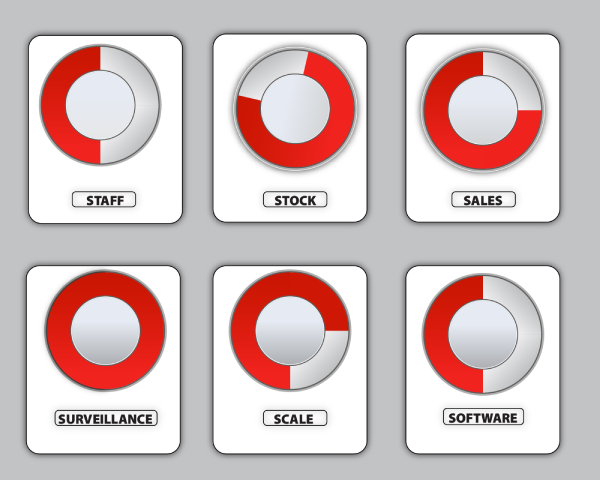
Retail Healthometer
Check the health of your business? Are you ready to organize & scale ?
Author Bio

Nikhil Agarwal
Chief Growth Officer
Nikhil is a calm and composed individual who has a master’s degree in international business and finance from the United Kingdom. Nikhil Agarwal has worked with 300+ retail e-commerce brands and companies from various sectors, since 2012, to define their growth strategy and achieve operational excellence. Nikhil & his team have remarkable success stories of helping brands achieve 10X growth.