
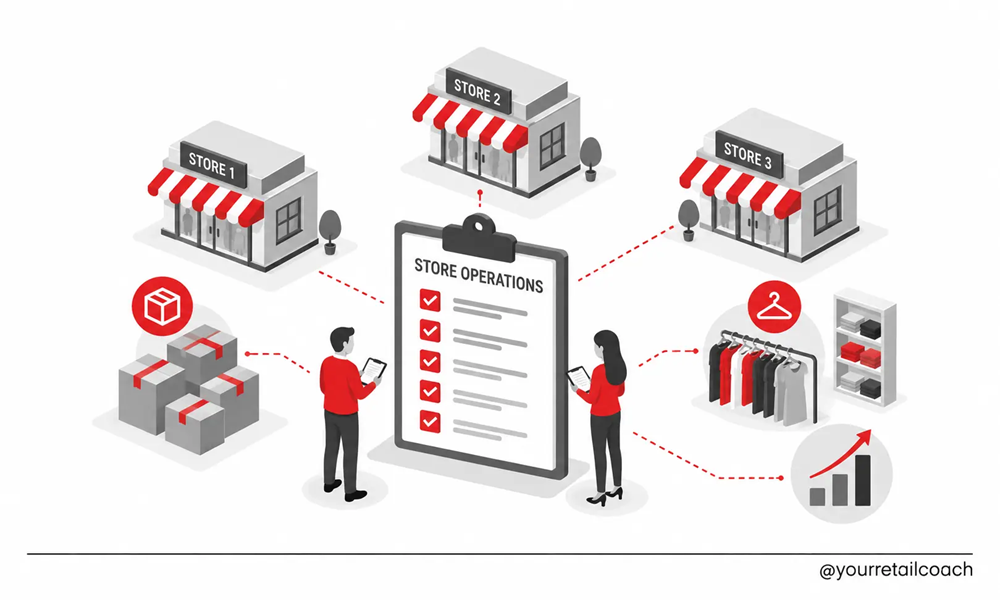
Retail growth has long been viewed as the pinnacle of commercial success. Bringing new outlets implies increasing popularity among customers and revenues for retailers. Behind the emergence of retailers’ new shops, however, hides the problem of operational drift.
Research studies prove that almost 60% of retailers experience operational problems within 18 months after they have opened their third store. The issue, however, is not related to sales, but it is rather associated with the fact that retailers have inconsistent and unstandardized approaches across their outlets.
A singular retail outlet can be efficiently monitored and managed. The founder or the store manager keeps track of all aspects, be it visual merchandising, the opening process, receiving delivery or handling cash. However, once the second outlet is opened, the ninth increased to tenth and the tenth to a hundred, the personal approach becomes impossible.
The Core Pillars of Multi-Store Consistency
Effective operational success in diverse locations depends on the effective operation of the four pillars people, processes, technologies, and infrastructure.
- People : Individuals: Clarifying the knowledge of organizational hierarchy, Key Responsibility Areas (KRAs), and standard Job Descriptions (JDs) makes it possible for every employee, starting from the cashier, to know his/her duties properly.
- Process : Having detailed SOPs means that tasks will be performed equally well in any place, organizing business in the same way, regardless of the distance between branches.
- Technology : Unified POS networks, ERP systems, and real-time inventory control make the process of data synchronization happen in the headquarters and in regional units.
- Infrastructure : Standardized back office spaces, materials for display, and customer flow spaces help maintain the same level of visuals and efficient operation in all the branches.
Daily Store Opening and Closing Routines
The work-life of a commercial outlet is determined in the half-hour preceding opening time and the half-hour after the last client has left. Just going through the motions of store opening or store closing can cause some of the action to be forgotten. Setting a rigid operational checklist for both opening and closing the store makes sure that operations are secure, the store is ready, and losses are kept low.
Essential Opening Checklist Protocols:
-
Security and Perimeter Check: Report on door and window locks functioning, armed status of security system, status of glass doors/windows as well as working condition of all security cameras.
-
System and POS Checks: Turn on POS and check for Internet connectivity, effective operation of barcode scanners, adequate paper in receipt printers.
-
Cash Drawer Management: Count float cash on hand while receiving cash register initial readings.
-
Cleaning and Merchandising: Sweep the store to clean it up, check cleanliness of display shelves, check the condition of lights in the store, and corroborate placement of promotional materials with merchandising manuals.
-
Doing a briefing with store personnel: Review the sales target for the day, SKU focus, and secret client-related goals for employee performance as part of the shift in charge.
Essential Closing Checklist Protocols:
- Customer Sweep and Secure Entry : Verify that all guests have exited the premises, lock the doors, and designate a security guard or senior member of the team to monitor the doors.
- POS Settlement and Cash Drops : Conduct a daily reconciliation of cash registers, print the End-of-Days (EOD) report of sales, account for any changes in payment methods, and complete required cash drops.
- Inventory and Store Reset : Assemble merchandise displays by hanging, folding, and restocking the displays, clean the changing rooms, and tidy the storage room.
- Facility Shutdown and Alarm Arming : Power down non-essential lighting and display electronics, verify fire exits are clear, verify backroom security locks, and arm primary security alarms.
Inventory Management and Stock Replenishment
For businesses with multiple stores, the challenge of maintaining accurate control of inventories in wholesale centers, dark stores, and retail outlets is significant. Without strict adherence to processes and procedures, inventory losses related to theft or spoilage and stock outs of popular SKUs can put a strain on the available working capital.
Implementing Open-To-Buy (OTB) Frameworks
To maintain ideal inventory levels across branches without tying up capital, multi-store operations must utilize an Open-To-Buy (OTB) strategy. OTB calculates exact purchasing budgets required for inventory cycles based on projected sales, planned markdowns, and targeted closing stocks.
Consider a fashion retail chain aiming to determine its purchasing budget for an upcoming cycle:
Target Closing Stock (EOM) = Projected Sales X Target Sales-to-Stock Ratio
Total Stock Needed = Projected Sales + Planned Markdowns + Target EOM
OTB (Retail Value) = Total Stock Needed- Total Stock Available
OTB (Cost Value) = OTB (Retail Value) X (1 – Markup percentage)
If a regional retail branch projects $50,000 in sales with planned markdowns of $5,000 , a target EOM stock of $150,000 , and currently holds $25,000 in available inventory, its calculated retail stock requirement is $180,000 . Applying a standard cost factor (e.g., 35% cost margin), the store’s actual purchasing budget cap stands at $63,000 at wholesale cost.
Inwarding and Receiving SOPs:
- Goods Receipt Note (GRN) Discipline: Mandate paperless, scan-only in warding using handheld scanners or RFID tags at store receiving docks.
- Discrepancy Reporting: Enforce automated flags within 24 hours for shipment variations between sent stock transfer notes (STNs) and actual received quantities.
- System Stock Allocation: Block incoming inventory from being sold or moved to display floors until the digital e-GRN scan is complete.
Customer Experience and Front-of-House Standards
A multi-store retail brand must offer a unified brand experience. A customer visiting a store in Chicago should experience the exact same service quality as a customer shopping in London or Singapore.
Key Elements of Front-of-House Standardization:
- Visual Merchandising Compliance: Distribute digital planograms directly to store task management apps. Require store managers to upload photo confirmations of display setups for corporate approval.
- Golden Customer Path Navigation: Enforce tier-based spatial store layouts that direct foot traffic along planned promotional routes, ensuring high-margin displays receive maximum exposure.
- Standardized Greeter and Assistance SOPs: Define explicit team engagement steps, specifying response times, product presentation techniques, and cross-selling approaches.
- Unified Return and Exchange Policies: Maintain a single, system-enforced returns policy across all stores. Process returns seamlessly at any register through central ERP integration.
Multi-Store Audit and Quality Control
When it comes to multi-store retail networks, creating standard operating procedures is just part of the issue; to have compliance over a long period, it is necessary to have strict auditing processes. Standardization of operations always requires regular monitoring to avoid a drop in performance.
Implementing a Multi-Tiered Audit Model:
- Weekly Internal Store Audits : Store managers conduct self-assessment audits focusing on key activities such as daily opening and closing procedures, compliance with visual merchandising and inventory management best practices.
- Monthly Inter-Branch Audit s: Store managers travel to neighboring branches to conduct visits and audits of their peers, making observations related to customer service, tray management and safety in backrooms.
- Quarterly Corporate Compliance Audits : Unforeseen audits usually resulting from a tip-off from the general headquarters that check the implementation of SOP procedures, adherence to inventory management practices and compliance of local accounting with financial results.
Audit Scorecards and Action Plans
Audit scores should be calculated using standardized scorecards. When compliance drops below target thresholds in areas like visual merchandising, receiving SOPs, or cash drawer management, automated escalations trigger clear corrective action plans.
Why YRC
Expanding multi-store operations often requires vast experience, solid plans, and extensive industry knowledge. Your Retail Coach (YRC) is a leader in retail consulting, assisting businesses to make the shift from scattered multi-store systems to unified high-growth retail businesses.
YRC creates, builds, and puts into effect customized Standard Operating Procedures (SOPs), forms people-oriented KRAs/JDs, develops IT/ERP systems, and enforces proper compliance audit processes. By solving difficult operational issues and standardizing stores’ processes, YRC allows retailers to grow confidently and profitably.
About YRC
is an international retail consulting and process engineering firm dedicated to helping brick-and-mortar, e-commerce, and omnichannel retail businesses achieve operational excellence, seamless scalability, and sustainable growth.
FAQs
How often should multi-store operational checklists be updated?
Operational checklists should undergo formal reviews bi-annually or whenever new enterprise technology, altered POS architectures, or new product lines are introduced to ensure routines match modern workflow realities.
What is the best way to ensure store staff actually follow SOPs?
To achieve compliance, be sure to incorporate procedures in standard operating procedures into the Point of Sale software applications and to use mobile task management systems that allow photo verification. Plus, make sure that the monthly compensation of your employees is influenced by the audit scorecards.
How do standard operating procedures help reduce retail inventory shrinkage?
Standardized operational practices implement strong double-confirmation procedures in the entrance points, ensure creation of electronic records for shipments, prescribe periodic stock surveys, and allow for secure reception of precious stocks in dedicated storages.
Will multi-store checklists help small retail chains that only have 3-5 outlets?
Indeed. Implementing uniform operating processes at the outset helps avoid the establishment of informal practices, thus making it much simpler and cheaper to launch more stores in the future.
What role does tech integration play in multi-store standardization?
A centralized system that combines different technologies makes it possible to synchronize price updates, schedule and automate reorder alerts through the ERP system, apply checkout rules through a point-of-sale system, and provide the corporate center with accurate information about every location in real time.
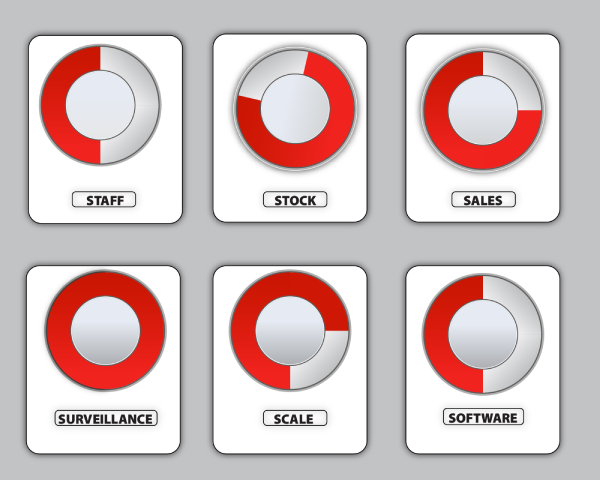
Retail Healthometer
Check the health of your business? Are you ready to organize & scale ?
Author Bio

Nikhil Agarwal
Chief Growth Officer