
From a single store, Arjun has expanded his retail brand to ten sites in various cities. Everything appeared promising on paper. Plans for expansion were already underway. foot traffic was consistent, and revenues were rising. However, something didn’t feel right. While some stores did remarkably well, others found it difficult to reach even the most basic goals. Operational inconsistencies continued to surface, and customer opinion varied greatly.
What Arjun was dealing with is a typical situation with international retail companies. Without effective retail shop management, growth leads to gaps that eventually impede performance. Luck is not the foundation of high-performing stores. They are motivated by organized retail and sales management systems, coordinated teams, and strict store management procedures.
How to Manage a Retail Store Effectively
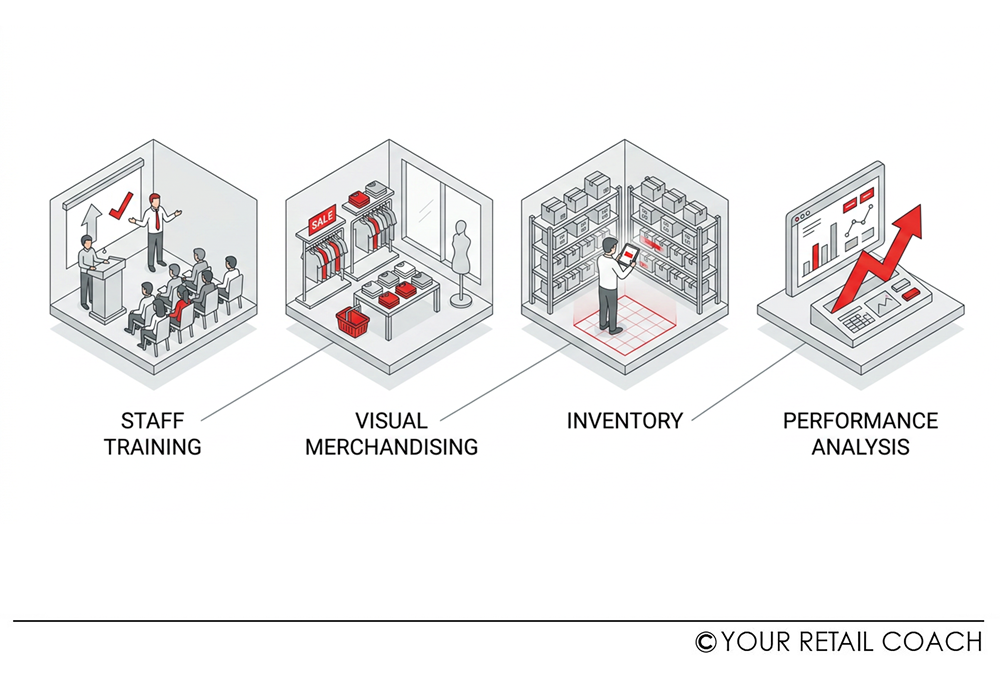
Managers should concentrate on these eight fundamental pillars in order to attain optimal performance.
Product and Inventory Management
Stocking inventory is important to a retailer’s performance. Using historical data and seasonal sales, a store manager can project future demand to determine when there are adequate quantities of appropriate items to fulfill customer needs. Inventory levels should be set in order to decrease instances of overstocking as well as stockouts. Mobile technologies allow data integrity to be maintained through the digitization of physical on-ground logistics while specialized POS systems allow for SKU monitoring.
Visual merchandising that is dynamic
Retail is a medium of experience. Focus points and storytelling displays with a lifestyle theme are used by high-performing establishments to draw customers in. Managers can promote cross-selling and streamline the client journey by appropriately zoning the store area. Displays are kept clean, fresh, and in line with current promotions thanks to routine audits.
SOPs and Operational Excellence
SOPs that are thoroughly documented are necessary for consistent execution. Every procedure should be consistent, from cash handling and safety inspections to opening and closing procedures. By updating these SOPs from paper to mobile platforms, managers can exchange real-time modifications and automatically allocate duties by shift, keeping the team compliant and in sync.
Fostering Effective Teams
Your employees represent your company. Hiring for soft skills and responsibility is the first step towards success, followed by quick onboarding. Continuous growth is possible without interfering with the sales floor by using micro-training modules, which are automated based on a staff member’s individual job. Frequent, data-driven coaching that promotes a sense of ownership through well-defined KPIs is recommended.
Insights Driven by Data
Measurement of Effectiveness via Data
The use of analytical systems can provide managers with a clear indication of how their store is performing. This is accomplished through the use of foot traffic counts, conversion ratios, and inventory turnover. Leaders can utilize centralized dashboards to identify trends across multiple locations. This way, they can make adjustments to staffing levels, product offerings, and so on.
Structuring Goals Based on the SMART Framework
The goals you set for your company should be Time-bound , Specific, Measurable, Achievable, and Relevant. We may consider, the SMART objective would be to increase accessory attachments to 10% by the end of the second quarter instead of just increasing sales.
Achieving Consistency Through Structured Store Management
Arjun discovered that every one of his establishments was run differently when he started going over them. Store managers handled employees, customers, and operations in their individual ways. Inconsistency can harm a brand’s experience, even while certain innovation is beneficial.
Standardized store management procedures that guarantee consistency across locations are essential for high-performing stores. This covers procedures for opening and closing, inventory inspections, visual merchandising, and customer service.
Rigidity is not the same as consistency. It entails building a solid base that enables retailers to provide the same high-quality experience worldwide.
Important areas of attention include:
- Standard operating procedures for everyday operations in the store
- Clearly defined roles and duties for shop teams
- Frequent audits to guarantee adherence
Performance becomes predictable and growth-oriented as consistency increases.
Retail and Sales Management Alignment for Better Results
One of Arjun’s main problems was that while store operations teams were preoccupied with inventory and logistics, his sales teams were primarily concerned with reaching targets. These departments operated independently, which resulted in lost opportunities.
To increase profitability, retail and sales management must collaborate. If operations and sales are separate, a store cannot be successful. Both tasks are coordinated in high-performing stores to produce a smooth client experience.
For instance, while sales strategies should take stock availability and client demand patterns into account, inventory decisions should be influenced by sales trends.
Included in effective alignment are:
- Using sales information to inform inventory management
- Educating employees on sales and operational effectiveness
- Establishing common KPIs for shop performance and sales
Enabling Store Managers to Take the Lead in Performance
One thing connected Arjun’s top-performing stores. Strong shop managers who accepted responsibility for their performance lead them. Underperforming stores, on the other hand, lacked direction and leadership.
Retail shop management relies heavily on store managers. They are leaders who affect customer satisfaction, team morale, and operational effectiveness in addition to being supervisors.
Giving shop managers the proper resources, instruction, and decision-making power is essential to empowering them.
Critical elements include:
- Continuous training in retail and sales management skills
- Access to real time data for better decision making
- Accountability for operations and sales results
Using Technology to Improve Store Operations
Manual procedures formed a bottleneck as Arjun’s company expanded. Effective store management was hampered by inventory mismatches, delayed reporting, and a lack of visibility.
In order to increase accuracy and streamline processes, modern retail shop management significantly depends on technology. Real-time insights into shop performance are provided by tools like integrated platforms and retail management systems.
Retailers can transition from reactive decision-making to proactive management thanks to technology.
Among the main advantages are:
- Real-time inventory and sales monitoring
- Automated reporting to expedite decision-making
- Better communication between central teams and stores
Putting the Customer First in the Store
Arjun came to the conclusion that customer experience remained the key differentiator notwithstanding all operational advancements. Retailers who consistently provided individualized experiences scored much better than others.
At every point of contact, retail store management must put the client first. Every aspect of the shopping experience should be improved, from staff behavior to store layout.
Understanding client demands and going above and beyond are key components of high-performing stores.
Crucial elements consist of:
- Educating employees to successfully interact and serve customers
- Keeping stores tidy, orderly, and aesthetically pleasing
- Making constant improvements to service quality through feedback
The customer experience is a continuous process. Long-term success in retail is defined by a continuous dedication.
Why Choose YRC?
YRC supports retail businesses in building structured, scalable, and high-performing store operations through a practical consulting approach.
- Standardized retail store management frameworks to drive consistency across locations
- Alignment of retail and sales management for improved conversion and profitability
- Process design and SOP implementation for efficient store operations
- Store manager capability development through targeted training programs
- Technology advisory including SAP store management and retail systems integration
- Performance diagnostics to identify gaps in operations, sales, and customer experience
- Hands-on execution support to ensure strategies translate into measurable outcomes
YRC focuses on delivering operational clarity, stronger control, and sustainable growth for global retail businesses.
FAQs on Retail Store Management Best Practices
What is retail shop management and what is its significance?
Retail management includes managing daily store operations, employees’ performance, inventory, and customer satisfaction. Retail management is important to maintain the profitability of the business. It also helps retailers to manage their products and ensure customers receive consistently good service across every store.
How may retail performance be enhanced by store management?
Retail store management contributes to increased overall shop profitability by lowering inefficiencies, boosting sales conversions, and maintaining constant service quality. It enhances Retail store management boosts performance by:
- improving customer satisfaction
- team alignment
- operational efficiency
What are the essential elements of sales and retail management?
Inventory control and employee training make up an important part. So also, sales tactics and customer interaction are crucial. Finally, performance monitoring is all part of retail and sales management. With an alignment of these elements, retailers may maximize revenue and customer happiness while operating effectively.
How is technology important in managing Retail Stores?
The technology will increase the accuracy of operations and streamline processes and also provide real-time information. Technology will assist retailers to make the right decision for effective retail operations. They will also be better placed to manage inventory effectively and monitor retail store performance.
How can companies maintain uniformity throughout several locations?
Companies can accomplish this by:
- putting standard operating procedures into place
- educating shop managers
- utilizing centralized systems
- carrying out frequent audits
This keeps customer experiences and procedures consistent throughout all store locations.
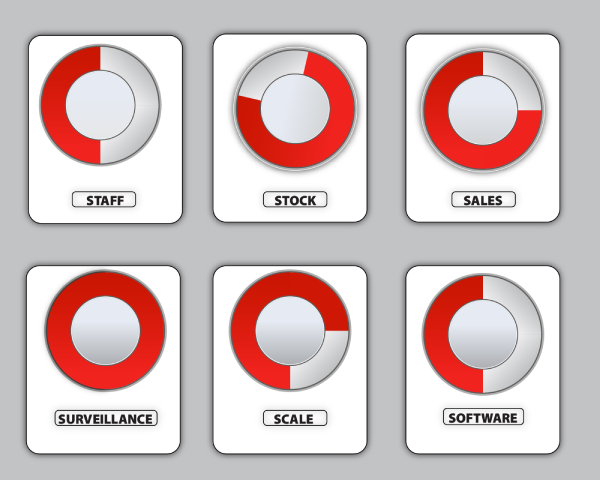
Retail Healthometer
Check the health of your business? Are you ready to organize & scale ?
Author Bio

Nikhil Agarwal
Chief Growth Officer