
Retail Operations
After months of struggling to get his head around ever diminishing profits despite excellent sales, Ravi found that he had unwittingly allowed sales staff to offer substantial un-authorized discounts. As a result, sales figures and profits continued to decline.
Retail business consulting can help you discover your business story, whether that story is positive or negative. Many independent retailers see significant amounts of missed profit as a result of poor system controls, manual price adjustments of incorrect billing, and inadequate systems for tracking returns.
Retail consulting firms build technology based systems and processes to eliminate gaps in operations and implement standard operating procedures (SOPs) from paper to systems providing retailers with visibility and discipline.
This article discusses how retailers can close the gaps on leakage using systems-based retail operations management. We will also see how retail consulting companies provide consulting services to small/medium size retailers globally.
The Hidden Cost of Retail Leakage in Daily Operations
Retail leakage tends not to happen all at once. In most cases, multiple small operational gaps add up to represent a substantial operational loss over time. Many small and medium-sized retailers think of shrinkage as being caused only by theft; however, operational leakages are just as severe. Retail consulting firms frequently find leakage during regular store audits.
Some of the more common sources of leakage are:
- Unauthorized discount overrides: Staff providing discounts outside of the company’s normal approval process.
- Barcode and pricing mismatch errors: Improper billing errors due to incorrect product mapping in the system.
- Unverified returns: Products that are received back into inventory without being processed and verified properly.
- Cash handling errors: Shift closure discrepancies that go unaddressed.
While each operational gap seems small by itself, when combined over time they will reduce the company’s overall profitability. Retail business consulting focuses on identifying the weak points in an organization by tracking data and system mapping. They help SMEs build a stronger framework for operational controls across their locations.
Why SOP Documents Alone Fail to Prevent Retail Losses
A lot of retailers already have SOP (Standard Operating Procedures) manuals but the real problem is that rarely do they get executed properly. Retailing consultants see SOPs in print but do not see them being used on the sales floor thus creating operational risk due to human reliance.
SOPs usually fail for the following reasons:
- Manual processes predominate – Staff use their memory to perform in-store operations instead of utilizing systems to capture data.
- Lack of systems enforcement – Staff have the ability to over-ride POS systems without approval.
- Lack of oversight mechanisms where management can only review data once per month.
- Training of employees on SOPs is sporadic, therefore, new employees are taught to shortcut SOPs by their peers.
Retail business consulting converts SOPs into system rules. Instead of telling store associates what to do, a system will either allow or restrict them from performing certain actions. Once SOPs are incorporated into POS and ERP workflows, compliance will increase automatically and as a result, both accidental and intentional leakage will decrease significantly.
How System-Driven Retail Operations Management Works
Companies that consult businesses in the retail industry will create multiple layers of control to all existing forms of retail technology. The intention of these additional controls is not to increase complexity; rather, it’s to improve accountability.
A typical system-based control framework may contain;
- Access is role based: only pre-approved employees can approve discounts.
- Price Validation: Point of Sale (POS) can only pull pricing from a master database.
- Workflow for Return Verification: all transactions must be matched to the original transaction.
- Cash Variance Alerts: when there is a mismatch; the system will notify the user of the discrepancy immediately.
Consultants who specialize in retail consulting ensure the controls they implement will reflect the day-to-day world of retail stores. By utilising the system to enforce accountability will not only reduce the possibility of human error but will discourage the misuse of funds. SMEs will benefit from this because control does not require continuous manual monitoring.
The Role of POS and ERP Integration in Leakage Prevention
The disconnection of systems provides a means to circumvent the rules of the environment. As such, the majority of retail consulting firms place a strong emphasis on the integration of their POS and ERP systems.
Some of the ways integration benefits retailers are:
- Inventory updates occur in real-time: prevents the manipulation of stock
- Price changes sync in real-time: eliminates manual price editing
- The rules for offers are consistent: reduces the possibility of store-level offer abuse
- By tracking anomalies on centralized dashboards, management is quickly alerted to issues.
The retail business consulting unit works to ensure that data is flowing correctly between systems. When at least two systems communicate with each other, it becomes more difficult to manipulate the data.
Building a Digital Audit Culture in Retail Stores
Instead of being one-off yearly reviews, audits should be regularly scheduled operational assessments using data as their foundation.
Examples of modern audit structures include:
- Daily automated reporting to provide visibility into aberrant transactions.
- Weekly compliance monitoring to ensure adherence to SOPs.
- Monthly operational in-depth audits to detect risk patterns.
- Verification checks to promote employee accountability.
Retail consulting professionals design easy-to-read, high-level audit performance dashboard. When store management team members review data frequently, small concerns are addressed before they potentially develop into significant financial losses.
Using Data Analytics to Detect Discount and Pricing Abuse
One of the most prevalent forms of retail leakages is the misuse of discounts; this can be detected through analytics by Retail Consulting firms when unusual activity patterns are identified.
The usage of analytics will allow firms to identify the following:
- Repeated usage of manual discounts by staff members
- High Returns to Sales Ratios
- Frequent Price Override Transactions
- Location-based leakage patterns
Retail consulting uses analytics to convert raw data into actionable reports. Small and medium enterprises have data but often do not have the appropriate framework to interpret this data. Analytics dashboards allow for the quick identification of problems requiring intervention by management and helps to ensure both long-term revenue loss does not occur from discount misuse and that there is consistent pricing discipline among stores.
Training Store Teams to Support System Controls
Leakage cannot be solved with technology alone. Retail consulting firms create a combination of systems control and employee development to effectively train their employees.
Effective training will teach employees:
- The reason why controls are put in place and building acceptance of them instead of having a negative experience towards them.
- How state-of-the-art systems protect employees, and eliminating fear of the system monitoring them.
- The use of process decision-making will assist in getting all employees to execute consistently.
- Employees can learn how to report exceptions and in the appropriate timeline.
Retail business consulting aligns training with operational systems. When staff understand systems that support them, compliance improves naturally. SMEs see better staff accountability and fewer manual process shortcuts.
Real SME Use Case: From 4% Leakage to 1.2%
A multi-store apparel SME engaged with retail consulting firms in response to declining operating margins despite constant levels of revenue. A series of store audits identified:
- manual discounting during busy periods
- return fraud because of lack of invoice validation
- cash discrepancies that are not accounted for daily
Through the introduction of system based discount approvals, automated return workflows and daily cash variance reports, retail consulting was able to decrease the leakage rate from 4% down to 1.2% in a six-month period. Improved profits were generated without also increasing revenue. The engagement is an example of how structured retail business consulting can enable companies to develop and maintain operational discipline by leveraging technology and aligning processes.
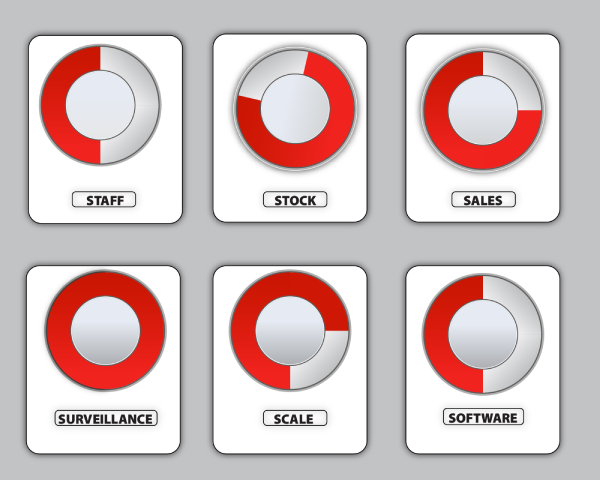
Retail Healthometer
Check the health of your business? Are you ready to organize & scale ?
Author Bio

Nikhil Agarwal
Chief Growth Officer
Nikhil is a calm and composed individual who has a master’s degree in international business and finance from the United Kingdom. Nikhil Agarwal has worked with 300+ retail e-commerce brands and companies from various sectors, since 2012, to define their growth strategy and achieve operational excellence. Nikhil & his team have remarkable success stories of helping brands achieve 10X growth.