

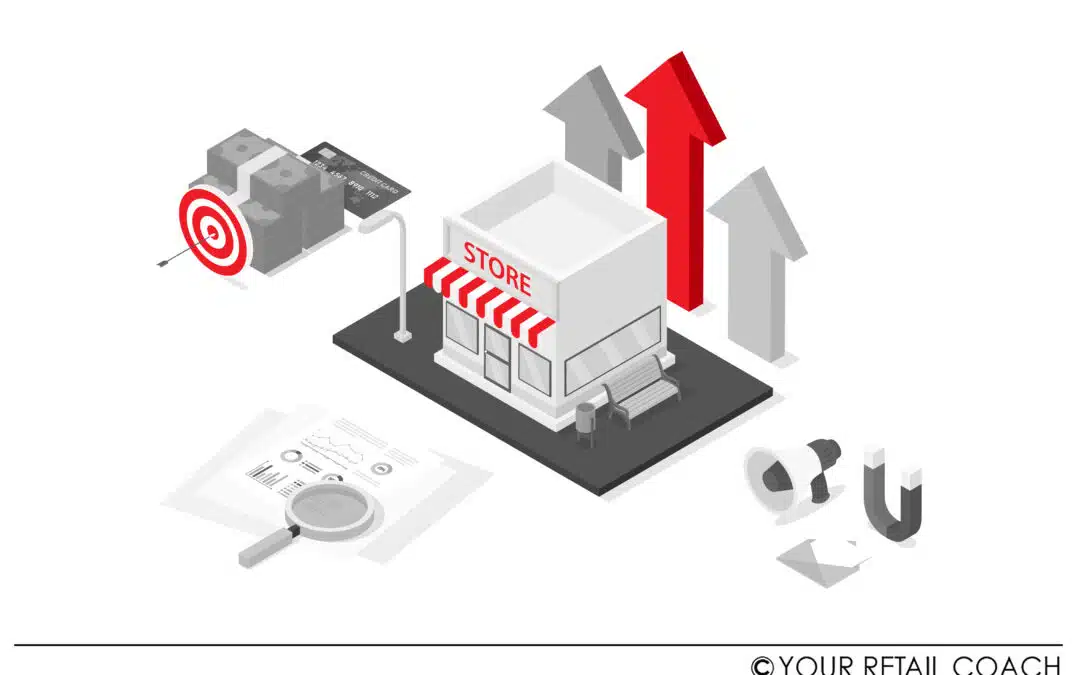
There are many challenges for retail businesses looking to grow into new geographies: location, customer preferences, operational complexity, and compliance, to name just a few. This is how retail expansion consultants become valuable. Consultants become operational frontiers for navigating and bridging the gap from desired growth to operational growth. They provide insights and guard rails to develop a scalable, data-driven, and operationally feasible go-to-market plan.
Whether you are a modern D2C brand moving into offline markets or a legacy brand scaling nationally, a strong plan, backed by expert advisors, allows you to grow with and outpace the competition. Growing without a plan can lead to store failures and wasted time and dollars. Involving specialized retail consultants early means your team begins to have clarity on how to appropriately allocate budgets, when to expect growth, and how to pivot the brand to localize.
At a basic level of high-level decisions, down to operational minutiae, consultants can ensure that your expansion plan will provide both sustainability and profitability, and the growth will be a legacy.
Role of Retail Consultants in a Successful Go-to-Market Strategy
Any retail rollout program comes from a well-defined go-to-market strategy. A go-to-market strategy dictates how a brand will engage, entice, and ultimately convert potential customers at new locations. It will need input from an experienced retail consultant, who comes with a thorough knowledge of the industry, competitive landscape, and customer behavior trends. They’ll help businesses sidestep pitfalls commonly encountered and subsidize entry into the new market.
Consultants enable companies to receive consultant feedback while not being an internal team member. They provide objective advice on product-market fit, channel mix, merchandising, staffing, and promotional windows. Their objective point of view will further help ensure stakeholder alignment while speeding the process. Moreover, with the disruption of retail and the emergence of omnichannel models, many being developed with technology in mind, a go-to-market strategy must be smart and adaptable. Even more, consultants will align your expansion plans with your business objectives, whether that means hitting a certain level of revenue, number of stores, or a number of franchises.
In the end, consultants allow organizations to translate their brand DNA in different geographies, while managing their operations lean and staying customer-centric. The result is a more aligned brand experience that aids in driving sales and loyalty.
Retail Site Planning and Expansion Feasibility Analysis
Retail site development is one of the most critical components of retail growth. Inadequate site selection can significantly undermine a stores performance, regardless of the intrinsic brand strength. Retail consultants utilize demographic patterns, footfall tracking, and traffic flow patterns to assess optimal retail locations. Their systematic assessment eliminates much of the risk and maximizes your potential for longer term return on investment.
Paired with this is an expansion feasibility assessment. Their expansion feasibility assessment will inform the most important facts: Is the market ready for your brand? Is there adequate demand, what are the competitive threats in the local market and what does your inventory model need to look like?. Utilizing data-based models and benchmarking to help clients gain a green or red signal before investment.
Retail consultants will also consider macroeconomic factors, local laws, operational constraints, and cultural factors as part of their analysis when recommending locations. By assessing multiple potential sites based on data and viability, the consultant helps retail executives make informed and confident decisions. Ultimately, the consultant is ensuring that your retail store is not just viable, but also visible, ensuring that both of these criteria are considered.
Strategic Market Entry and Retail Location Intelligence
Effective market entry is more than just a venue opened in a new city. It requires a deep understanding of customer psychology, local dynamics, regulations, and possible channel synergies. Retail consultants create end-to-end market entry plans to assess the competitive landscape, pricing models, supply chain structures, and consumer demand within specific regions, which does not rely on trial and error.
One essential aspect of this process is retail location intelligence, a potent decision support tool. By synthesizing geospatial data, consultants can determine the relative income brackets, lifestyle preferences, proximities to competitive site activities, and accessibility to destination locations, which provide insights to explain regional characteristics or trends. Retail consultants furnish heat maps and predictive models to pin-point potentially lucrative areas to strategize use of economic trade areas and site selection from the outset.
Retail location intelligence can help retail brands not only enter a new market but absolutely dominate it by being there at the right time with the right prices to influence consumer behavior. Retail location intelligence can also facilitate multi-store planning of new stores to avoid cannibalization of existing stores to establish and protect brand identity and enhance loyalty. By utilizing a market entry framework, and insights from retail location intelligence, companies can better assess risk, mitigate uncertainty and identify opportunities that maximize long-term profitability.
Franchise Development and Store Network Optimization
For many brands, franchising is the desired operating model for scaling quickly. However, franchise development must strike a healthy balance between control and delegation. Retail consultants drafted a franchise strategy that can keep the consistency of the brand while giving franchise owners agency. Consultants create franchise agreements, support new franchisee onboarding, and define standard operating procedures (SOPs) to maintain store operations without all the brand owners needing to be involved.
Besides devising the franchise strategy, consultants can help create a better store network. They can evaluate what stores are doing well, what stores are struggling, which stores to shut down, and which ones to move. They ensure in their deliverable evaluations recommendations on what to do first – which stores to consider to open next, when to open them and where to build cumulative strength for the brand.
Retail Growth Advisory for Long-Term Scalability
Scaling a retail enterprise involves far more than just growth for the sake of growth. Sustainable growth is what retail growth advisory is about. Consultants aid businesses in developing the long-term strategy by taking into account customer lifetime value, inventory velocity, seasonality, tech integrations, and more.
They provide diagnostics on how the business has performed historically, analyze market opportunity, and help brands restructure pricing, supply chain, and vendor relationships. This way, businesses obtain a 360 degree advisory experience, making sure that brands not just grow but grow smart.
Retail growth advisors often work closely with senior leadership teams to ensure the store expansion plans are aligned with business KPIs measured by sales per square foot, customer acquisition cost, or lifetime value. Their support in creating growth plans pays off when brands are looking to IPO, go through rounds of funding, or take on a new vertical or segment in their transformation. By hiring retail consultants specialized in growing brands and undertaking growth planning, brands future-proof their retail ecosystems.
Retail Project Management for Execution Excellence
In retail, a great plan requires great execution. This is where retail project management comes into play. Consultants sometimes perform as implementation partners by engaging architects, vendors, landlords, government groups, and internal teams. Vendors also organize the scope, timeline, budget, and deliverables of the plans while delivering a quality solution.
Retail project managers make certain stores are set up safely to code, tech-enabled, and align with brand standards. Purely engaged in setup, they are a single point of accountability for hardware, construction, staffing, merchandising, and IT. Retail project managers establish workflows for procurement, inventory and stocking, and in-store practice help facilitate successful stores at launch.
Retail consultants measure success in key performance indicators like time to market, budget variances, and customer satisfaction post-launch. Retail consultants oversee and keep management accountable to keep timelines for all their projects, reducing potentially expensive delays and miscommunication while making sure every store footprint becomes a long-term asset. In retail, execution may be the biggest hurdle in global expansion, but once established with effective project managers, execution from planning to launch turns into an efficient process.
FAQs
In what ways do retail consultants assist with franchise development?
How does retail site planning play a part in expanding feasibility?
Retail site planning develops discovering high-potential locations through demographic data and foot traffic analysis. The research should be the foundation of expansion feasibility and provides assurance that the chosen location will be viable long-term for the business.
Why is retail location intelligence important when entering new markets?
In what ways does store network optimization enhance retail company performance?
Author Bio

Rupal Agarwal
Chief Strategy Officer


Get In Touch