

Profitability Quick-commerce India Solutions
New delivery systems have changed the way city dwellers purchase food and other household needs in Indian cities. As more people want to receive their goods right after they order them, the business has grown faster than it has become profitable. Just because there are more orders and customers ordering quicker; it does not mean that increasing volume or the number of customers will create long-term profit margins for all delivery companies; especially those who do not have a good business model or those struggling with rising costs, poor unit economics and an increasingly chaotic environment.
The future challenge is not simply getting into the marketplace or gaining new customers; it’s creating a viable business structure that can continue to generate revenue after operating costs have risen, while still meeting the consumers’ expectations of quick delivery. To accomplish this, delivery businesses require structured strategic planning, optimized operations and expert consulting capabilities. To develop robust quick-delivery strategies, companies need to understand why they struggle to achieve profitability; and how to achieve profitability through continued growth in order to establish a sustainable foundation for their brands in India.
Why Profitability Remains Elusive in Quick Commerce
Quick commerce is facing profitability challenges because of the same reasons that consumers are drawn to this business model. The fast delivery model relies on a densely populated fulfillment network (warehouses), large number of employees, and constant availability of inventory. All three components create significant increases in both fixed and variable costs.
Quick commerce operates differently; whereas a retailer or e-commerce uses larger basket sizes and fewer deliveries, with quick commerce, the size of each basket is smaller and the frequency of delivery is higher. Picking, packing, and last mile delivery costs must be spread over many more orders than for traditional retail retailers, which creates less margin to recover.
In India, the unique combination of urban operational challenges adds additional layers of complexity to this model. Traffic jams and the cost of land means higher quantities, and managing a workforce can complicate operations. With no discipline in planning and expanding fast, there is a possibility that retailers could have overlapping catchment areas, underutilized assets and significant losses. Therefore, profitability cannot be achieved merely through increasing scale, but rather, by developing an optimized supply chain model.
Cost Structure Challenges Unique to the Indian Market
Fast delivery services in India have a complicated financial structure. High costs of both infrastructure and operating expenses are incurred for delivery options that are much quicker than standard delivery options due to the greater density of people living close together. Rental costs for buildings that are located in the best locations of cities are also high, and this affects a company’s fixed cost.
The staffing of workers is another major issue with fast delivery. Staffing workers across many locations often takes the form of having a large number of people employed at small warehouses and having a full-time delivery staff who will be available during the day for orders. The rapidly changing demand patterns that occur due to quick delivery make it more difficult for managers to plan for their delivery staff; as a result, the periods when there is little or no demand will typically have an employee who is not working or is idle.
Cost pressures in fast delivery services are concentrated on four primary cost categories:
- Costs associated with rental of facilities for small, local fulfillment centers
- Costs to deliver items from the point of origin to the end-user, due to the short delivery time frames
- Lost sales due to items that have gone bad, especially perishable and fresh items
- Significant technology investments to enable fast delivery and create scale
When growth objectives drive expansion of delivery options, the above issues are made worse because there is no discipline regarding profitability per delivery unit.
Unit Economics
The foundation of a company’s profitability in quick commerce is the unit economics of each company. Most companies do not achieve positive contribution margins per order. When the cost of delivery and fulfillment exceeds the gross margin, larger companies will experience larger losses rather than less.
Grocery-focused companies are already struggling with thin margins. Many companies are reducing their profitability by employing discounts to draw in customers or keep existing customers. Additionally, the frequency of restocking increases the supply chain cost, making it even more difficult to recover costs.
Without proper visibility into the true unit economics, a company may take too long to respond to any changes needed. The current state of unit economics for businesses is created because they lack granular data on order profitability at an individual customer level, at various times of the day, per product category, etc., and therefore must rely on assumptions instead of data-driven insights. To improve a company’s unit economics, the company must be committed to measuring its unit economics correctly, establishing the appropriate benchmarks to use, and be willing to change any activities that are not financially sustainable.
Inventory and Assortment Misalignment
There is potential for increased profitability through improved inventory planning, which has been greatly overlooked as a profitability driver in the rapidly growing industry of quick commerce. Inventory assortments that are overly broad lead to increased storage cost and chance of waste while too few SKUS could potentially render less than satisfied clients.
Fulfillment Centers that rely on broad assumptions instead of localized demand forecasting contribute to the amount of slow moving inventory, markdowns and expired goods that negatively affect margins.
To achieve optimal assortment planning:
- SKU Rationalization based on Data.
- Demand Forecasting based on localized needs.
- Regular Performance Review.
- Continuous Alignment between merchandising and operational tasks.
If businesses do not have these parameters in place to monitor the health of their assortments, it will cause their inventory to decrease their overall profitability. Consulting firms often help businesses improve assortment strategies so that the business continues to provide its products in the quantities that the potential customers desire, while also maximizing financial performance.
How Retail Consultants Help Fix Profitability Challenges
Through their provision of a knowledge-based, fact-based, and external perspective, retail consultants are able to provide an outside-in perspective that many organizations cannot attain from within. In addition to providing problem identification, retail consultants also design solutions that may be implemented and maintained by the organization, taking into account real-time operational factors.
Retail consultants assist in determining the most appropriate approach for each of these areas, as follows:
- Assessing and diagnosing unit economics on a granular basis
- Developing and implementing new, flexible fulfilment, delivery methods
- Optimizing inventory mix and merchandising strategies
- Aligning growth initiatives with forecasting and budgeting to achieve profitability milestones.
The use of a structured methodology, combined with the application of industry best practices, will allow Quick Commerce companies to transition from a “growth at any costs” mentality to that of a “sustainable operation” mentality.
How Your Retail Coach (YRC) Can Support Profitability Transformation
Your Retail Coach (YRC) plays a critical role in helping quick commerce and retail brands address profitability challenges through structured, end-to-end consulting. With deep expertise in retail operations, supply chain design, and business transformation, YRC supports organizations in building financially viable quick commerce models.
YRC’s approach focuses on diagnosing core profitability leakages across fulfillment, inventory, and last-mile operations. Rather than offering generic solutions, YRC designs customized strategies aligned with the brand’s business goals, market positioning, and operational constraints.
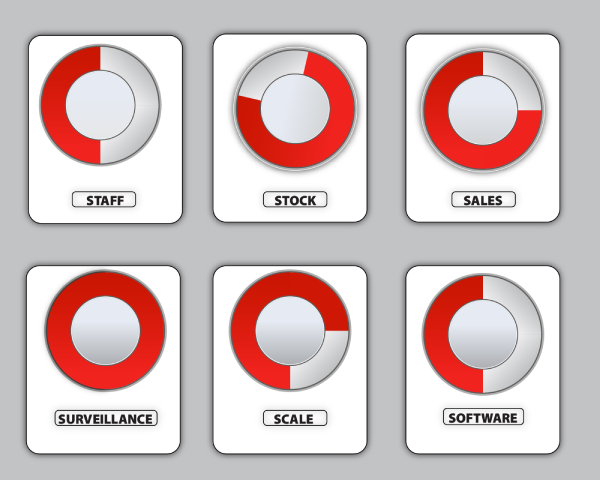
Retail Healthometer
Check the health of your business? Are you ready to organize & scale ?
Author Bio

Nikhil Agarwal
Chief Growth Officer
Nikhil is a calm and composed individual who has a master’s degree in international business and finance from the United Kingdom. Nikhil Agarwal has worked with 300+ retail e-commerce brands and companies from various sectors, since 2012, to define their growth strategy and achieve operational excellence. Nikhil & his team have remarkable success stories of helping brands achieve 10X growth.