
Process Optimisation In E-Commerce With Signavio
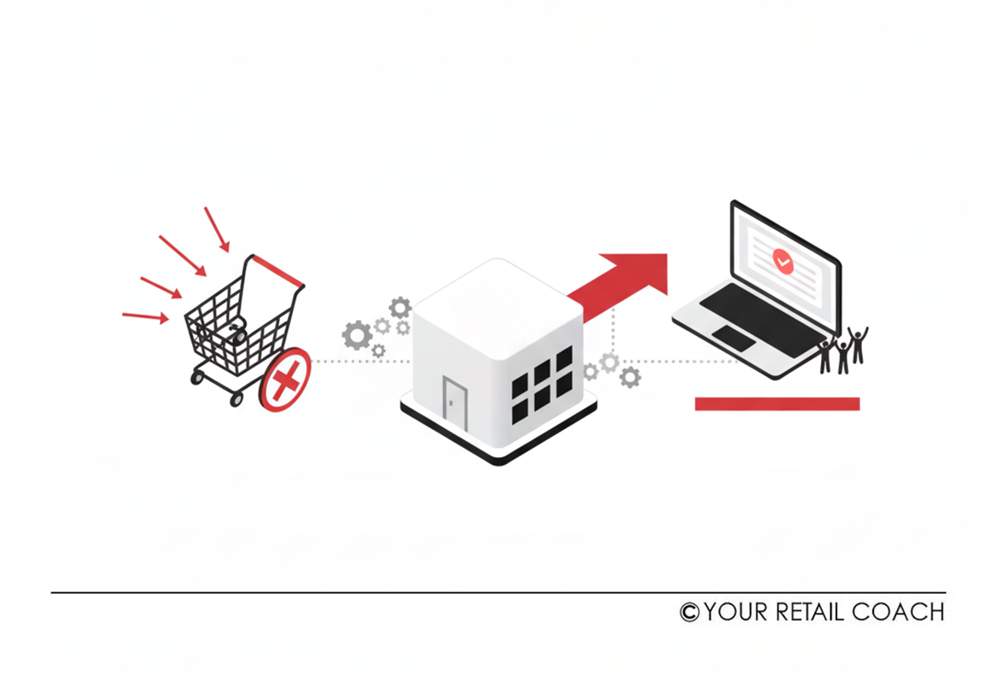
Cart abandonment continues to be one of the major problems for online retailers, with abandonment rates frequently reported at well over 60–75% of customers, varying by industry. Digital shoppers expect seamless and effortless experiences. In fact, any hindrance during these customer journeys, whether slow pages, complicated checkout, or payment options, or undisclosed delivery costs, can derail potential purchases. Addressing this issue goes beyond more marketing ideas; it requires methodical operational improvements, informed through actual process intelligence.
Signavio Business Process Management (BPM) can be a major value add in this area. By combining process mining, journey modelling and ongoing improvement capabilities, modern retailers can identify root causes of hidden bottlenecks and where customers drop off their journey. Traditional analytics can tell retailers WHAT is happening e.g. customers are dropping off, process intelligence can explain WHY things are happening or why customers are in different stages of the process in logging into a service.
Signavio lets teams model the online retail experience life cycle through each stage of product discovery, cart creation, checkout flows, payments, fulfillment and post purchase mode. Modelling these stages and subsequent processes within processes effectively allows customer journeys to be more accurately redesigned for the customer, and that barriers to checkout, inconsistent activities/processes and general operational inefficiencies can all be optimised holistically.
As competition continues to increase, retailers who embrace a new way of using Signavio to build more lean and customer focused processes can significantly reduce friction in the online experience, increase conversions and enhance their digital commerce experience as a whole.
What Leads to Cart Abandonment?
The reasons people leave seem simple at first, but the processes that lead to them are very complicated. Signavio helps find the root causes of problems in many important areas of optimising the online retail process, such as:
- Complicated checkout steps: Flows that go to multiple pages, fields that are not needed, or navigation that is not clear can slow things down.
- Costs that were not expected: Extra fees that came up too late in the journey caused people to drop off right away.
- Few ways to pay: Customers want digital wallets, payment plans, and ways to pay that are specific to their area.
- Slow page loading times: Latency during the cart or checkout stages has a huge effect on conversions.
- Inconsistent mobile experience: More people using mobile devices means that even small problems can make people leave.
- Lack of transparency about stock or fulfilment: Customers leave when delivery times or availability seem unclear.
- Signals of a lack of trust: Weak security measures or unclear refund policies make people less likely to finish.
Signavio uses process mining to find the exact process or system that is causing each problem by looking at these drivers. This doesn’t just fix problems one at a time; it builds a structured base for fixing operational inconsistencies and making the customer journey better.
Applying Signavio Process Mining to the Retail Conversion Funnel
One of Signavio’s best features for e-commerce is process mining. It takes data from operational systems like CRM, ERP, OMS, PIM, or checkout platforms and shows the real customer journey as it happens. Traditional funnel analytics only show how many people drop off, but Signavio shows detailed process paths that show how customers move through browsing, adding to cart, starting checkout, and completing payment.
This level of understanding helps find not only the most common paths but also the rare, ineffective ones that cause problems. For example, if customers often go back and forth between delivery options and payment pages, the store may not have a clear cost structure or there may be conflicting data between systems.
Signavio points out rework loops, deviations, system delays, and bottlenecks that make the user experience worse. This lets teams figure out how slow back-end processes affect how customers act.
E-commerce companies can use process data to make targeted changes that make checkout flows smoother, system interactions more stable, and conversion rates higher. This supports a data-driven approach to digital commerce excellence.
Mapping the Online Retail Journey with Signavio Journey Modeler
It is important to map the eCommerce journey to gain insight into customer perceptions and operational performance. The Signavio Journey Modeler provides a visual framework to understand how customers interact with the brand at each touchpoint, including:
- Awareness and product search through marketing and SEO paths
- Product evaluation, reviews and comparison tools
- Add to cart interactions, including promotions and stock alerts
- Checkout process, such as shipping, payment and authentication
- Order fulfilment, tracking of delivery and communication
- Post-purchase engagement, feedback loop or return
Journey models combine emotion and behaviour data, which are designed with processes to facilitate associated representations of customer pain points.
By mapping journeys using Signavio, retailers benefit from:
- Identifying moments of emotional drop off
- Connecting customer perceptions to actual steps operational teams perform
- Empowering marketing, UX, operations, and IT teams for a shared visual representation
- Consolidating journey maps into the processes to drive rapid repositioning
This creates an opportunity for synergy between customer experience and operational outcome; a critical step to reduce cart abandonment and facilitate conversions.
Using Process Intelligence to Improve Checkout Efficiency
Improving the checkout process has the highest return on investment (ROI) because it is often the last step before conversion. Signavio lets you look closely at each small interaction in the checkout funnel, such as authentication steps, shipping choices, payment validation, and system responses.
-
- Retailers can use process intelligence to find out exactly where delays are happening, like when address verification is slow, payment gateway problems, or back-end API latency. These insights back up specific automation and redesign of workflows.
- Signavio might show, for example, that customers leave when they switch between mobile tabs during two-factor authentication. One possible solution is to allow one-click checkout or to add other ways to verify someone’s identity.
- Operational synchronisation is also very important for making checkout work well. Inventory, pricing, promotions, and fulfilment systems must all work together without any problems. Signavio can find problems or delays between these systems, which helps businesses speed up their processes and make sure their data is correct.
In the end, process intelligence turns checkout from a static page into a dynamic, optimised workflow that is designed for speed, clarity, and trust, three things that are essential for conversion success.
Enhancing E-Commerce Operations with Continuous Improvement Cycles
The real value of optimisation efforts comes from keeping an eye on things and making small changes over time. Signavio helps with cycles of continuous improvement through:
- Ongoing process KPIs for the number of people who leave their carts, the time it takes to check out, and the number of errors
- Dashboards that show how well conversions are doing across markets, devices, and segments
- Finding the root cause of new problems that system changes cause
- Alerts that happen automatically when something goes wrong in purchase funnels
- Aligning models with execution to make sure that operational processes meet customer expectations
- Workspaces for collaboration that let teams from different departments work together quickly
Continuous monitoring makes sure that optimisations keep working even when product lines grow, systems change, or customer behaviour changes. Retailers can quickly see how changes, like easier form fields, new ways to pay, or new delivery messages, affect their business.
Companies build a strong foundation for digital commerce excellence by incorporating Signavio into their daily operations.
Retail Healthometer
Check the health of your business? Are you ready to organize & scale ?
Author Bio

Nikhil Agarwal
Chief Growth Officer
Nikhil is a calm and composed individual who has a master’s degree in international business and finance from the United Kingdom. Nikhil Agarwal has worked with 300+ retail e-commerce brands and companies from various sectors, since 2012, to define their growth strategy and achieve operational excellence. Nikhil & his team have remarkable success stories of helping brands achieve 10X growth.