
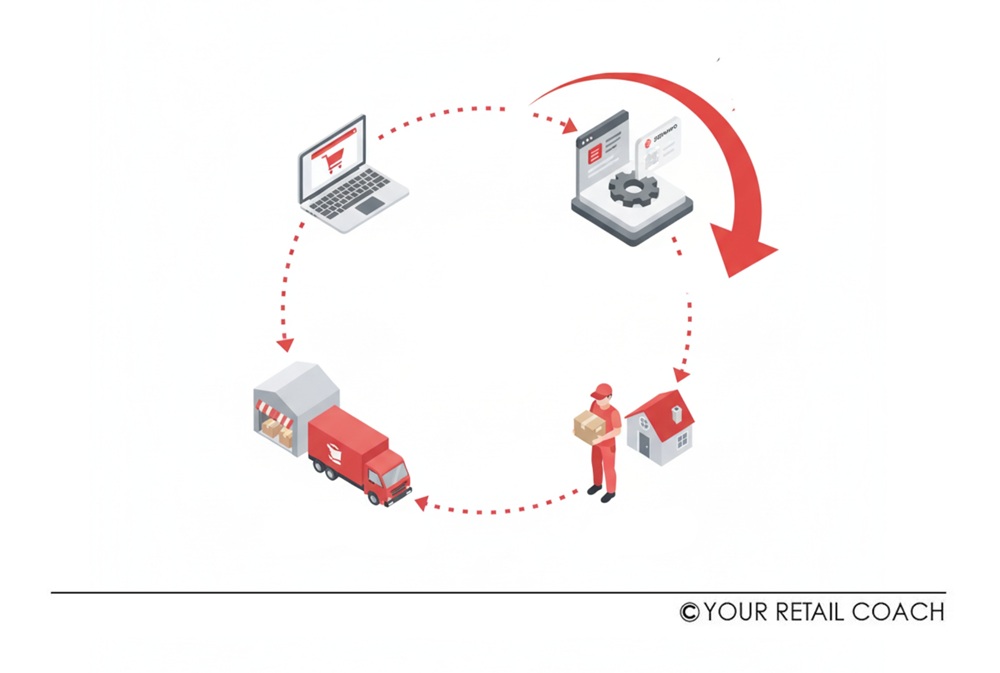
Online Retail Journey Mapping
Today, online shopping has become one of the most competitive areas of business worldwide. Customer demands are consistently on the rise, operations are being conducted in more complex ways, and the demands to provide seamless experiences on all digital venues are growing. Retailers – particularly those selling groceries online – need to be accurate, fast, and smart to be successful. In this sense, journey mapping in retail becomes the strategic advantage over your competitors.
Journey mapping ensures that what customers expect aligns with what the business can deliver, creates robust Standard Operating Procedures (SOPs), increases automation, and bridges the gap between BPM (Business Process Management) and ERP systems.
Adding Signavio to this process lets stores model, analyse, and improve these journeys in a way that is structured and can be measured. Journey mapping with Signavio helps businesses figure out where digital experiences rely on backend systems and where standard operating procedures (SOPs) don’t meet promised service levels. Signavio links customer expectations with operational data in e-grocery, where freshness, accuracy, and timing are all very important.
Connecting Customer Journeys to Operational Excellence
Retailers need to connect journey insights directly to the way they do business in order to make real changes. Here are some ways that journey mapping with Signavio improves operations in digital commerce:
- Shows hidden gaps in processes using Signavio’s process intelligence
- Shows where ERP, WMS, or OMS don’t meet real-time journey expectations
- Guides SOP redesign using Signavio process models
- Brings together the supply chain, digital, and customer service teams to work towards common goals
- Helps retail consulting teams find the real causes of problems more accurately
- Helps redesign BPM workflows to have fewer manual steps and exceptions
- Makes it clear who is responsible for each phase of the journey, which cuts down on conflicts between departments.
- Allows for prioritisation of improvement projects based on data
Signavio acts as the operational engine behind journey insights and ensures improvements are data-backed and sustainably implemented.
How Signavio Journey Mapping Makes Important Parts of the Retail Funnel Better
Journey mapping makes each step of the retail funnel better by showing how being ready to do business affects what customers choose. It helps stores understand why customers leave, abandon their carts, or lose trust when backend processes don’t work as expected. Journey maps show where problems start, like slow search results because of bad catalogue attributes, failed payments because of ERP delays, stockouts because of wrong replenishment, or delivery problems because of last-mile capacity that isn’t aligned.
When e-grocery customers engage the funnel, it becomes more sensitive, because with this transaction, the customer needs everything to go right: available slots, substitutions that are correct, real-time inventory, and easy to understand communication. Retailers can tweak processes, adjust system integrations, and establish SOPs that limit the friction by looking at each funnel stage through the lens of the customer and operations.
Better alignment within the company makes the funnel work better, increases conversions, and gives customers fewer interruptions. Journey mapping changes the funnel from a marketing tool to a way to get operational intelligence.
Using Journey Mapping to Create and Standardise SOPs with Signavio
Journey insights are very helpful for SOPs because they tie operational standards to what customers really want. Below are the ways Signavio strengthens SOP design:
- Finds out where current SOPs don’t meet customer needs
- Sets rules for picking and packing that are always the same, especially in e-grocery
- Sets up clear rules for substitutions based on how customers act
- Makes sure that all channels have the same communication touchpoints
- Makes sure that delivery people follow predictable handover rules
- Aligns the processes for returns and refunds with ERP workflows
- Supports training by giving clear, step-by-step instructions based on role
- Makes compliance easier by getting rid of confusion
All of these changes make SOPs that are based on real journeys, not guesses. The end result is that all stores, warehouses, and delivery partners do things the same way.
Journey-Driven Automation Powered by Signavio
Journey mapping becomes a powerful automation catalyst when retailers understand how every customer action links to internal tasks. Signavio makes this better by finding steps that can be automated, finding manual bottlenecks, and mapping out how systems depend on each other. Without Signavio, automation projects often don’t connect with real-world problems and stay separate from them.
With Signavio, stores can focus on payment delays, inventory mismatches, or manual escalations that hurt customers. Signavio helps with automated slot optimisation, batch picking improvements, and freshness control workflows for e-grocery. When used with BPM, Signavio helps get rid of manual tasks and speed up handling of exceptions. It makes sure that creating orders, updating stock, and giving refunds all go smoothly when it’s connected to ERP.
Signavio’s journey-driven automation makes digital commerce operations that can grow and are always dependable, all while keeping the customer experience safe. As demand rises, it directly improves speed, accuracy, and consistency in operations.
How Retail Consulting Can Help with Journey-Based Change
Retail consulting is very important for turning journey insights into real-world transformation projects. Consultants add structure, objectivity, and knowledge from many different fields that internal teams don’t always have. Here are the most important things they do:
- Do research on customers and stakeholders to make sure your journey maps are correct.
- Look at how things work to find out what causes experience gaps.
- Change the way you write SOPs to make sure they are always followed and fit with the journey.
- Find ways to improve and automate BPM workflows
- Check for gaps in the integration of ERP, OMS, and WMS that affect journeys.
- Help departments work together and set rules for themselves.
- Create transformation roadmaps based on measurable KPIs
- Help pilots, scaling, and developing skills
For digital commerce to be reliable, journey mapping must work with BPM and ERP. Signavio is a key player in making this happen. Customer journeys show where system delays or manual steps lead to problems, like ERP latency affecting promises, BPM misroutes, or OMS inconsistencies. Signavio helps you see these dependencies, figure out where integration needs to get better, and try out new workflow designs. Signavio diagrams help BPM platforms plan tasks, make decisions automatically, and cut down on exceptions. At the same time, Signavio models and tests processes that are cleaner and better defined, which helps ERP. This three-way alignment makes it possible to see things in real time, improves process governance, and cuts down on operational breakdowns. In the end, Signavio makes sure that accurate, integrated backend systems fully support customer journeys.
Why Signavio Is Important for Mapping the E-Grocery Journey
E-grocery is complicated to run, so it needs the accuracy and visibility that Signavio provides. Here are some important contributions:
- Shows problems with slot capacity using Signavio process analytics
- Changes substitution rules based on journey intelligence
- Maps show where Signavio workflow views aren’t accurate.
- Shows how long it takes for inventory to sync across ERP and OMS
- Improves cold-chain SOPs based on Signavio
In short, Signavio helps online grocery stores maintain consistency, accuracy, and dependability at every stage of their business where customer trust is on the line.
Implementation Roadmap: Using Signavio to Turn Journeys Into Improvements
Signavio makes a structured journey-based roadmap much stronger. Retailers start by collecting feedback and operational data. Then they use Signavio to make journey maps that show how different processes are connected. Then, they check the standard operating procedures (SOPs), warehouse operations, and integrations to find out where things go wrong. Next come the improvement designs, which include new workflows, steps for automation, and ERP/BPM improvements, all of which have been modelled and tested in Signavio.
Pilots check to see if something is possible and how well it works, with help from Signavio lifecycle tracking. Training uses process documentation straight from Signavio to make sure everything is clear and consistent. Governance routines then make sure that journey maps and SOPs are always in sync. In short, Signavio makes the roadmap a living system that helps you keep getting better and better at running your business.
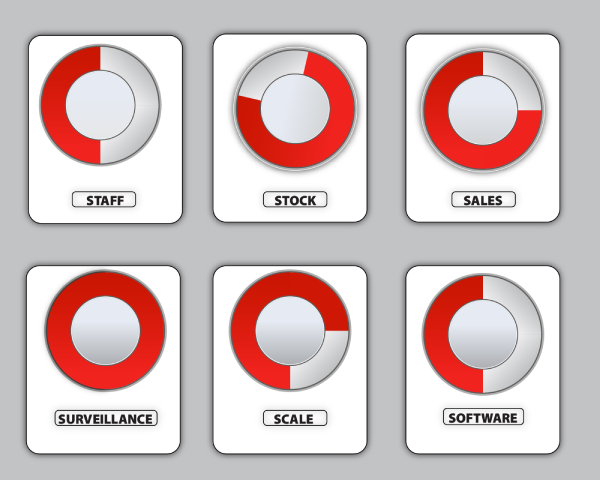
Retail Healthometer
Check the health of your business? Are you ready to organize & scale ?
Author Bio

Nikhil Agarwal
Chief Growth Officer
Nikhil is a calm and composed individual who has a master’s degree in international business and finance from the United Kingdom. Nikhil Agarwal has worked with 300+ retail e-commerce brands and companies from various sectors, since 2012, to define their growth strategy and achieve operational excellence. Nikhil & his team have remarkable success stories of helping brands achieve 10X growth.