
According to Nvidia’s 2026 State of AI in Retail report, 91% of retail organizations are already using AI technologies to improve key areas of retail store management.
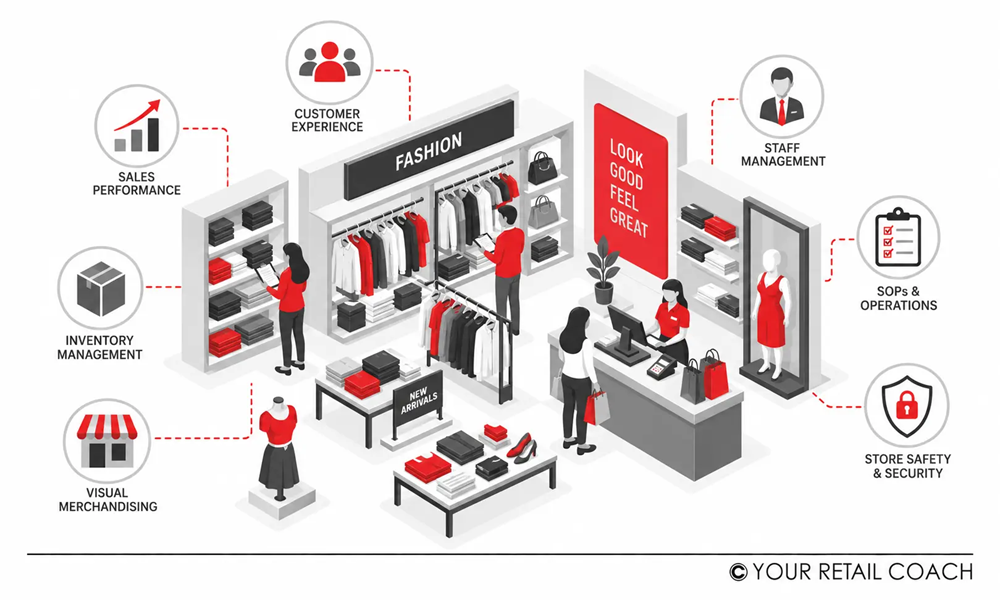
Whether managing a chain of stores or a premium brand, success depends on structured systems. Strong store management practices enable retailers to increase revenue by improving the crucial aspects of business.
Similarly, strong retail and sales management strategies take into account both, the commercial objectives and operational capabilities.
This blog explores the key areas retailers must master to achieve long-term success.
Foundations of Retail Success
With multiple options, customers rightfully seek even better products than what is available. This growing customer expectation along with market conditions can be a challenge for retail businesses. They certainly need to create standardized processes. Aside from that, maintaining discipline across operations will ensure all their stores deliver a consistent experience.
Successful retailers focus on:
- Operational efficiency
- Inventory accuracy
- Workforce productivity
- Customer satisfaction
- Sales optimization
Inventory Management
Ill effects of poor inventory management are not hidden. Businesses may be driven to face stockouts, overstocking, lost sales, and reduced profitability.
A well-designed retail store management framework emphasizes inventory visibility and control. This calls for having established processes for all aspects related to inventory.
Key inventory management practices include:
- Real-time stock monitoring
- Automated replenishment systems
- ABC inventory classification
- Cycle counting procedures
- Vendor coordination
- Inventory accuracy audits
When inventory systems are optimized, retailers can improve product availability while reducing carrying costs and wastage.
Workforce Management and Employee Performance
Employee performance is a reflection of how effective store management is. You know your management is going in the right direction when it involves the right talent. They understand their responsibilities which are aided by continuous training.
Aside from this, employees are expected to thoroughly understand the operational procedures. They are abreast with the customer service expectations and performance standards.
Key workforce management initiatives include:
Hiring and Onboarding – Employees can become productive more quickly with the aid of structured hiring and onboarding processes.
Instruction and Development of Skills – Frequent training enhances service quality, selling strategies, and product knowledge.
Evaluation of Performance – Monitoring client feedback, conversion rates, and productivity makes it easier to spot areas for development.
Engagement of Employees – Customer experiences and company outcomes are positively impacted by motivated personnel.
Investing in workforce development often results in lower staff turnover and higher customer satisfaction for retailers.
Delivering Exceptional Customer Experiences
Customer expectations in all retail formats are continuously growing. Consumers want convenience, personalized service, product availability and seamless transactions.
Effective store management practices help to ensure that each customer touch point reflects the company’s brand values and service standards.
Important elements of customer experience include:
- Clean and organized stores
- Friendly and knowledgeable staff
- Efficient checkout processes
- Product accessibility
- Personalized recommendations
- Consistent service quality
Retailers should consistently collect consumer input and apply the results to enhance customer service. A satisfying customer experience increases brand loyalty and encourages repeat business.
Retail Performance Metrics and Sales Optimization
Effective retail and sales management relies on monitoring key performance indicators such as:
- Sales per square foot
- Average transaction value
- Conversion rates
- Gross margin
- Inventory turnover
- Customer retention rates
- Employee productivity
Data analysis helps retailers identify trends, optimize merchandising strategies, and improve profitability.
Sales optimization should also include:
- Cross-selling initiatives
- Upselling opportunities
- Strategic promotions
- Category management
- Customer segmentation
Standardized Processes and Operational Governance
Successful retail enterprises are characterized by consistency. Every facility adheres to the same operational standards according to standard operating procedures.
The management of retailing operations requires clearly documented workflows for:
- Opening and closing procedures
- Cash handling
- Inventory management
- Merchandising execution
- Customer service
- Loss prevention
- Vendor coordination
When you standardize the processes, you also reduce variability and risks. It also simplifies training and better alignment with compliance.
Technology as an Advantage
Decision-making is enhanced by the visibility, automation, and useful insights that digital tools offer.
Here are some benefits of using technology as a growth enabler:
- Point-of-sale systems
- Inventory management software
- Workforce scheduling tools
- Business intelligence dashboards
- Customer relationship management platforms
- Mobile retail applications
Luxury Retail and Managing Premium Customer Expectations
Successful luxury retail management is all about delivering exceptional customer engagement. Then again, it also is about preserving brand identity and prestige.
These are some important considerations when you learn about luxury retail management:
- Personalized customer interactions
- High service standards
- Premium store environments
- Curated product presentations
- Relationship-based selling
- Exclusive customer experiences
Risk Management and Loss Prevention
A proactive approach to risk management includes:
- Regular audits
- Security monitoring
- Inventory controls
- Employee accountability measures
- Vendor compliance checks
- Data protection protocols
From an operational standpoint, many types of risk pose a threat to retail businesses. Inventory shrinkage, theft fraud or theft, regulation compliance, and security are some examples of operating-risks retailers face.
Continuous Improvement and Business Scalability
Retail excellence is not achieved overnight, but rather on a continuous basis. It requires constantly reviewing operational performance and making improvements over time. Successful organizations:
- Conduct operational reviews
- Benchmark performance
- Implement process improvements
- Adopt new technologies
- Train employees regularly
- Analyze customer feedback
When a retailer’s operational foundation is solid and properly managed, scaled growth becomes achievable. Retailers can improve their businesses through continuous improvement, which allows them to satisfy the changing demands of clients while keeping their operational efficiency.
The evidence of the retailer’s success shows that their business is thriving due to the fact that they are making multiple correct decisions every single day, resulting in the right products being in stock when needed; the right personnel being available to help satisfy customer queries; well-stocked and organized shelves; and effective, seamless operations behind the scenes.
Although these processes are often overlooked because they seem “normal” for retailers, each one is the product of successful management systems working together. Retailers who succeed in this competitive industry usually possess a high level of excellence in executing; consistently delivering a high-quality shopping experience and having a high standard of operational discipline.
Why YRC?
YRC assists retailers in turning the complexities of their operations into structured, scalable, performance-driven systems. YRC provides practical solutions specifically designed to meet each retailer’s individual needs. This includes assisting re-engineering processes, developing SOPs, conducting operational audits, and managing luxury retail.
Using The YRC Method, companies combine their industry knowledge with operational “Best Practices’ and Implementation-focused consulting services to improve the overall performance of their businesses.
Conclusion
In order for a retail operation to be successful, a retail operator must take a disciplined approach in all aspects of their operation. Luxury retailers will provide customers with premium experiences; however, strong retail store management systems will ensure operational consistency and efficiency.
Retail store management best-practices will result in improved performance of the workforce and greater customer satisfaction. Strategic retail and sales management will improve commercial outcomes, while comprehensive management of retail operations will allow for retail businesses to remain agile, scalable, and profitable in an increasingly competitive retail environment.
Organizations that focus on these areas will be positioned for greater growth, higher levels of customer loyalty, and long-term success.
About YRC
YRC is a retail consulting and business excellence solution with over 14 years of experience. It aims at increasing productivity across all types of retail formats. We provide correction of process gaps and governance issues.
From agreements of operational diagnostics, through the application of SOP development, up to performance improvement and transformation initiative. YRC assists retailers in establishing operational consistency, productivity improvements and scalable future growth. The foundational framework provides particularly significant value to companies that desire continuous improvement for operational excellence and standardization.
Retail Healthometer
Check the health of your business? Are you ready to organize & scale ?
Author Bio

Nikhil Agarwal
Chief Growth Officer
Nikhil is a calm and composed individual who has a master’s degree in international business and finance from the United Kingdom. Nikhil Agarwal has worked with 300+ retail e-commerce brands and companies from various sectors, since 2012, to define their growth strategy and achieve operational excellence. Nikhil & his team have remarkable success stories of helping brands achieve 10X growth.