
Omnichannel Retail – Dive In
Today, for retail brands and businesses, it is not just important to have omnichannel capabilities but to excel at them. The modern-day customer prefers phygital shopping. It gives them more convenience and saves their time as well. When omnichannel is done right, customers tend to shop more and more frequently and stay loyal. This helps boost Customer Lifetime Value (CLV). Consistency in having a unified shopping experience gives a strong reason for customers to keep coming back for shopping, leading to improvement in loyalty and retention. In the midst of chaos and competition, the quality of omnichannel capabilities offered by a brand stands out as a differentiator.
In this blog, the team of omnichannel consulting experts of YRC highlights some of the key areas to focus on for mastering the art of omnichannel.
Data Consolidation
For giving a relevant omnichannel experience, it is critical to have a good understanding of customers. This calls for centralisation of all customer data into one, unified platform like a CRM or CDP. This is important because the customer journey in today’s world traverses multiple online and offline touchpoints. Without this data consolidation, crucial information and insights remain scattered and discreet, depriving the scope of crafting more effective omnichannel strategies.
With data unification, customer support also gets the much-needed elevation required in an omnichannel environment. With a holistic view of customers, customer care representatives are in a better position to address complaints more effectively and efficiently. It saves customers from narrating the whole saga when encountering a problem.
Omnichannel experience can also be personalised with data and insights in hand. For example, if the shopping history of a customer reveals that there is a greater preference for home delivery orders, they can be provided additional incentives on online purchases.
Past shopping and interaction data also sheds light on the preference for different channels and touchpoints in different stages of the shopping journey. For example, a departmental store may discover that it witnesses a spike in store traffic (channel) on days when it announces promotional deals (awareness stage in customer journey).
Smooth Cross-Channel Transition
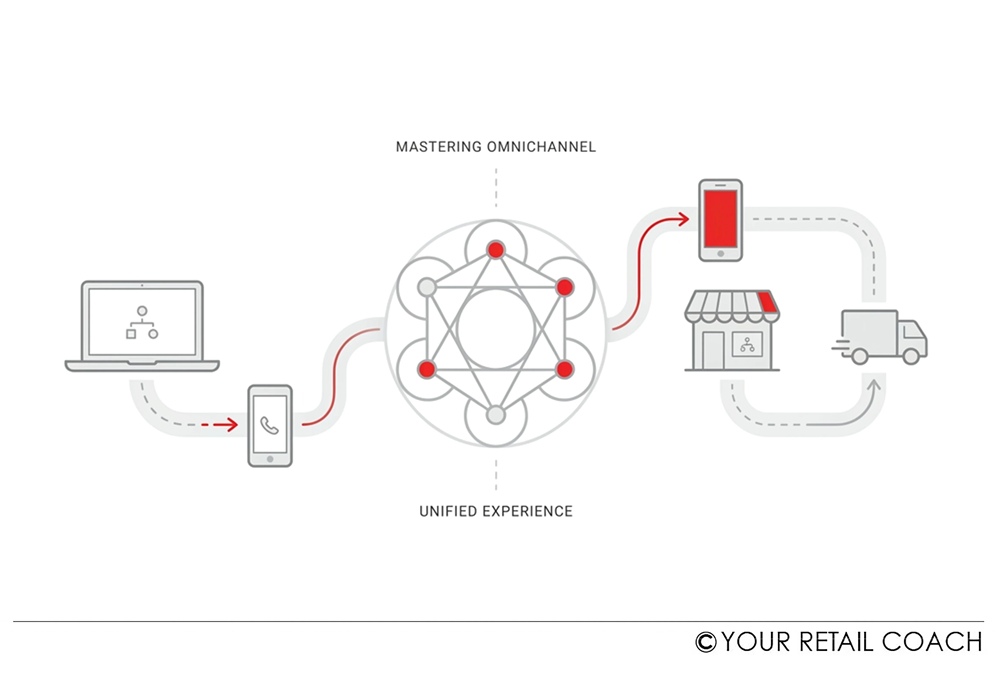
One of the hallmarks of a true omnichannel experience is a smooth cross-channel transition. It does not allow loss of context when customers shift between online and offline touchpoints. This means that customers can carry forward their shopping journey, choosing a channel and touchpoint of their preference.
A fundamental requirement to make this work is having an extensively mapped customer journey. It should include every possible touchpoint with the anticipation of all possible switching. For example, after finding out about an advertisement or a mention on Facebook, a customer may search for the brand on Google. From there, they may visit the website or also directly call the store. All the touchpoints must be in serviceable condition. Say, if no one picks up the call or makes a call back, that could very well be turning a customer away. Such calls should be responded to with additional relevant information that could help customers further their shopping journey. For example, if someone called up to enquire about store timing, they could be additionally sent a message over WhatsApp or any other relevant app containing an image of the storefront, store address with landmark, store hours, phone numbers, etc., in the form of a digital card or image.
Consistency in Branding
In omnichannel, customers interact with a brand at multiple touchpoints in the entirety of the shopping journey. These touchpoints may include social media posts, website or app, email, push notifications, storefront, store layout, signage and banners, etc. What needs to be secured here is that the brand perception remains uniform. If the brand image from different touchpoints feels incoherent or inconsistent to customers, it can weaken their brand perception. A weak brand perception does not help in forging a good brand connection with customers. This consistency in branding shows up in all verbal and non-verbal communications across all the touchpoints concerning brand voice and tone, brand message, brand positioning, value propositions, etc. For example, if a brand seeks to establish sustainability as its image, it should ensure that none of its posts on social media platforms deviates even remotely from the principles and ethos of sustainability and related concerns. When consistency in brand communications is maintained, it helps reinforce recall and recognition. This consistency helps customers form a coherent and organised perception of brands. This even applies to humans; deep down, we carry a projection of every person we know. This perception may not always be floating on the surface of our minds, but if we are to think of a person for some objective reasons, that perception comes to the fore.
Real-Time Inventory View
A core element of every omnichannel strategy is having accurate and real-time inventory status for all process stakeholders. This means those who have or should have access to inventory data in business process execution should have the real-time data cutting across stores, warehouses, and eCommerce platforms. In the context of omnichannel, the biggest reason for such heightened emphasis on ‘real-time’ inventory data is to ensure the timely availability of necessary goods at all channels. Loopholes in inventory data management often turn out to be a major source of frustration and dissatisfaction for customers. For example, if relying on website information, a customer visits a store and then finds that the desired item is out of stock, it will readily give them a sense of discontent.
Retail brands must not only emphasise having real-time data integration and visibility in their inventory management systems but also curate the solutions to meet the unique omnichannel requirements of their businesses.
This transparency, endowed by real-time inventory visibility, empowers customers to make informed decisions and save time and effort. This helps brands build trust and goodwill. It significantly helps retailers maintain timely and accurate inventory levels and specifics at the right places of storage, distribution, and sales. Accuracy and effectiveness in inventory management eventually leave a positive impact on overall operations.
Personalisation at Scale
Personalisation at scale is another foundational requirement for uplifting the omnichannel experience. It goes beyond basic generalised solutions to deliver hyper-personalised solutions to the entirety of a customer base.
What makes personalisation at scale possible is a unified data strategy, typically using a Customer Data Platform (CDP). A CDP integrates consumer data from a myriad of sources, including web/app analytics (user and consumer behaviour), POS, social media, etc. and creates a single, unified view of individual customers. This 360-degree perspective allows technologies like AI and machine learning to analyse and predict consumer behaviour. For example, a customer who shows an inclination to respond to deals and discounts may be offered more similar stimuli. AI can also help in identifying the time and channel of communicating such offers. Conversely, someone with an abandoned cart might receive a personalised deal or alternate product recommendation via email or push notification to regenerate their interest. All these personalisation measures could be executed via automation after the strategies are fed into the system.
By personalising and disseminating content, recommendations, and promotions, with uniformity across all touchpoints, retailers can secure a consistent and coherent brand perception. Consistency in brand perception and customer experience helps bring improvements in conversion rates, CLV, AOV and brand advocacy.
Empower Store Employees with Technology
Equipping the team in stores with mobile gadgets that give real-time access to holistic customer and inventory records is a big step towards delivering a true omnichannel experience. This elevates the role of store employees from mere transaction handlers to exclusive customer care executives.
With an extensive perspective of customers encompassing their purchase history, wish lists, and past interactions over both online and offline channels, store sales representatives can offer better services, leading to a higher probability of making conversions and helping brands forge better bonds with customers.
Real-time stock reflectivity also helps employees better manage inventory.
Mobile POS capabilities also allow employees to execute transactions from anywhere within a store. This saves customers from waiting in queues and increases the overall service speed of stores.
Wider Fulfilment Options
Having a wider range of fulfilment options is vital for successful omnichannel in today’s retail landscape, as they effectively fulfil the demand for choice and suitability among today’s customers. Two popular fulfilment strategies are discussed below.
BOPIS (Buy online and pick up in store) or curbside pickup eliminate shipping charges and allows customers to collect orders at a time of their convenience within the store hours. Customers who are more inclined towards making purchases from mobile devices find BOPIS an ideal shopping solution. It is also a time-saving method, especially when items are of a routine nature, like groceries. In contrast with purely home delivery orders, retail stores benefit from BOPIS in the form of sustained footfall in stores. This also gives them an opportunity to increase sales.
By having distribution centres in multiple strategic locations, retail brands can further improve their omnichannel experience. It reduces the delivery timelines for online orders, lowers logistics costs, and allows opting for low-priced commercial spaces.
In the near future, drone deliveries are likely to become more popular after regulatory and infrastructural issues are sorted.
Leverage AI and Automation
Leveraging Artificial Intelligence (AI) and Automation has become central to elevating the omnichannel experience from a mass, common-to-all strategy to hyper-personalisation at scale.
With CDP and AI, brands are able to gather and process data from all touchpoints across online and offline channels to create a broader perspective of individual customers concerning their interactions with brands. This enables brands to adjust prices in real-time based on factors like competition, demand and supply, and price sensitivity of customers. This helps maintain competitiveness and optimise profitability while still securing price consistency across products and channels. Additionally, AI solutions can establish a correlation between complex data points from browsing history, purchase patterns, and other aspects of user and consumer behaviour to help brands come up with more effective hyper-personalised offerings. When these AI-powered solutions are uniformly reflected across all touchpoints, the omnichannel shopping journey becomes more seamless to customers.
Last but not least, today’s AI-powered chatbots and virtual assistants can provide automated customer support round the clock, providing a significant boost to the omnichannel experience of customers. For example, if they want to raise an issue in the middle of the night, they can do so without having companies make a human team present at the desk at that hour.
Focus on the Relevant KPIs
For real omnichannel improvement, it is crucial to move beyond siloed metrics. This is because traditional channel-focused KPIs only provide fragmented perspectives. Two such metrics are discussed below. As an experienced retail and eCommerce consulting firm, YRC maintains that it is important \to approach these KPIs from an omnichannel perspective.
Retail brands must focus on all-inclusive performance indicators that reflect the quality of the customer journey across all touchpoints. In this direction, the Customer Lifetime Value (CLV) is a KPI to look out for. It is an indication or estimation of the total revenue a customer could provide over their entire relationship with a brand. This helps gauge the value of providing a long-term omnichannel experience. An important consideration here is to look into the differences and variations in CLV for omnichannel customers.
The second in the list is the Customer Retention Rate (CRR). For an omnichannel brand, CRR measures its ability to retain customers – something that significantly draws implications from the quality of the shopping experience delivered to customers. Here, it is important to look into the number of successful conversions from customers who engaged with a brand over multiple touchpoints – both online and offline. It shows how comfortable it is for customers to hop between online and offline touchpoints while traversing the shopping journey and making a purchase or completing a desired action.
Focus on User Experience (UX)
An intuitive UX is essential for improving the omnichannel journey. This is about ensuring that every touchpoint a customer interacts with, whether it is the website, the mobile app, or in-store elements, features simplicity, speed, and accessibility. Maintaining consistency in these standards is key to delivering a unified shopping experience. In other words, friction points should be eliminated.
For example, a customer should be able to initiate shopping on the app and complete the purchase on a laptop or in the store without losing continuity. This requires data synchronisation across platforms and consistency in design and navigation across devices and operating systems.
For in-store interactions, UX encompasses the design, interface, and working of self-checkout kiosks and smart tablets used by store employees. Being assured of a simple, fast, and integrated shopping experience helps customers engage with brands with fewer perceptual barriers.
Optimise Mobile Experience
In delivering omnichannel CX consulting services, YRC prioritises optimising the mobile experience for improving the omnichannel experience. The primary reason for this is that the smartphone serves as the primary control source for managing the shopping journey as well as traversing between the physical and digital channels. Thus, the performance of websites and apps on smartphones must score extremely well on the parameters of speed, responsiveness, and intuitiveness in terms of UX.
A superior smartphone experience is not just about having a functional app and website. It demands a feature-rich and UX-focused design that brings all the core omnichannel capabilities into one place. It should not be difficult for customers to search for products and check real-time availability across channels. They should be able to use the brand’s app to scan products, make payments, and manage their accounts and orders. Even to avail services like BOPIS and curbside collection, the smartphone plays a decisive role.
Wrapping Up
For delivering a high-quality omnichannel experience, one of the foremost requirements is the centralisation of all customer data into a single, unified platform like a CRM or CDP. Without this data consolidation, crucial information and insights remain scattered and discreet, depriving the scope of crafting more effective omnichannel strategies.
In a true omnichannel experience, customers enjoy a smooth cross-channel transition. This means that customers should be able to carry forward their shopping journey, choosing a channel and touchpoint of their preference without the loss of context and continuity.
In omnichannel, customers interact with a brand at multiple touchpoints in the entirety of the shopping journey. If the brand image from different touchpoints feels incoherent or inconsistent to customers, it can weaken their brand perception. What needs to be secured here is that the brand perception remains uniform across all touchpoints and channels.
In the context of omnichannel, the biggest reason for a heightened emphasis on ‘real-time’ inventory data is to ensure the timely availability of necessary goods at all channels. This transparency, endowed by real-time inventory visibility, empowers customers to make informed decisions and save time and effort, irrespective of the channel of shopping they choose.
Personalisation at scale is another foundational requirement for uplifting the omnichannel experience. It goes beyond basic generalised solutions to deliver hyper-personalised solutions to the entirety of a customer base. What makes personalisation at scale possible is a unified data strategy, typically using a Customer Data Platform (CDP).
Equipping the team in stores with mobile gadgets that give real-time access to holistic customer and inventory records is another big requirement in delivering a true omnichannel experience to customers. With an extensive perspective of customers encompassing their purchase history, wish lists, and past interactions over both online and offline channels, store sales representatives can offer better services.
Having a wider range of fulfilment options is vital for successful omnichannel in today’s retail landscape, as they effectively fulfil the demand for choice and suitability among today’s customers.
When AI-powered solutions and services are uniformly reflected across all touchpoints, the omnichannel shopping journey becomes more seamless to customers. AI-powered chatbots and virtual assistants can provide automated customer support around the clock, providing a significant boost to the omnichannel experience of customers.
For real omnichannel improvement, it is crucial to approach KPIs from an omnichannel perspective. For example, simply considering the total number of conversions is not enough; it is also important to look into the number of successful conversions from customers who engaged over multiple touchpoints – both online and offline. It shows how comfortable it is for customers to hop between online and offline touchpoints while traversing the shopping journey and making a purchase or completing a desired action.
On the UX front, retail brands should focus on making their apps/websites /in-store gadgets – feature-rich, speedy, safe, and intuitive across all devices and operating systems.
Optimising the mobile experience is crucial for improving the omnichannel experience, as the smartphone serves as the primary control source for managing the shopping journey as well as traversing between the physical and digital channels.
About Your Retail Coach
We are a retail & eCommerce consulting marque with a nascent international footmark. Over 10+ years of experience in retail and eCommerce consultancy, we have catered to over five hundred clients in more than twenty-five sectors with a success rate of over 94%.
To speak to a professional omnichannel business consultant, feel free to drop us a message, and we will shortly reach out to you.
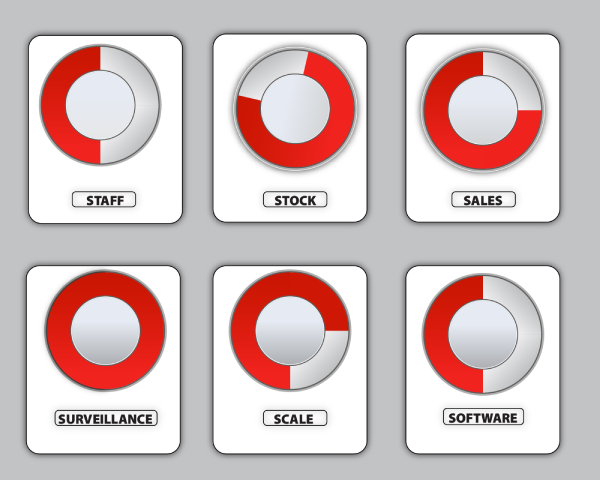
Retail Healthometer
Check the health of your business? Are you ready to organize & scale ?
Author Bio

Nikhil Agarwal
Chief Growth Officer


Get In Touch