
Making your own clothes can be really fun since it feels like, through fabric, you can craft your dreams and see how they would look in stores worldwide. Every time someone posts their success on Instagram, it may seem that many designers, who began their journey fueled by passion, end up giving up. For instance, Priya from Pune designed amazing clothes that were inspired by the Zara India site.
After sharing her amazing and creative Instagram photos, Priya gained 10,000 new followers in one week. She received an unbelievable number of orders, which only added to her excitement to sell her creations.
However, 6 months later, Priya was in chaos; she had constant delays with her shipments, had no product to sell to customers and had not been able to develop a plan for opening any physical retail locations.
Due to the lack of a retail plan, Priya’s clothing line was not accepted by any of the clothing stores she had approached. Priya’s story is just an example of the many designers that fall into this trap; they build a business that is built for Instagram but they do not build a business that is built for physical retail.
Our six-month process is designed to help you become one of the dreamers that have built an empire through the assistance of a successful fashion business consultant. By focusing on operations, supply chain management and effective marketing strategies, we will help you take your clothing brand to the next level and build a company that can sell on global shelves.
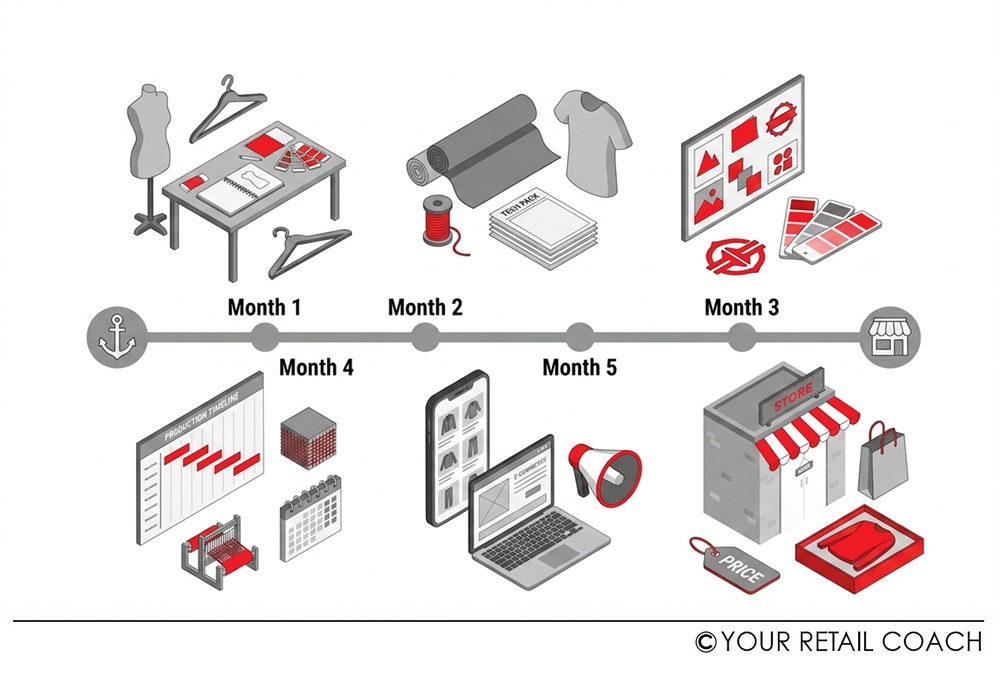
Month 1: Validate Your Vision and Nail Market Fit
Priya stared at her sketchbook, sketches inspired by Zara India online fluidity. But validation? Zero. She wasted fabric on untested designs. Don’t repeat her mistake.
In Month 1, forge your foundation. Conduct customer interviews across global markets—India’s festive buyers to US minimalists. Analyze Zara India online data for trends like sustainable cottons.
- Bulletproof steps: Survey 100 potentials via Google Forms; use tools like Jungle Scout for demand spikes.
- Define niche: Will you opt for athleisure for urban millennials or will it be Eco-luxe for Gen Z. This will define your niche.
Refine your unique value, and work on why your threads beat clothes shops. This phase ensures every stitch sells. Priya skipped it and her line mismatched demand. Yours won’t.
Month 2: Design and Prototype with Scalable Precision
Priya focused only on having finished products with no regard to how much they cost her, so she designed and developed many samples which cannot be mass manufactured. However, global demand requires that you produce items precisely.
Utilising Zara India Online’s ability to rapidly prototype, Priya’s design team will create 10 core SKUs of versatile staple items.
Actions:
-Develop product specifications and tech packs (include specifications and measurements)
-Through the use of computer-aided-design (CAD) software, develop and test 3 prototypes of each design.
-Cost Control: Use of Alibaba to source swatches will have a maximum price of $5/unit.
Mistakes made by Priya: Not having processes in place to evaluate scalability; make sure products designed can accommodate worldwide fit with sizes from XS through 3XL; conduct a focus group at the end of the month and make adjustments based on results. To-date your line will be positioned for “retail ready” and ecommerce consulting firms have reviewed your product line.
Month 3: Build Ironclad Supply Chain and Sourcing
Priya’s supplier ghosted her during peak Diwali. No backups, no scale. Clothes shops need reliability, not excuses.
Master sourcing like Zara India online’s agile networks. Vet 5 factories in Tirupur or Bangladesh for MOQs under 500 units. Negotiate lead times under 45 days.
- Essentials: Diversify vendors; audit for ethical labor via platforms like Sedex.
- Inventory math: Forecast 3 months’ sales using Excel models. Aim for a 30% buffer.
Secure terms: 30% upfront, balance on delivery. Test runs produce 100 units. Priya learned painfully; you build resilience now, positioning for fashion ecommerce consulting that scales globally without hiccups.
Month 4: Automate Operations and Tech Stack
Operations crushed Priya. Manual orders through WhatsApp led to errors. No SOPs meant chaos as volumes grew.
Erect your operational fortress. Implement Shopify or WooCommerce for ecommerce consulting firms’ seamless flow. Integrate inventory tools like Cin7.
- Must-haves: Draft SOPs for picking/packing. This will be for under 10 mins per order; automate with Zapier for order alerts.
- Metrics: Track fulfillment rate >98%; use Shiprocket for India, ShipStation globally.
Priya’s manual hell? Avoid it. Train a VA team on these. By now, simulate 500 orders daily. Your marketing strategy of clothing business thrives on this backbone, ready for retail partnerships worldwide.
Month 5: Craft Multichannel Marketing Blitz
Priya poured into Instagram, ignoring SEO. Traffic vanished post-algorithm shift. Retail needs omnichannel pull.
Devise a marketing strategy of clothing business echoing Zara India online’s digital-physical synergy. Allocate 40% budget to SEO/content, 30% influencers, 30% ads.
- Tactics: Launch blog on “Sustainable Apparel Trends”; run Meta or Google ads targeting “ethical clothes shops.”
- Partnerships: Micro-influencers with 10K followers in 5 countries; pop-up events in Mumbai, NYC.
Track CAC under $20. Priya’s single-channel fail? Yours blends D2C, marketplaces like Amazon, Myntra, prepping for physical retail conquest. Global audiences engage.
Month 6: Retail Pitch and Launch Mastery
Priya pitched unprepared, she had no set P&L. A string of rejections followed, the product needed to have a retail-ready look in order to secure placement at retail.
- It will occur only after a pitch deck, which will illustrate 6 months of metrics such as 2,000 total orders and a 40% re-order rate. Present to major chains or global pop-up chains.
- Apply for wholesale pricing like 50% margin.
- Launch as follows: 1,000 unit soft opening online, 3 retail stores.
After her initial pitch, Priya’s product was relaunched and is now in 5 clothing boutiques. Your story can follow a similar success. From Instagram spark to global racks, backed by fashion ecommerce consulting prowess.
Why YRC?
As the leading fashion eCommerce consultancy, YRC provides customized six-month roadmaps that combine the online flexibility of Zara India with the operational excellence of Lean Six Sigma.
YRC has more than fourteen years of experience helping large apparel companies reach their potential, providing end-to-end services. This includes services from SOPs through to retail sales presentations; has an overall success rate of 95 percent with clients in India and the US.
Companies require YRC for both impartial audits and API-driven automated processes. Consequently, they avoid problems similar to those encountered by Priya’s businesses. YRC is recognized by global brands as the preeminent partner for rapidly transforming start-ups into successful retail companies.
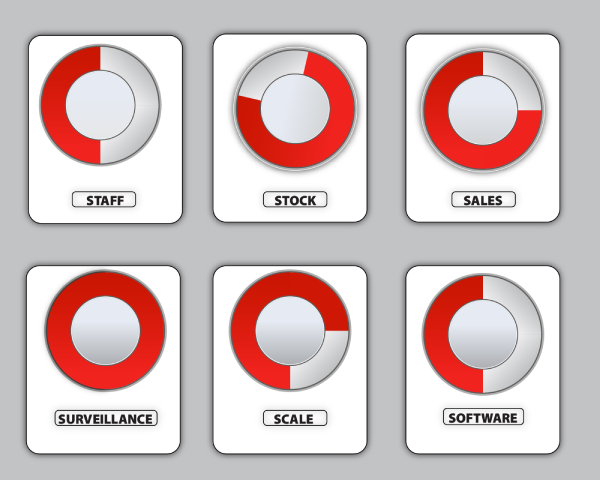
Retail Healthometer
Check the health of your business? Are you ready to organize & scale ?
Author Bio

Nikhil Agarwal
Chief Growth Officer


Get In Touch