
The 7 Profit Levers Retailers Ignore
Ravi’s three clothing businesses have bad customer satisfaction. He spends a lot of money on advertising and sales promotions, yet his foot traffic and sales spike for a few days and then decline. As a result, Ravi believes that the only way to develop his business is to spend money on advertising.
During his audit of the retail market, Ravi discovered that customers often cancel their purchases because they couldn’t find their size, they had to wait a long time in line to pay, and the associates could not find the product. Most of these problems were not visible in Ravi’s daily sales report.
Consulting for retail has an emphasis on fixing the internal processes of the retailer rather than just providing additional promotions.
The same type of performance problem that Ravi experienced is what is found in many small business retailers worldwide. Small business retailers typically believe that their sales problems are caused by external factors; however, the actual cause of the problem lies within their operations.
Let’s now examine the other seven profit levers that most retailers overlook.
1. Stock Availability Accuracy
Customers go into stores expecting to find products available for sale. If they discover that an item is out of stock, the customer might not return to that store again. Stock accuracy is one of the most important factors in driving sales compared to the vast majority of marketing efforts.
Retail is losing significant revenues to the following reasons:
- Manually tracking stock
- Delays in posting stock from inbound receipts
- Lack of visibility between stores
- No real-time reporting of inventory from a dashboard
As part of a consulting service to help retailers with their inventory management process, consultants assist retailers with professional practices by defining SOPs for stock control such as cycle counting, using Barcodes for stock movement, and establishing automated alerts to highlight mismatches in stock levels.
Typically, consulting projects in retail will reveal that as much as 5-8% of inventory being accounted for inaccurately can lead to a reduction of actual sales revenues by 10% or more. When stock availability improves, the conversion rates of customers improve immediately.
A retail tech consultant can provide an integrated solution between the POS system, warehouse system, and ERP system so that the different sales systems are connected, allowing you to always know what to sell and where to find it.
2. Faster Billing Experience
The billing process is the final juncture between a customer being sincerely interested to continue the buying process, only for the customer to discontinue the buying process if the billing takes an excessive amount of time to complete.
There are many bottlenecks that can prevent a customer from completing the billing process:
- Slow POS systems
- Approval of discounts manually
- Issues with scanning barcodes
- Poorly trained staff
- Network delays.
The primary focus of retail consulting is to help improve the amount of time required to complete the billing process. Even if you can reduce the amount of time it takes to bill an average customer by 30 seconds, you can dramatically increase the number of transactions processed per day.
A consultant offering retail technology consulting can help retailers:
- Upgrade their POS (point of sale) architecture
- Create offline billing backup
- Simplify workflows for approving discounts
- Create mobile billing options
Retail consulting projects consistently demonstrate that when the process for completing billing is made faster, customer satisfaction scores improve and impulsive purchases increase. When customers wait less time in line, store staff can serve a greater volume of customers per hour, thereby increasing the daily volume of sales.
3. Staff Productivity Systems
Productive systems and processes are the key to creating sales growth through hiring more employees.
Retailers often use verbalizing to instruct employees instead of using structured workflows. This results in:
- Time spent looking for a product.
- Inconsistent processes in the way customers are assisted.
- Poor practice of up-selling.
- Confusion of tasks during peak times of business.
Retail strategy consultants implement sales conversation frameworks, task scheduling systems, and daily productivity dashboards to help grow sales with existing employees.
In addition, retail technology consultants can implement workforce management tools that track completion of tasks by employees as well as time spent interacting with customers.
Trained employees can produce 20-30% more sales than untrained employees, at the same staffing cost, in the retail industry.
4. Smart Replenishment Planning
Retailers often rely on a gut instinct or simply on recent sales when they are deciding how much of each addition to order, and this is leading to problems with having overstocked a lot of slow-turning products.
Sophisticated replenishment systems are able to use:
- Historical sell-through data
- Seasonal demand forecasts
- Store sell-through patterns
- Supplier lead-time calculations
Retail strategy consulting firms can assist small and medium-size retailers in implementing replenishment calendars and reorder trigger programs to assist with their inventory planning.
A retail technology consultant can integrate demand forecast tools with the retailer’s POS data in order to provide automated reorder suggestions based on actual product sales patterns.
Retail consulting projects show that many retailers are holding excess inventory constitutes a blockage of working capital, which ultimately costs them sales on products that are in high demand.
With a scientifically based replenishment approach, retailers can accomplish the following:
- Improved cash flow
- Reduced stock-outs
- Increased full-price sales
- Improved supplier negotiation
This is a major area of consultation for retail clients, particularly for multi-store small and medium-size retailers who are looking to expand.
5. Customer Data Utilization
Numerous retailers have access to customer data but do not utilize it appropriately. Customer data can also be utilized to anticipate future sales, among other forms of customer data.
Useful data you can gather about each customer includes:
- How often they purchase from your store
- Which of your stores they frequently purchase from
- The average amount of money spent per shopping session
- When they generally make purchases each year
By using a retail strategy consulting professional, your retailer can create customer segmentation models for the purpose of creating targeted communication instead of using mass marketing techniques.
Retailers who effectively manage their customer data can provide the following services to their customers:
- Send relevant product notifications
- Provide personalized promotions
- Increase the frequency of repeat visits
- Identify high-level customers
Through retail consulting, customer data is transformed from a passive form of storage into an active tool for generating revenue.
6. Standardized Store Operations
When stores operate in varying ways, customers have an unpredictable level of experience. The process of standardizing procedures creates a consistent customer experience at all store locations.
Standard operating procedures (SOPs) are needed in the key areas of:
- Store opening and closing procedures
- Visual merchandising
- Customer greeting
- Stock receiving
- Complaint resolution
When a consultant specializes in retail strategy, they will ensure that the SOPs are practical and measurable. A retail technology consultant will help to digitize SOPs with checklists and reports for audit purposes.
Some of the benefits of standardization include:
- Newer employees learn at a quicker rate than employees who work in stores that are not standardized.
- Consistency in the customer’s experience, regardless of which store they visit.
- Measurability of the stores’ performance.
- The ease with which a manager can supervise numerous stores.
7. Scalable Store Processes
Many retailers find it easy to operate one store but struggle when they open more, due to not having the ability to create scalable processes.
Some examples of scalable systems are:
- Centralized reporting dashboards
- Standardized training modules
- Centralized buying
- Unified pricing structures
- Centralized vendor management
Consulting with a retail strategy consultant will assist retailers in creating their marketing plans, as well as creating scalable processes so that the same processes can be applied to all their stores.
Retail consulting illustrates that many retailers are unable to tackle the growth they want because of operational dependencies on the owner’s actions. Successful scalable systems will remove this barrier.
Retail industry consulting will enable retailers to:
- Open stores faster.
- Maintain quality across locations.
- Manage inventory centrally.
- Monitor performance remotely
Scalable systems improve the performance of all stores; they also enhance current store performance because processes are clearer and quicker to implement.
Build Stronger Retail Systems with YourRetailCoach
Is your retail company experiencing growth, but finding that your operations aren’t keeping pace? This may indicate that it is time to improve what you have in place to support this growth.
YourRetailCoach (YRC) works with small to medium-sized retailers globally as they build strong operational processes, improve performance in the stores, and get ready to expand. With retail consulting from experts, strategy and technology help to make money without relying on discounting.
Let’s create successful retail businesses that are scalable together!
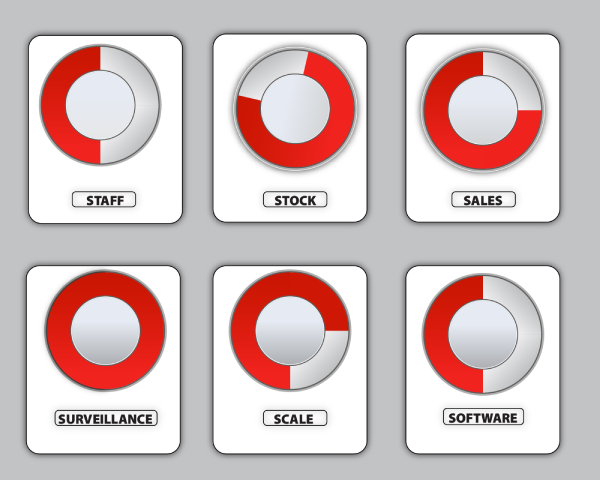
Retail Healthometer
Check the health of your business? Are you ready to organize & scale ?
Author Bio

Nikhil Agarwal
Chief Growth Officer
Nikhil is a calm and composed individual who has a master’s degree in international business and finance from the United Kingdom. Nikhil Agarwal has worked with 300+ retail e-commerce brands and companies from various sectors, since 2012, to define their growth strategy and achieve operational excellence. Nikhil & his team have remarkable success stories of helping brands achieve 10X growth.