
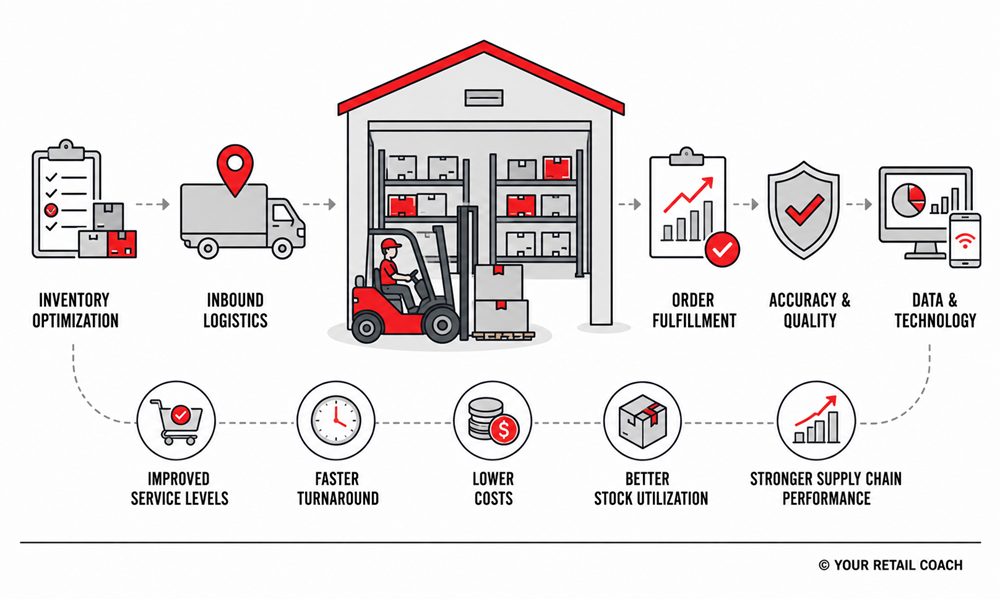
Warehouse problems usually do not become clear until the warehouse has issues with inventory. It takes a long time to fulfill orders or the costs of running the warehouse start going up and affecting how the business does overall.
Profitability is affected when the warehouse execution process is linked to the replenishment process. Inventory reaches the retailers later than expected and excess stock is sitting in locations that are not appropriate. Retailers still treat each warehouse of their retail store as a separate unit. Such methods make inventory transparency worse and the timing of the replenishment decisions longer.
The right technique is disciplined warehouse execution being used together with integrated inventory management. Retailers should be able to standardize the receipt process, develop quicker picking paths, apply synchronized replenishment logic, and use stock availability technology. A really effective retail logistics management system ensures accuracy of inventory results and better dispatch, labor and replenishment productivity at all retail warehouse. Retailers are able to find the right inventory allocation when the processes of warehouse management are linked with the unique inventory control system.
A centralized stores supply warehouse structure allows leadership teams to monitor inventory flow from inbound receipt to store delivery. When supported with process discipline and a retail wms, warehouse teams can reduce delays, improve fill rates, and lower carrying costs. A scalable stores supply warehouse network also strengthens store responsiveness during seasonal demand swings.
How to Improve Inventory Flow Inside Warehouse Operations
The speed at which inventory moves really matters. It affects how quickly things are available on the shelves and how well a company uses its working capital. Retailers should think about how they can restock shelves before they set up their warehouses.
They should focus on making sure things get replenished quickly; this is termed as replenishment velocity. Without considering this factor, the goods may sit in one place for a long time. This means retailers should change how they do things in their warehouses to make inventory movement a priority. Replenishment velocity is very important for retailers.
Standardize Inbound Operations
Every retail store warehouse should follow a fixed receiving structure covering dock scheduling, barcode scanning, pallet mapping, and discrepancy reporting. Standardization improves receiving speed and reduces reconciliation delays.
Key Actions
- Create fixed inbound windows for suppliers.
- Separate fast-moving inventory immediately after receipt.
- Use barcode validation at every receiving stage.
- Allocate storage positions according to SKU movement frequency.
- Escalate damaged inventory instantly.
A structured stores supply warehouse operation reduces receiving bottlenecks and improves stock accuracy. Retailers should also use the retail warehouse management system to compare supplier compliance levels across inbound categories.
Redesign Storage Logic
Traditional storage models increase picker travel time and slow replenishment cycles. Every retail store warehouse should organize storage according to order frequency, store demand, and replenishment priority.
Recommended Structure
- Fast-moving SKUs near dispatch lanes
- Seasonal inventory in flexible overflow zones
- High-value inventory inside monitored access areas
- Cross-docking for rapid replenishment inventory
Retailers that redesign the stores supply warehouse around inventory velocity usually improve dispatch speed within a short period. A retail wms can also assign optimized pick paths and reduce unnecessary movement inside the facility.
Improve Dispatch Accuracy
Dispatch errors damage both customer experience and operating margins. Retailers should combine process controls with digital verification.
Execution Priorities
- Batch picking for repetitive orders
- Wave planning during high-volume periods
- Scan verification before dispatch
- Exception alerts for incomplete shipments
- Real-time shipment tracking
A disciplined retail store warehouse operation improves order turnaround and reduces emergency transfers between locations. Retailers managing regional fulfillment should connect warehouse execution with a multi store inventory management system for synchronized inventory visibility.
How to Improve Inventory Visibility and Warehouse Control
Warehouse visibility is now a strategic requirement for retail leadership teams. Decisions on replenishment, allocation, and markdown planning depend on accurate inventory information.
Build a Single Inventory View
Disconnected systems create inventory duplication and replenishment delays. Retailers should connect warehouse records, store stock data, transit visibility, and returns processing into one operational structure.
A centralized retail warehouse management system helps leadership teams monitor:
- Inventory ageing
- Fill rates
- Stock accuracy
- Replenishment delays
- Order turnaround time
- Inventory carrying cost
A connected stores supply warehouse structure also improves inventory balancing between regions. Retailers can redirect stock faster and reduce overstock exposure. A retail wms strengthens this process by updating stock positions continuously during receiving, storage, and dispatch.
Replace Periodic Audits with Cycle Counting
Annual inventory audits do not support high-volume retail execution. Every retail store warehouse should use cycle counting based on SKU movement and inventory risk.
Suggested Cycle-Count Structure
| Inventory Type | Frequency |
|
Fast-moving SKUs |
Weekly |
|
Medium movement SKUs |
Bi-weekly |
|
Slow-moving inventory |
Monthly |
|
High-value inventory |
Daily |
Cycle counting improves inventory confidence levels and reduces reconciliation effort. Retailers should use the retail warehouse management system to automate discrepancy reporting and monitor recurring inventory variances.
Connect Stores with Warehouse Inventory
Store teams need direct visibility into warehouse inventory status. Integration between warehouses and a multi store inventory management system allows stores to access replenishment timelines, transfer availability, and live stock visibility.
This Improves
- Store replenishment planning
- Inter-store transfers
- Omni-channel fulfillment
- Inventory balancing
- Markdown planning
- Seasonal inventory allocation
A synchronized stores supply warehouse network gives leadership teams stronger control over inventory deployment decisions.
How to Scale Warehouse Performance Across Multi-Store Retail Networks
Warehouse complexity increases sharply when retailers expand across regions, formats, and channels. Retailers should create warehouse structures that support operational consistency at scale.
Segment Warehouse Roles
Not every retail store warehouse should carry the same inventory profile. Retailers should classify facilities according to fulfillment responsibility.
Suggested Segmentation
- Central distribution centers
- Regional replenishment hubs
- Urban fulfillment nodes
- Seasonal overflow facilities
- Dark stores for rapid delivery
A segmented stores supply warehouse model improves replenishment efficiency and reduces unnecessary inventory duplication. Retailers can also configure the retail warehouse management system according to the role of each facility.
Introduce Selective Automation
Warehouse automation should solve operational bottlenecks instead of increasing process complexity. Retailers should focus automation on repetitive execution areas.
Recommended Automation Areas
- Conveyor sorting
- Dock scheduling
- Mobile scanning
- Carton labeling
- Pick-to-light systems
A disciplined retail store warehouse operation supported by selective automation improves labor productivity and dispatch consistency. A retail wms also helps warehouse teams identify recurring throughput bottlenecks.
Track Warehouse Metrics Linked to Commercial Performance
Warehouse reporting should support commercial decision-making instead of only operational tracking.
Critical Metrics Include
- Fill rate
- Inventory accuracy
- Dock-to-stock cycle time
- Order turnaround time
- Cost per order
- Dispatch accuracy
- Stock-out frequency
- Inventory carrying cost
Leadership teams should review these metrics weekly through the retail warehouse management system. Integration with a multi store inventory management system also helps regional managers compare inventory productivity across territories.
Warehouse Control Structure
Supplier Inbound
↓
Receiving and Verification
↓
Storage Allocation
↓
Picking and Replenishment
↓
Dispatch and Tracking
↓
Store Receipt Confirmation
↓
Inventory Visibility Dashboard
A synchronized stores supply warehouse system helps to make sure that products are restocked on time and that we have a view of our inventory across the whole supply chain.
When retailers have control over their inventory, follow a strict shipping schedule and quickly restock products they can increase their profits and have more products available on shelves.
This is because they can improve how their business runs and make sure that products are always available for customers.
Retailers can also make decisions about inventory and shipping to achieve this.
Strategic Outcomes for Retail Leaders
Retailers that redesign warehouse operations generally achieve measurable improvements across inventory productivity and order fulfillment.
Expected Outcomes
- Lower inventory carrying costs
- Faster replenishment cycles
- Higher shelf availability
- Better labor utilization
- Improved dispatch accuracy
- Reduced inventory discrepancies
- Faster store fulfillment
- Better working capital efficiency
A disciplined operating structure supported by a retail warehouse management system allows retailers to scale operations without losing execution control. Integration with a multi store inventory management system further improves inventory synchronization across regional networks.
A modern retail store warehouse strategy should focus on inventory visibility, replenishment speed, process standardization, and fulfillment accuracy. Retailers that modernize the stores supply warehouse structure with process discipline and a retail wms create stronger supply chain responsiveness.
About YRC
Your Retail Coach (YRC) is a boutique retail consulting firm specializing in operational excellence. We design tailored SOPs and strategies to streamline your retail store warehouse operations. By optimizing your stores supply warehouse , YRC implements robust retail warehouse management frameworks that minimize bottlenecks, reduce costs, and elevate overall supply chain performance.
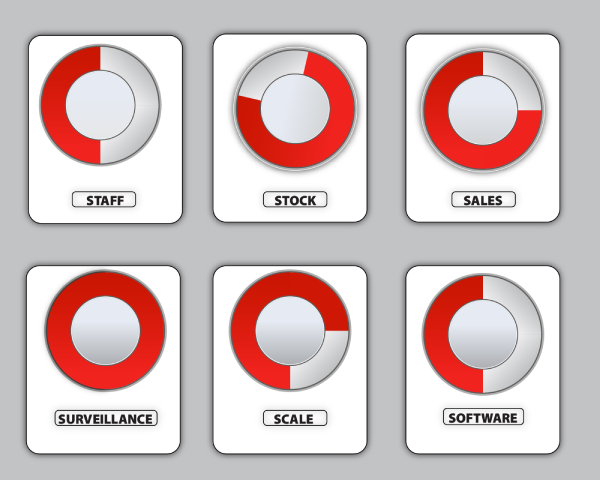
Retail Healthometer
Check the health of your business? Are you ready to organize & scale ?
Author Bio

Nikhil Agarwal
Chief Growth Officer
Nikhil is a calm and composed individual who has a master’s degree in international business and finance from the United Kingdom. Nikhil Agarwal has worked with 300+ retail e-commerce brands and companies from various sectors, since 2012, to define their growth strategy and achieve operational excellence. Nikhil & his team have remarkable success stories of helping brands achieve 10X growth.