
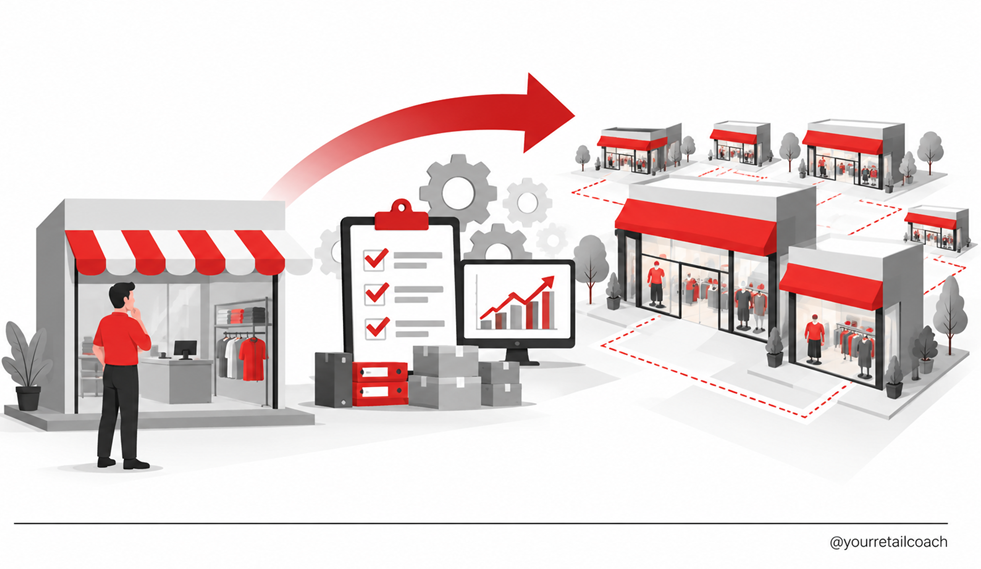
Business Owners Should Care about Organised and Unorganised Retail Because an Unorganised System Cannot Be Easily Scaled.
Unorganised businesses are often seen working without centralised inventory management. This makes their inventory levels unpredictable, leading to frequent stockouts or overstocking. Without rigid control over the flow of inventory, it becomes challenging to think of starting new stores.
Service quality, product consistency, and customer experience do not remain consistent over time and across locations without standardised business processes. This makes it nearly impossible to deliver a reliable brand promise and come up with a reliable retail store expansion strategy.
Unorganised systems acquire loss of financial visibility and control. Unplanned and unstructured financial processes limit financial and operational monitoring, masquerade operational leakages, and prevent accurate data-driven decision-making.
Scaling requires a replicable operations blueprint. An unorganised business system remains heavily dependent on a few individuals rather than processes and systematic workflows. These few individuals cannot be everywhere; making retail business expansion seems unmanageable.
Technological transformation is easier for organised enterprises. With SOPs in place, it is easier to identify technological solutions needed for operations. Modern retailers leverage centralised inventory and supply chain technologies, automation and POS systems, and AI-powered analytics to streamline operations, optimise costs, and move fast. This puts unorganised businesses in a tight spot against their tech-driven counterparts.
Retail business expansion requires a conscious effort, and in this pursuit, getting organised should assume priority.
Operations Standardisation via SOP is The First Step for Becoming Organised and Achieving Scale in Retail (Standard Operating Procedure for Retail)
SOPs eliminate dependence on tribal knowledge and codify routine operations. SOP decouples growth from individuals. This does not mean obsolescence of tribal expertise, but the path is laid, and anybody with the right skills can walk on it.
SOP-driven standardised operations bring consistency in customer experience. Uniform standards for store layout, visual merchandising, inventory management, customer service, and fulfilment across every touchpoint and every store complement the efforts of maintaining a uniform brand image and value.
SOP serves as the operations blueprint that can be easily replicated for new stores or expanded operations. It helps ensure faster rollout with known operational standards and predictability of costs. So, whether it is store number 2 or store number 20, there is already a foundational plan for execution.
SOP accelerates time-to-productivity. SOP manuals not only help in operations, but they also provide crucial inputs for training. Training becomes more focused and job-specific. Employees get a vision of their day-to-day responsibilities. This reduces the friction of expectations from both sides.
SOP establishes a baseline for technology adoption and retail transformation. If you do not know how to drive well (operations), no car is good or bad. But when you have a good understanding of cars and driving (operational requirements and technological solutions), you would be in a much better position to choose a car that best suits your priorities.
Operations Standardisation is Defining, Documenting and Deploying Uniform Business Processes
In retail operations management, operations standardisation has five principal requirements:
- Structural Uniformity (Store structure, layout)
- Sensory Uniformity (Visual merchandising, brand logo, dress codes, lighting)
- Process Uniformity (Sameness of process workflow and execution)
- Product and Service Uniformity (Quality control, customer service)
- Resource Uniformity (skills, tech stack, network – for consistency in performance and results)
Standardise Inventory Management First for Building the Modern Retail Organisation
In retail, inventory is working capital. If inventory management is faulty, every downstream process and parameter of success derails. Here are a few important reasons why inventory management should be standardised first:
- Customer experience takes a beating when ghost stock is listed as available, misalignment of physical and digital inventory records.
- Hampered sales revenue due to inventory data inaccuracy and uninformed decision-making
- Working capital and cash flow crisis, ability to fulfil financial commitments adversely affected
- Emergence of idle hours if there is not sufficient inventory to deal with, operational costs rise because of under-utilisation of resources.
- Increased exposure to shrinkage
Best Practices for Developing SOPs for Retail Store Operations Standardisation (Curated by Experienced Retail SOP Consultants)
Keep SOPs Simple
- Easy Language
- Practical Workflows
- Easy Adoption by Store Teams
Define Accountability Clearly
- Role Ownership
- Approval Authority
- Escalation Hierarchy
Build Checklists
- Daily Checklists
- Weekly Checklists
- Audit Checklists
Align SOPs with Technology
- POS Alignment
- ERP Alignment
- Automation Alignment
Train Employees
- Onboarding Training
- Refresher Training
- Role-Based Learning
Review SOPs Periodically
- Continuous Improvement
- Compliance Reviews
- Business Updates
Hire Professional SOP Writing Services
- Faster Implementation
- Avoid Internal Delays
- Reduce Trial and Error
- Ensure Momentum is Not Lost
- Leverage Industry Best Practices
- Accelerate Expansion Readiness
Concluding Note
If you want to grow your business, you must first make it organised.
It is easier to manage and scale an organised system.
Unorganised business systems act erratically. Their outcomes remain volatile and uncertain.
The first step towards becoming an organised business is standardising your operations. Everything else is only an idea or a thought experiment.
SOP is the first concrete step towards operations standardisation.
Retail business growth strategies and SOP for retail business go hand in hand.
FAQs
What are the 7 types of retailers? (Retailing formats)
Contemporary classification of the conventional 7 categories of retailers (retailing formats):
|
Physical / Store-Based Formats
|
Online / Non-Store Formats |
Hybrid / Omnichannel Formats |
|
Department Stores
Supermarkets
Hypermarkets / Discount Superstores
Specialty Stores
Convenience Stores
Category Killers
Off-Price Retailers / Factory Outlets
Warehouse Clubs
Pop-Up Stores
Traditional / Kiosk / Mom-and-Pop Stores (Kiranas)
|
Horizontal ECommerce Marketplaces
Vertical / Specialty Marketplaces
Direct-to-Consumer (D2C)
Quick-Commerce (q-Commerce)
Social Commerce
Subscription Retail
Livestream Shopping / Tele-Shopping
Automated Retail (Vending Machines)
|
Buy Online, Pick Up In Store (BOPIS / Click-and-Collect)
Dark Stores / Micro-Fulfilment Centres
Showrooming / Experience Stores (Browse in-store, ship to home)
Webrooming / Guided Store Kiosks (Browse online, try in-store)
|
What are the 5 Ps of retail?
- Product: The tangible products and/or associated services offered to defined target segments, fulfilling specific needs or solving one or more problems.
- Price: The pricing strategy in consideration of value proposition, target segments, and brand/market positioning.
- Place: The channels of distribution, logistics, and online and offline touchpoints via which products and services (values) are offered for sale or consumption.
- Promotion: The activities used to generate awareness, interest, desire, traffic/footfall, and purchases (e.g. print advertising, social media campaigns, discount pricing)
- People: Frontline and back-end staff whose knowledge, skills, training, and performance affect the value delivery.
What are the 5 KPIs in retail?
|
Key Performance Indicator (KPI)
|
Why Does It Matter? |
|
Sales Per Square Foot
|
Measures how effectively the physical retail footprint generates revenue. Essential for store planning and lease evaluation.
|
|
Inventory Turnover Rate
|
High turnover means high demand and efficient working capital; low turnover indicates overstocking and cash tie-up.
|
|
Conversion Rate
|
Evaluates sales team effectiveness, store layout, product availability, and customer purchase intent.
|
|
Average Order Value (AOV) / Average Basket Size
|
Tracks cross-selling, up-selling, and basket-building strategies (e.g., promotional bundles or checkout add-ons).
|
|
Gross Margin Return on Investment (GMROI)
|
Shows how many gross margin dollars you earn for every dollar invested in stock. Vital for category management and pricing.
|
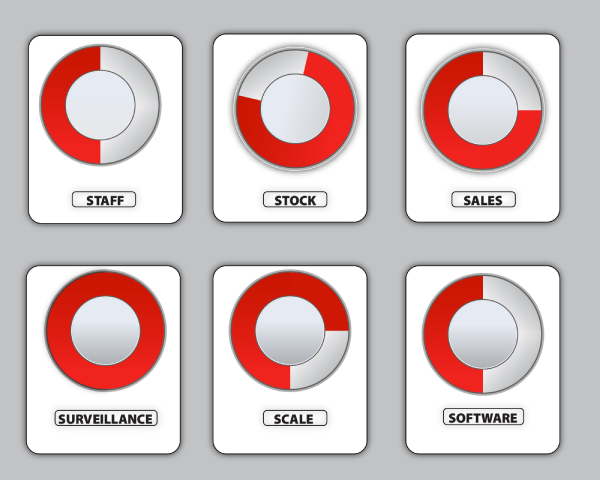
Retail Healthometer
Check the health of your business? Are you ready to organize & scale ?
Author Bio

Nikhil Agarwal
Chief Growth Officer