
Why is Scaling Challenging for Unorganised Businesses?
One of the glaring traits of an unorganised business system is the lack of centralisation in inventory management. They tend to rely on ad hoc, temporary, or localised solutions. This prevents them from managing their inventory at an enterprise level. Situations of stockout and over-stocking become chronic. ISTs are out of question. Without robust and centralised control over inventory, it becomes challenging for unorganised business systems to think of starting new stores.
Unorganised business systems tend to work with non-standardised business processes. This makes it difficult for them to deliver and maintain quality and consistency in products, services, and customer experience. You cannot come up with a reliable retail store expansion strategy without the necessary systems that ensures the delivery of brand promises.
When a business system is unorganised it also tends to lose control over its finances. The symptoms first appear in the form of loss of financial visibility. This happens because the significance of capturing and monitoring financial movements and performance is undermined or not well-recognised.
When contemplating scale or expansion, you cannot afford to lean on a weak operations blueprint. This operations blueprint is what you are going to replicate in the new store locations. You must be very sure of this blueprint. If your business is dependent on a few individuals rather than processes and systematic workflows, retail business expansion might become more challenging for you because these few individuals cannot be everywhere.
Technology is crucial for growth and expansion, but technological transformation is challenging for unorganised enterprises. Because unorganised businesses tend to operate in undefined and unstructured ways, it is difficult for them to correctly identify the technological requirements. Without this understanding, they often end up with misfit tech solutions.
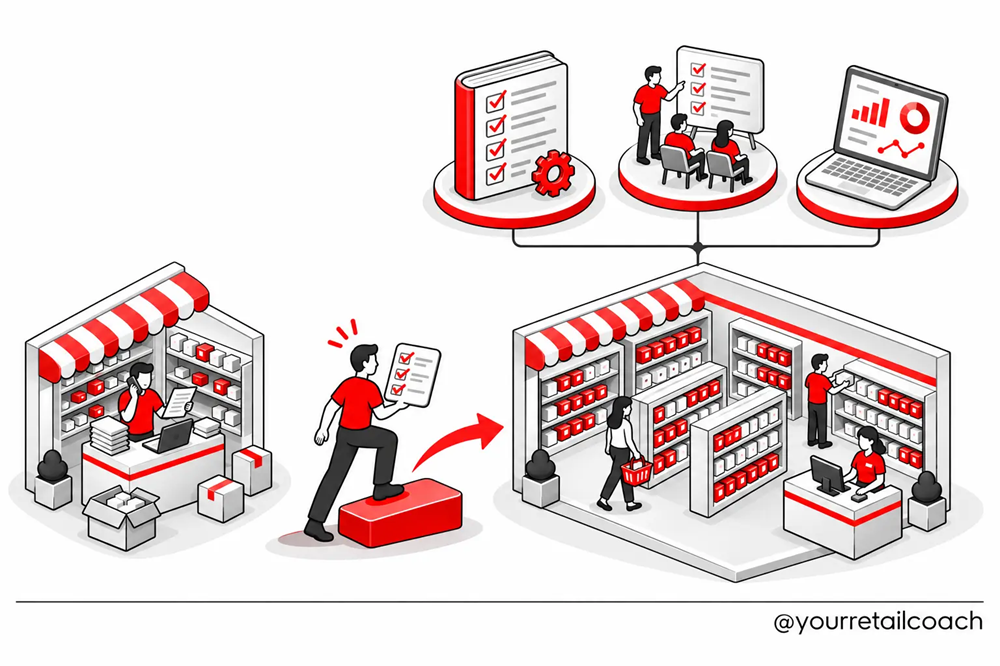
Operations Standardisation via SOP is The First Step for Becoming Organised and Achieving Scale in Retail (Standard Operating Procedure for Retail)
SOPs align growth with process over people – SOPs eliminate dependence on tacit knowledge and organises routine operations into a defined framework. This does not mean obsolescence of tribal expertise. But once the path is laid, anybody with the right skills can walk on it.
SOP-based standardised operations bring consistency in customer experience
SOP manuals as the operations blueprint – SOPs can be easily replicated for new stores or expanded operations. It helps ensure faster rollout with known operational standards and predictability of costs. So, whether it is store number 2 or store number 20, there is already a foundational plan for execution.
SOP accelerates time-to-productivity – SOPs not only aid in operations, but they also deliver vital inputs for training. Training becomes more focused and curated. Employees get a fair idea of their day-to-day duties and responsibilities. This cuts the friction of expectations from both sides.
SOP gives the foundation for technological transformation – If you do not know how to drive well (operations), no car is good or bad. But when you have a good understanding of cars and driving (operational requirements and technological solutions), you would be in a much better position to choose a car that best suits your priorities.
Operations Standardisation is Defining, Documenting and Deploying Uniform Business Processes
In retail operations management, operations standardisation has five principal requirements:
- Structural Uniformity (Store structure, layout)
- Sensory Uniformity (Visual merchandising, brand logo, dress codes, lighting)
- Process Uniformity (Sameness of process workflow and execution)
- Product and Service Uniformity (Quality control, customer service)
- Resource Uniformity (skills, tech stack, network – for consistency in performance and results)
Standardise Inventory Management First for Building the Modern Retail Organisation
In retail, inventory is working capital. If inventory management is faulty, every downstream process and parameter of success derails. Here are a few important reasons why inventory management should be standardised first:
- Customer experience takes a beating when ghost stock is listed as available, misalignment of physical and digital inventory records.
- Hampered sales revenue due to inventory data inaccuracy and uninformed decision-making
- Working capital and cash flow crisis, ability to fulfil financial commitments adversely affected
- Emergence of idle hours if there is not sufficient inventory to deal with, operational costs rise because of under-utilisation of resources.
- Increased exposure to shrinkage
Best Practices for Developing SOPs for Retail Store Operations Standardisation (Curated by Experienced Retail SOP Consultants)
Keep SOPs Simple
- Easy Language
- Practical Workflows
- Easy Adoption by Store Teams
Define Accountability Clearly
- Role Ownership
- Approval Authority
- Escalation Hierarchy
Build Checklists
- Daily Checklists
- Weekly Checklists
- Audit Checklists
Align SOPs with Technology
- POS Alignment
- ERP Alignment
- Automation Alignment
Train Employees
- Onboarding Training
- Refresher Training
- Role-Based Learning
Review SOPs Periodically
- Continuous Improvement
- Compliance Reviews
- Business Updates
Hire Professional SOP Writing Services
- Faster Implementation
- Avoid Internal Delays
- Reduce Trial and Error
- Ensure Momentum is Not Lost
- Leverage Industry Best Practices
- Accelerate Expansion Readiness
Concluding Note
If you want to grow your business, you must first make it organised.
It is easier to manage and scale an organised system.
Unorganised business systems act erratically. Their outcomes remain volatile and uncertain.
The first step towards becoming an organised business is standardising your operations. Everything else is only an idea or a thought experiment.
SOP is the first concrete step towards operations standardisation.
Retail business growth strategies and SOP for retail business go hand in hand.
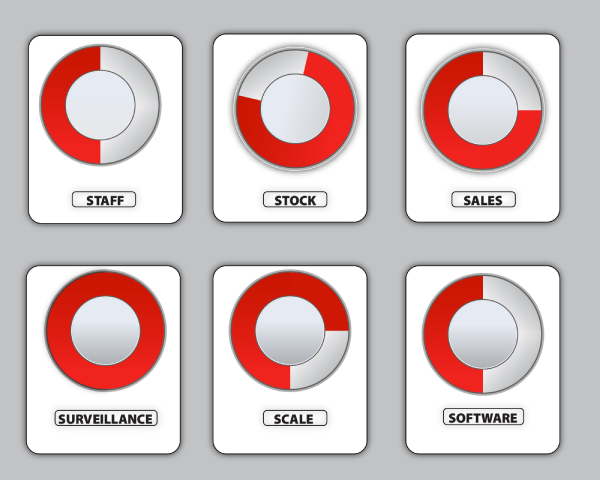
Retail Healthometer
Check the health of your business? Are you ready to organize & scale ?
Author Bio

Nikhil Agarwal
Chief Growth Officer
Nikhil is a calm and composed individual who has a master’s degree in international business and finance from the United Kingdom. Nikhil Agarwal has worked with 300+ retail e-commerce brands and companies from various sectors, since 2012, to define their growth strategy and achieve operational excellence. Nikhil & his team have remarkable success stories of helping brands achieve 10X growth.