

Fashion eCommerce in Egypt
On a busy evening in Cairo, a small online apparel brand celebrates a surge of orders after a successful social media campaign. Excitement quickly turns into stress. Packages pile up, customers message about sizing, and half the orders are marked Cash on Delivery. A few days later, many parcels came back unopened. The problem isn’t demand but the operations.
Across emerging fashion markets, apparel brands often scale marketing faster than systems. Without a clear apparel retail SOP, structured merchandising SOP apparel, and consistent apparel customer service SOP, growth becomes chaotic.
In COD-heavy regions like Egypt, operational discipline is essential. When supported by a thoughtful marketing strategy of the clothing business, standardized processes transform scattered orders into reliable, scalable fulfillment engines capable of supporting international growth.
When Orders Grow Faster Than Operations
Many fashion startups begin with a simple promise. They have stylish clothing delivered quickly. In the early days, founders personally oversaw all the business aspects. These were inventory, packaging, and customer conversations. However, once marketing campaigns succeed, operations become the silent bottleneck.
Common operational challenges include the following:
- High COD refusal rates: Customers change their mind at the doorstep, creating logistics losses.
- Unstructured returns: Returned garments arrive without inspection processes or clear routing.
- Inconsistent quality checks: Different staff follow different standards.
- Inventory confusion: Marketing pushes products that are already low in stock.
One other factor is merchandising discipline that can have a positive effect on customer confidence. In addition to inconsistent merchandise descriptions and sizing charts, merchandise availability also affects customer confidence in making a purchase. A weak merchandising Standard Operating Procedure (SOP) in the apparel industry can also lead to both cancellations and returns.
Another area where inconsistency can impact customer trust is within the customer support function. Without a structured apparel customer service SOP, agents may respond differently to each request resulting in some customers receiving refunds while others may take days before receiving an answer from customer service. Such inconsistencies damage the trust that customers have in the retailer.
Building a Growing Apparel Retail SOP for Fulfilment
A structured apparel retail SOP is the backbone of reliable eCommerce fulfillment. It transforms individual effort into repeatable processes that anyone in the team can follow.
Imagine the same Cairo fashion brand months later. Orders flow in again, but this time operations move like a well-rehearsed routine.
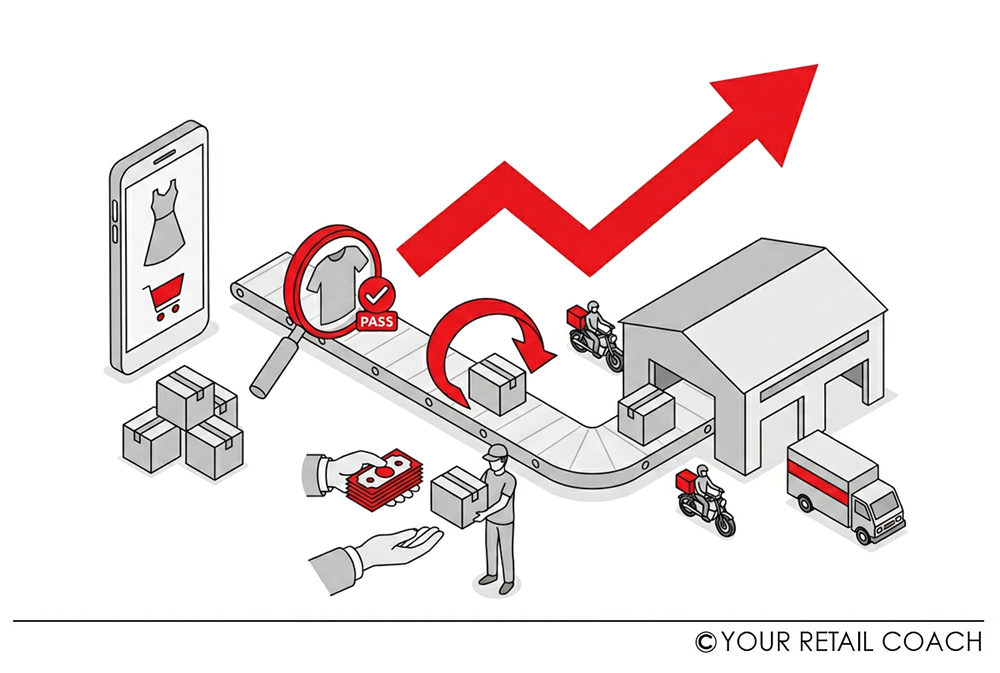
The SOP covers the entire journey from order confirmation to delivery.
Key operational components include:
- Order validation: Automated checks confirm address accuracy and COD eligibility.
- COD verification calls or messages: Customers confirm intent before shipping.
- Standardized picking processes: Warehouse teams follow clear item-location maps.
- Packaging guidelines: Garments are folded, tagged, and protected uniformly.
- Dispatch protocols: Orders leave the warehouse within a defined timeline.
These simple but disciplined steps reduce operational friction dramatically.
Quality control becomes another critical SOP layer. Apparel products require careful inspection before shipping.
A typical QC workflow may include:
- Fabric inspection for defects or stains
- Size verification against order details
- Label and packaging accuracy checks
- Final scanning before dispatch
This systematic approach ensures that what customers receive matches what they ordered.
Returns handling must also be integrated into the apparel retail SOP. Instead of reacting to problems, companies define clear procedures for:
- Receiving returned garments
- Inspecting condition and eligibility
- Updating inventory records
- Processing refunds or exchanges
When operations follow defined procedures, fulfillment becomes predictable. That predictability allows fashion businesses to grow confidently without compromising customer experience.
Strong Merchandising Apparel SOP for Demand Alignment
The merchandising function provides store content while fulfillment completes the actual shipping of those products. Having a strong SOP for merchandising items in the apparel department will ensure that the needed product data, stock on hand, and demand forecast are aligned for each customer.
Take for example a global customer about to buy some Egyptian garments at an Egyptian website. They will expect the website to provide clear product descriptions such as size, good-quality photos of the products, and an accurate number of products to be shipped to them.
Without merchandising discipline, common issues emerge such as the following:
- Product sizes listed incorrectly
- Images that do not reflect actual fabric or color
- Stock levels that lag behind real inventory
- Promotions pushing out-of-stock items
A structured merchandising SOP apparel solves these issues by standardizing how products are prepared for sale.
Core merchandising processes include these aspects:
- Product onboarding workflows
- Standardized product descriptions
- Photography standards
- Inventory synchronization
Merchandising SOPs also help teams anticipate demand instead of reacting to it.
For apparel brands aiming for global reach, this alignment is even more critical. Customers worldwide expect professional presentation and reliable availability.
Customer Experience and Marketing Strategy of Clothing Business
Operational excellence alone does not guarantee growth. Customers must trust the brand enough to place and repeat orders. This is where the apparel customer service SOP and the marketing strategy of clothing business intersect.
Imagine a shopper receiving their first order. The garment fits perfectly, but they still have questions about styling or exchange policies. Their experience with customer support determines whether they become a repeat buyer.
An effective apparel customer service SOP defines how teams interact with customers at every stage.
Important customer support practices include:
- Response time standards: Queries answered within defined hours.
- Clear exchange policies: Customers know how to change sizes easily.
- Return guidance: Step-by-step instructions prevent confusion.
- Communication templates: Consistent tone and information across channels.
When support teams follow these guidelines, customers feel reassured even when problems occur.
Meanwhile, the marketing strategy of clothing business must evolve alongside operations. Marketing campaigns should not simply drive orders—they should drive the right orders.
Effective strategies include:
- Targeting repeat customers with loyalty incentives
- Promoting products with stable inventory levels
- Using customer feedback to improve product design
- Retargeting shoppers who abandoned COD orders
Data-driven marketing also helps brands identify patterns in returns, cancellations, and product popularity.
When marketing insights feed back into operational SOPs, companies create a powerful growth loop. Marketing attracts customers. Operations fulfill promises. Customer service preserves relationships. Together, they build a fashion brand capable of scaling globally.
Why Choose YRC?
YRC specializes in retail and eCommerce consulting, helping apparel businesses design practical systems that support rapid growth.
Key advantages include:
- Expertise in developing apparel retail SOP frameworks for fulfillment and logistics
- Strategic guidance for merchandising SOP apparel implementation
- Structured apparel customer service SOP models that improve customer experience
- Support in aligning operations with the marketing strategy of clothing business
YRC focuses on operational clarity and measurable results. By helping companies streamline processes, reduce returns, and strengthen fulfillment efficiency, YRC enables fashion brands to scale confidently across markets.
Retail Healthometer
Check the health of your business? Are you ready to organize & scale ?
Author Bio

Nikhil Agarwal
Chief Growth Officer


Get In Touch