

Why Digital Transformation?
‘Digital Transformation’ may sound bulky but it could be as simple adopting
to use a calculator or a smartphone communication app. For businesses,
going digital mean choosing to harness the power of digital tools and
technologies for improved business and business processes.
Digital Transformation Consulting Services
Before we understand digital transformation, what digital is must be understood. Even a Google search for ‘what is digital’ does not show up the dictionary meaning of the term digital on page one. According to the Cambridge Dictionary, digital (adjective) is recording or storing information as a series of the numbers 1 and 0, to show that a signal is present or absent. However, in business vocabulary, the term digital is used to connote computers and the internet. We may keep adding stuff to this idea of digital but the essence would not change.
Digital transformation is when businesses choose to adopt ‘digital’ ways of existing and operating as distinguished from anything else. It could be in the form of computers, laptops, smartphones, printers, scanners, emails, servers, cloud, internet, ERP, digital marketing, analytics, biometric system, auto-replenishment systems, AR/VR, mobile app, website, etc. Thus, the scope of digitizing a business or adopting digital transformation is wide and can range from being simple to complex.
 Digital Transformation is not just limited to businesses. Even consumers these days are constantly evolving and changing their behaviour with the use of technology. Consumers prefer booking a cab on their smartphones rather than looking out for taxis and auto-rickshaws. They prefer buying groceries online rather than going out to supermarkets. ECommerce businesses that were once used to sell books are now selling apartments and cars.
Digital business transformation is now a matter of survival. An article echoed that 27% of senior executives believe that going digital will not just give you a competitive edge over others but it has also become necessary to survive in today’s world.
 According to a report, about one-third of senior marketing leaders believe that their businesses will no longer be known as traditional service providers but as digital businesses in the next 5 years.
According to a recent study by IDC, worldwide spending on technology and services enabling digital transformation will reach about USD 2.3 trillion in 2023 at a CAGR of 17.1% from 2019 to 2023. This reveals that digital transformation is considered as a long-term investment by firms.
Benefits of Digital Transformation
Achieving break-even is a concern but digital transformation is a long-term investment and also a continuous activity. It can only start. We have listed some of the key benefits of adopting digital transformation.
- Cost-efficiency, increased accuracy, and appetite for more :
 What can be done digitally or with automation should be done that way. The reasons are speed, accuracy, and volume leading to increased effectiveness and efficiency. An even bigger reason is that the benefits of having better and efficient internal processes could be passed on to make a business model more profitable and more value-adding to customers.
In any business, there are several manual operations and activities which can be fully or partially automated by digitizing them. For example, monitoring the inventory levels done manually can be a tedious and time-consuming job. This process can be automated using RFID or any other suitable technology. This would increase process efficiency and also eliminate the chances of errors and misjudgements.
With growth in business and expanding customer base, companies need to be more technology-driven and less dependent on manual execution of routine operational tasks and activities.
- Scalability :
 One of the major advantages of digital transformation is breaking free of slower legacy systems and leveraging modern, scalable alternatives. Digital transformation is not just limited to back-end processes but it can also mean unlocking the power of selling through digital channels. It could mean having the IT prowess to manage more stores or operate in more locations.
Suppose that you run a chain of supermarkets and have various stores located in a city. By using retail digital transformation, you can come up with a website/app to take online orders and provide home delivery service. By adding a digital channel, you can scale up your business and serve the target market online. This gives you more sales and more revenue.
Because going digital facilitates better management overcoming the barriers of distances, volume, and complexities of dealing with intermediaries and facilitators businesses can think of expanding to new market territories or improvise their business models.
- Glocalization :
 Going glocal in simple terms is ‘thinking globally, acting locally’. Glocal can be in two ways – a local enterprise implementing a global business concept locally or a global enterprise customizing and implementing their business concept in a foreign local market. A new local restaurant with an international cuisine line would be an instance of the first way. The second way could be in the form of a fast-food giant like KFC or Pizza Hut customizing their products to suit the tastes and preferences of a local market.
The thing with almost every globally successful company is that they are extremely technology-driven. Implementing similar business models simply would not be possible without adopting digital transformation. For instance, a conventional mom and pop store cannot become a mini Wal-Mart store without choosing digital transformation among other things.
However, drastic digital transformation may not be necessary for the big MNCs in their glocalization efforts as they would already possess the knowledge and expertise of the required IT infrastructure to manage overseas markets.
- Asset-Light Model :
 One of the biggest hurdles for businesses to adopt digital transformation is capital. It takes a significant investment to build an entire IT infrastructure that could support digital business. The asset-light model helps businesses to go digital without investing in a lot of capital assets and owning them. Uber and Airbnb would be good examples here. In both cases, these companies do not own the physical assets required to deliver their services. At the fundamental level, they provide the connecting platform between customers and service providers and define the standards of service to be delivered by the service providers.
The COVID-19 lockdown has reinstated the importance of the asset-light model where employees are mostly working from their homes. The need for lush and large office buildings and spaces is staring at a somewhat bleak future.
By adopting suitable digital transformation solutions, companies can shed off the burden of owning the physical infrastructure required to deliver services.
- Agility :
 Agility is one of the biggest boons of going digital. Digital technologies have become one of the core foundational elements of business. Today or tomorrow, almost all traditional businesses will have to adopt digital transformation in one form or the other. Business without digital technology has become nearly unthinkable. But once a business goes digital, it is empowered to extend its market reach and uplift and modernize their internal operations.
Going digital increases the agility of an enterprise to respond to the changes in a business environment where the use of technology is increasingly becoming a standard and often a reason for disruption. A very common example would be restaurants tying up with food delivery aggregators. This is mostly a marketing decision but it involves the adoption of digital transformation.
We can also take the example of banks. By adopting digital transformation in the form of ERP for internal operations, mobile banking for customers, token system and automatic passbook update machines in branches, etc. banks have been able to cater to changing needs of their customers and uplift their internal operations to suit the business requirements.
- Data-based Insights :
 When a business goes digital, its systems also begin to generate data from all the corners of the enterprise. This data is gold for business. Data analysis can reveal meaningful insights for improving business strategies and performance across all the departments. Typical insights may include cost per hire, social media metrics, product performance, sales trends, cost of acquisition, reorder levels, etc. Such insights are extremely useful to improve strategies and operations. For example, if the cost per hire is showing a quarterly increase, the company needs to look into the reasons for the same. It can opt for comparative analysis of the figures for costing and hiring.
Many ERP applications already come with inbuilt analytical capabilities with dashboards and metrics to help in decision-making.
Overcome COVID Recession
With more than 175 countries being affected by the on-going COVID-19 pandemic, the world is fighting something that has not been dealt with more in a century. Case growth has seen a colossal increase and almost all the industries are getting affected. Most of the countries are locking down and asking everyone to stay inside in a bid to stop the spreading of the virus. During the lockdown period, all the businesses have been asked to shut down except the essentials which include all the daily essential supplies like groceries and medicines.
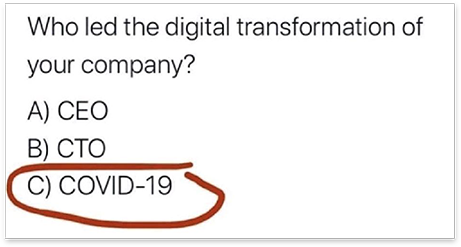
The above image is not just something to be taken on a lighter note but is a bare truth. COVID-19 is one of the biggest disruptions almost forcing businesses to adopt digital transformation.

The post-lockdown world will be laden with a host of changes for businesses. People around the world are now adapting to what is now being called the ‘new normal’ marked by social distancing, fewer outings, and unavoidable safety measures. The regulatory environment has stringent measures in place for carrying out business operations from production to delivery. Digital payments and contact-less delivery are being encouraged. New workplace conditions have to be maintained. WHF is a new reality. All of these leave a radical impact on how businesses will operate from here on.
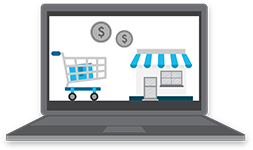 An emerging necessity from COVID-19 is digital transformation. Businesses that were not even thinking of using digital channels are now in consideration mode. We have seen brick and mortar stores taking grocery orders on WhatsApp and providing home delivery options due to lockdown. We have also been seeing increased collaboration between businesses to use each other’s capabilities to serve their customers. Additionally, businesses need to understand that before a full-proof vaccine is available and administered at a massive scale worldwide, the new normal will have to be embraced with all the grace and humility.
Digital Transformation in Retail & ECommerce
COVID-19 situation will be a driving force for retail and eCommerce players to adopt or uplift their digital platforms. But fear should not be the primary reason for doing something constructive. Since long before COVID-19, digital technologies have played a big role in transforming the retail industry and especially by creating its alternative face – eCommerce. That does not mean digital transformation is only meant to cover the journey from retail to eCommerce. Companies like Ikea, Amazon (Amazon Go), and Zara to name a few have transformed the face of conventional retail with retail digital transformation. Likewise, many innovative eCommerce players are also redefining industry standards.

Companies use digital technologies to improve their omnichannel customer experience. A contemporary example would be the feature to change the payment method at the time of delivery for online purchases. To make things easier for customers, the request for change of payment method can be initiated by the delivery partner in a matter of seconds and the transaction would be over quicker than settling for the changes.

Gone are the days when customer support was only customer support in black and white responses. The next level of customer support via retail transformation is delivering personalized experiences. Like in traditional retail, valued customers also need to be delivered a similar experience in eCommerce. This is possible with CRM-ERP in place. The customer support teams will need to understand a customer’s history with the company. New customers may have a different set of expectations than old customers.
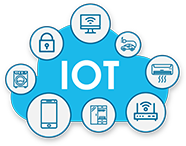
Another big thing knocking the doors of retail and eCommerce is IoT. Hyper-personalization is now a reality with IoT. Customers will have lesser worries for product/asset maintenance or replenishment of inputs. Queues in stores would be better managed which is often a complaint generator. With GPS and RFID, eCommerce companies will be able to track individual items precisely like never before lending operational transparency with their supply chain partners.
 With digital transformation in the retail industry, self-service checkout is another surprise for retail customers borne out of digital technologies. Customers now need not wait in long queues for checkout. This is a critical element of customer shopping experience. Many customers do not visit certain stores only because of the frustrating checkout time.
At the end of the day, whether it is retail and eCommerce, going solo or with the help of digital transformation companies, proactive business leaders are leveraging digital technologies to create UVPs and competitive edge for their business.
How YRC Digital can help?
YRC DIGITAL is the service brand of YRC dedicated to digital products & digital transformation consulting. YRC takes pride in having consulted over 500+ retail and eCommerce brands and 150+ B2B companies, which included start-ups, SMEs and multinational conglomerates, spanning across continents, with a success rate of 95%. And there’s so much for us to learn.
Our experience and expertise in the retail and eCommerce industry have given us a thorough understanding of the digital technology requirements for retail and eCommerce businesses. From digital business planning to digital marketing campaigns, our dedicated experts shall work closely with your business at every stage. We shall guide you with the selection and customization of digital analytics platforms in consideration of your specific business requirements. We also understand that delivering a superior customer experience as a part of a digital transformation strategy is of critical importance to stay ahead of the competition in the world of digital businesses. In short, we can help your business build a digital transformation roadmap.
By helping your business achieve digital transformation, our vision is to ensure that your business remains growth-oriented and achieves long-term sustainability.
Get Advice for Digital Transformation
Related Blogs
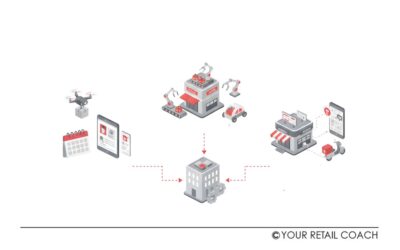
Emerging Grocery Retail Trends In 2025-26 And How Process Automation Is Defining Winners
Emerging Grocery Retail Trends In 2025-26 Grocery retailing will see significant disruption in 2025–26, as digital technology, consumer behaviours, and competitive pressures move rapidly forward. The grocery retailing businesses who are winning - are those who are...
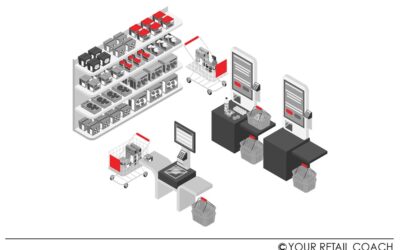
From Shelf To Cart: SOPs For Grocery Stores In The Age Of Omnichannel Retail
SOPs For Grocery Stores In The Age Of Omnichannel Retail Standard Operating Procedures (SOPs) provide grocery stores with the consistency and efficiency to keep his business ticking, from stocking shelves to shipping online grocery orders. In today's omnichannel...
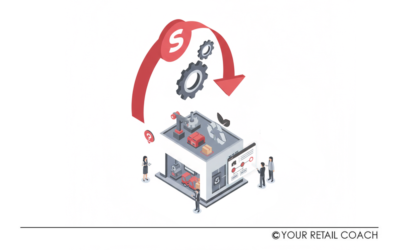
Sustainability In E-Commerce: How Process Excellence Via Signavio Supports Eco-Efficient Operations
Sustainability in E-Commerce with SAP Signavio Sustainability is a key consideration of today's eCommerce businesses due to the public's increasing understanding of the effects that our activities have on the environment (carbon emissions, waste from packaging, etc.)....
We work only for Visionaries.