
A winning go-to-market (GTM) strategy connects customer targeting, location selection, supply chain readiness, and omnichannel engagements. It’s about more than opening a new store; it’s about ensuring each retail engagement is set up to serve customer needs and local market behaviors.
This is where retail consultants come in. Consultants create scalable and location-based strategies from theoretical frameworks. They assess competitor presence, customer density, and economic index analysis to help you hone your market approach. The GTM plan is your architectural plan, prescriptive of product mixes, store formats, pricing models, and brand orientation. For retail chains looking for sustainable growth, getting the GTM strategy correct from the outset is not optional, it is fundamental.
Role of Retail Consultants in Go-to-Market Success
Retail consultants are important enablers in developing or refining your go-to-market approach. Their depth of industry knowledge helps identify blind spots, better allocate resources, and confirm your market assumptions with primary data gathering and opportunity modeling.
Consultants can bring a number of valuable support services to the table including planning retail sites, selecting formats, and benchmarking against competition. They connect the dots between your strategic vision and execute on-the-ground strategies so that retailer chains don’t make expensive mistakes. For instance, they may suggest a series of launch sequences in a catchment area; or in the catchment area level, they will refine the boundaries of the catchment area.
They also help tailor messaging and pricing strategies for distinct markets so that customers are engaged from the very first day. Consultants often work very closely with internal teams for retail growth advisory that incorporates global patterns with local activity in mind.
The insight they provide to understanding market and constituent behavior, regulatory shocks, and demographic alignment are invaluable. In a retail ecosystem that is focused on timing and precision, consultants allow you and your team to have the clarity to move confidently in the current environment. The simple outcome is improved ROI, faster break-even, and stronger positioning of your retail organization to scale.
Retail Site Planning and Location Intelligence
Successful planning for retail sites is important to ensure success at your chosen retail location. Planning strategically is more than just picking the spots with the most foot traffic; it is all about analyzing the data through retail location intelligence.
Location intelligence uses a multitude of data about demographics, traffic patterns, spending behaviors, and nearby retailers to determine target locations for stores. The analysis provides the granularity to help decisions not on a whim. Whether your strategy is to enter a city from a metro area or tier-2 city, it is important to make sure your retail experience meets demand.
Retail consultants are involved in this process because of their tools, local market knowledge, and ability to assess zoning, rent trends, and consumer concentrations to make recommendations based on your time horizon.
A smart retail site planning strategy is about more than just new store openings; it is where customers are likely to convert. Armed with the right data and predictive models, your go-to-market (GTM) strategy will be not just bold, but precise and ultimately profitable.
Analyzing Expansion Feasibility for Retail Chains
Before you make your move into a new market, you absolutely need to understand the feasibility of expansion. Expansion should be informed by thoughtful, strategic analysis—not guesswork. Retail chains must assess the saturation in the market, local demand and need, consumer and shopper behavior and things like logistical realities of their business model.
This is where retail growth advisory companies can help. They will conduct feasibility studies assess the commercial viability of an area. They will review population and economic trends and indicators, the growth rate and level of existing competition. All this analysis helps to identify both potential opportunities and risks.
They will also map out the scalability of your business model by factoring in supply chain capacity, availability of talent and the level of infrastructure, all of which are frequently under prioritized. Whether it is for one store or a bunch of locations, decisions on expansion need to be made in alignment with long-term financial sustainability.
The involvement of retail consultants with deep experience in growth strategy can help chains anticipate potential bottlenecks and bake-in contingencies into their go-to-market strategy. When feasibility is validated rigorously, your brand can avoid overextending and ensure continued healthy growth. Also, this step is where the vision first converts to something executable with a dose of realism.
Strategic Market Entry Tailored for Retail Chains
Choosing when to enter the market is just a part of strategic market entry. It means setting up a phased approach to market entry that is relevant to your brand positioning, operational capabilities, and consumer expectations. Whether entering urban metropolitan centers or focusing on an underserved area, requires calibrating as a distribution point.
Retail chains and other retail organizations need to think about the entry models—direct ownership, franchising, and in partnership. In all three scenarios retail consultants will provide their guidance in terms of what is the best model for your financial and operating capacity, as well as identifying trends in regional demand, piloting formats, and promoting to consumers in a meaningful way which will lead to the greatest adoption by consumers.
Retail location intelligence practices provide a basis for making decisions regarding records of areas that have the best potential for conversion. Along with our demand forecast models, this creates a durable framework to ensure there will be successful brand acceptance in order to build the opportunity of success for the company or organization.
A grounded market entry plan will have better alignment to your customers, meaning you start with traction faster, with less disruption. For retail brands it is not a matter of being everywhere; it is about being in the right place, at the right time, with the right message.
Retail Growth Advisory for Scalable Expansion
Scaling up a retail chain means planning for the future and this is where retail growth advisory can play a critical role. Advisors partner with retail leaders to create a roadmap that would allow for sustained and replicable growth in new geographies.
Advisors consider key questions like when and where should I grow next, how do I optimize the product mix, and how do I replicate a successful format in an expanding geography? Their advisory services would also afford leaders a certain level of comfort between the need to innovate and standardized operational consistency like for instance, are we going to invest in small stores in a costly rental district or are we going to experiment first with pop-ups?
By utilising various tools like heat maps, customer profiles, and location scores to help bring clarity to the decision process, retail consultants can also bring agility to a chain’s go to market strategy if a chain is open to a hybrid go-to-market strategy based on real time performance feedback.
Retail growth advisors will also augment considerations for directional growth to include macro and meso economic forces, digital disruption, and evolving consumer buying habits to ensure growth strategies can maintain relevance moving ahead. Ultimately, no brand wants to scale so quickly that it sacrifices the customer experience or lacks operational control.
Optimizing Your Store Network and Making Data-Driven Decisions
Optimization of the retail store network guarantees that every brick and mortar store is earning a share of profitability and equity for the brand. It consists of making informed data-driven decisions about formats, layouts, locations, and even closures when necessary.
Through analytics and performance analysis, retail brands can analyze which stores are lagging, and in what ways. The services of retail consultants can then help to improve network optimization through methodologies that include cannibalization analysis, proximity modeling, and in-store traffic flow analysis.
Many of the tasks associated with store network optimization can include re-routing to and from stores, allocating inventory for distribution, and hyper-localizing marketing. Ongoing assessments of the store network is a critical step in a strong go-to-market plan, as it allows brands to remain fluid and adaptable.
Optimization is not a one-time task, but a recurring process. By assessing store health more consistently, the retail chain is assured to get better returns and a happier customer. When stores are lighter in capacity and function optimally, they can be engines of growth, and not cost-centres.
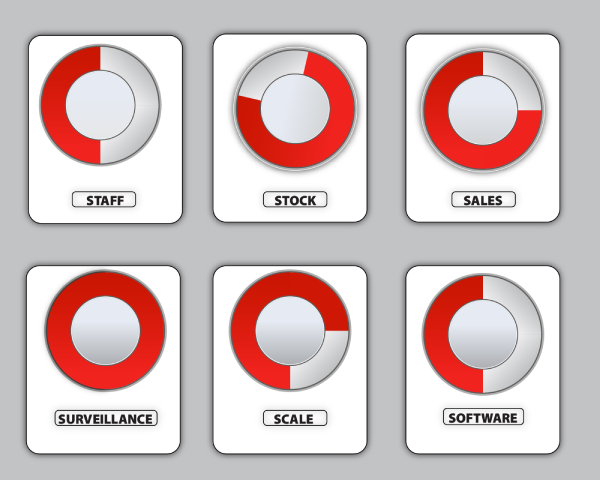
Retail Healthometer
Check the health of your business? Are you ready to organize & scale ?
Author Bio

Nikhil Agarwal
Chief Growth Officer
Nikhil is a calm and composed individual who has a master’s degree in international business and finance from the United Kingdom. Nikhil Agarwal has worked with 300+ retail e-commerce brands and companies from various sectors, since 2012, to define their growth strategy and achieve operational excellence. Nikhil & his team have remarkable success stories of helping brands achieve 10X growth.