
Revisiting the concept of “System”
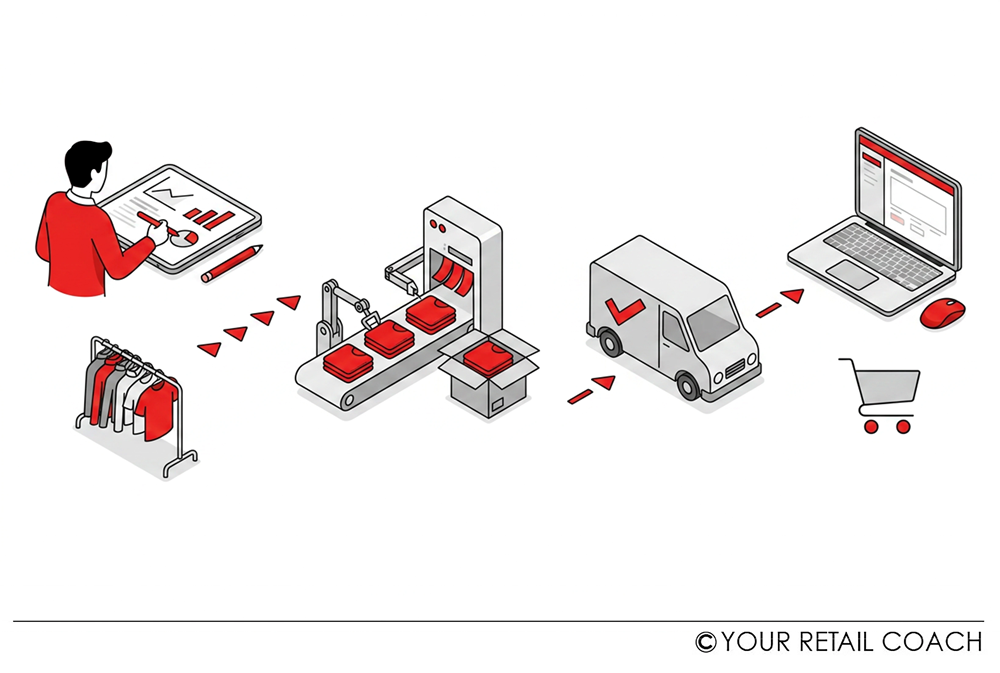
Before anything else, let us quickly revisit the concept of “system”. It is the identification, assimilation, and functional harmonisation of multiple components or sets of rules forming a complex or organised whole (mechanism) to achieve certain objectives. In the natural world, there are different ecosystems such as deserts, forests, and oceans. In machines, we have examples like cars and computers. In conceptual systems, there are languages and schools of philosophy. Each of these systems has tens to thousands of individual parts or sets of rules coherently arranged to give meaning or meaningful output.
“System” in Business
A business is also supposed to work like a “system” so that it functions and strives to yield the intended results. A well-planned system helps a business function predictably (e.g. ensuring standards of quality or paying suppliers on time). An ideal business system comprises these four elements:
- Process (what, how, when, where)
- People (who)
- Consumable Resources (raw/input materials, financial, etc.)
- Tools (machines, equipment, technology, etc.)
- Control and Feedback Loop
Why a “System First” Approach
Consistency and Quality Control
Veteran apparel business consulting experts would agree that in the clothing retail industry, consistency is the difference between a one-time purchase and paving the way to secure a loyal customer. Without a solid system in place, a brand is functionally and operationally impaired to meet the standards of consistency and quality control. Let’s see how this works.
- Tech Pack (Technical Package): The primary system for QA and QC in an apparel business is the Tech Pack. It is the “recipe” that communicates design, materials, measurements, and manufacturing details. For example, if you tell your production team to manufacture a grey cotton shirt, they may hand you 10 different shirts that are grey and made of cotton, and still not the one you wanted. When you have a tech pack, every required detail gets specified – design, the colour code, GSM, SPI (stitch density), size chart, etc.
- Sizing Standardisation: Size and fitment issues constitute a major challenge in apparel production workflow optimisation, and they spare no brand. Professional businesses deal with it using a systematic fix – block pattern/sloper instead of referring to sizes as Small, Medium, Large, XL, etc., for design and production purposes.
- Multi-Stage Quality Audits: You cannot wait till 1000 units are manufactured and half of them already shipped to detect anomalies in quality. Having a system for quality control allows the creation of multiple checkpoints, such as Pre-Production Sample and Final AQL, in the value chain. If any batch does not meet a standard, its flow is stopped for correction (if possible) or completely discarded off the pipeline.
- Inventory and Fabric Sourcing: Fabric and inventory are two of the most “liquid” assets in a clothing business. Without a system to ensure a smooth and accurate flow of these two components, there is a high probability of facing stockouts and deadstock situations, leading to idle or tied-up working capital in excess. Proven measures like Bill of Materials (BOM), lead-time mapping, buffer stock, ROL, quality testing, and ageing reports add accuracy and predictability to inventory management in a clothing business.
Scalability
Scalability is the ability of a business to expand its operations and footprint without costs, errors, or stress levels exploding at the same rate. Without a system, a business (new or old) remains highly dependent on the tacit knowledge and expertise of its owners and a few other individuals. This is not about publishing business secrets on a national daily, but creating a functional system that can reliably replicate performance and results. This is so that the members of the core team can shift their primary focus to broader issues like growth and efficiency instead of remaining tied to routine operations. Here are a few prime examples of how system-orientation helps in scalability.
- Proven Technical Solutions: We have already discussed above how system-oriented measures like Tech Packs and Slopers help clothing businesses achieve solid control over product quality and consistency. With these solutions in place, business owners need not spend hours with designers and tailors or the manufacturing team. They can confidently pass on these measured and proven documents to their respective units and achieve the same desired results irrespective of location or their active presence.
- Standard Operating Procedures (SOPs): SOPs stand out as an epitome of a process-driven system. With SOP framework development for multi-channel retail as one of its flagship expertise, YRC maintains that these documented procedures help ensure the “replicability” of a proven operations framework. In a clothing business, it applies not just to design and production, but also to all the departments like merchandising, inventory management, and administration. Once a new store has the required SOP manuals, it becomes significantly easier for everyone involved in running the store in the same style and standards as the original store.
- Automated Inventory Replenishment: In a small setup, it is easy to inspect inventory levels and place re-orders by walking down the aisles in stocking rooms. This does not work when there are 10 stores or an extensive product mix. In contemporary retail, stock measurement and inventory replenishment are already automated (almost everywhere) with little to no human intervention. A “system” can handle not just complexity but also volume and extent. Digitisation and automation are major leaps in strengthening business systems.
Efficiency and Cost Savings
In the clothing business, efficiency is not just about speed, but also about minimising wastage. It can be a wastage of fabric, consumables like dyes, labour hours, or working capital. Because of thin margins in fashion, having a robust system acts like a shield that controls mistakes and errors and prevents them from assuming problematic dimensions. Here are some instances of how a strong system makes a difference.
- Reducing Sampling Loops: Getting to the final design involves multiple to-and-fro exchanges of communication. These communication loops can be significantly reduced by implementing systematic and standardised solutions like Tech Packs and Point-of-Measurement (POM) sheets. By having a standard set of rules known to all stakeholders involved, the output can be achieved with a smaller number of sample exchanges.
- Fabric Yield and Nesting Optimisation: In fashion, fabric accounts for the largest share of total costs. Inefficient layouts and cutting can swallow this cost further. By using Marker Planning and niche software and cloud-based applications, a higher level of optimisation in fabric usage can be easily achieved.
- Streamlined Procurement: Not ordering all the required input materials from the best available sources on time can inflate the cost of production. Buying in fragmented quantities and from randomly available suppliers on short notice leaves little room for bargaining. The replenishment trigger linked to BOM helps overcome this problem.
- Minimising the Rate of Return (RR): Returns are a burden on profit margin. No doubt that these are accounted for, but a systems approach can help substantially minimise the quantum of returns and exchanges, and the eventual impact on financials and customer experience. Solutions like Final Quality Audit (AQL) and Fit Consistency Blocks are ideal measures to this end.
Enhanced Business Value
The true value of a brand also encompasses its “business systems”. For example, investors and franchisees also look into the state of the operations framework when considering entering into any partnership with brands. Well-established systems provide functional certainty in the eyes of outsiders. A few examples of how it pans out are highlighted below.
- Transferability: Documented SOPs, contracts, and other resources required to run a business speak for the “functionality” of a business enterprise. These resources can be easily shared with and comprehended by franchisees, new owners, or investors. This lends “transferability” to a business.
- Organised Expertise: An archive or library of designs and standardised documents shows investors that the required “internal” expertise is in one place in an organised state. For example, if a restaurant decides to sell the business, it may have to provide the recipes of its flagship dishes (USP of that restaurant).
- Reliable Records of Performance: External stakeholders like investors may also be interested in looking into the internal records of performance like apparel unit economics and burn-rate analysis. This takes the focus to the extent and quality of recording and measuring performance. For example, does a business only know that it is doing “well” or does it also have periodical retail KPI scorecards to corroborate the same? Having a well-defined and data-driven system for performance measurement and analysis gives confidence to outsiders.
- Workability of Supply Chain System: Investors seek an answer to this question (in one form or another) – does the business in question have a workable supply chain system? Taking over a business with a broken supply chain is a bad deal for its successors. What good would be a pizza or fried potato brand if the required supplies cannot be obtained? This need not always mean the exact replication or continuation of the same supply chain, but there should be evidence that the required supply chain can be reasonably built or brought under control (e.g. SOPs for the selection of suppliers, determining/conducting supply chain traceability & transparency audits).
1000 in 100
A system is the identification, assimilation, and functional harmonisation of multiple components or sets of rules forming a complex or organised whole (a functional mechanism) to achieve certain objectives.
- A business is also supposed to work like a system.
- System helps create and sustain consistency in quality (e.g. Tech Pack and sizing standardisation).
- System makes scalability easier (e.g. SOPs and PLM integration).
- System leads to improved efficiency and cost savings (e.g. BOM-based procurement).
- System enhances business value (e.g. transferability of expertise).
- Branding strategies and goals cannot be sustained without first having the right “business systems” in place to deal with the execution part.
About Your Retail Coach
We are a global retail & eCommerce consulting marque specialising in business set up, management, and expansion solutions. With over 10+ years in business, we have helped more than five hundred clients in 25+ verticals with a success rate of over 94%.
Share your thoughts with an apparel business consulting expert. Let us know and we will shortly reach out to you.
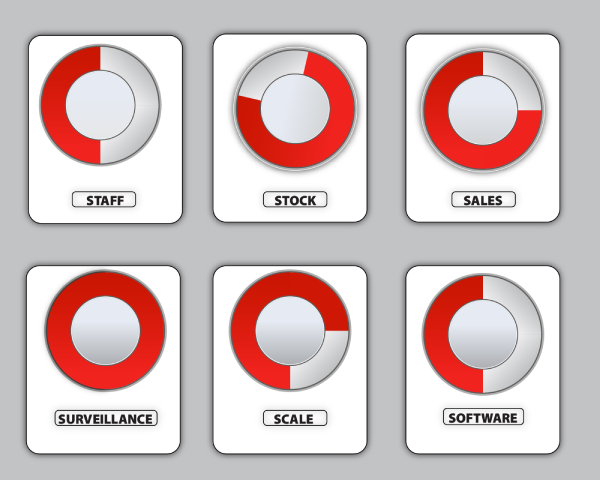
Retail Healthometer
Check the health of your business? Are you ready to organize & scale ?
Author Bio

Nikhil Agarwal
Chief Growth Officer
Nikhil is a calm and composed individual who has a master’s degree in international business and finance from the United Kingdom. Nikhil Agarwal has worked with 300+ retail e-commerce brands and companies from various sectors, since 2012, to define their growth strategy and achieve operational excellence. Nikhil & his team have remarkable success stories of helping brands achieve 10X growth.