
D2C and FMCG Brands
Quick commerce is not just a phase in India; it is a transformational shift in the way urban consumers approach the shopping of everyday goods. With the promise of delivery in 10–30 minutes, consumers’ expectations of convenience, planning, and brand selection have changed.
As such, consumers no longer plan for their weekly grocery shop, instead they purchase several times a week, and possibly several times per day, based on immediate needs of the consumer. The effects of this change in consumer behaviour are significant for both D2C and FMCG brands.
Quick commerce differs from traditional e-commerce in that speed, availability, and proximity are the biggest determinants of quick commerce success. The consumer’s decision-making window is incredibly short. Therefore, brands are competing on more than just storytelling or legacy equity; they are competing on visibility, placement, and reliability.
Quick commerce can be an attractive opportunity for D2C brands in India as it provides a significant shortcut to growth and eliminates the lengthy time it takes to deliver products to customers, which can negatively affect conversion rates.
On the other hand, for FMCG brands, quick commerce creates a new battleground of retail between kiranas and modern trade, with a whole different set of rules governing this space. Brands that view quick commerce as a new sales channel will likely underperform compared to brands that create a new strategy around instant consumption and build their business accordingly.
Understanding the Indian Quick Commerce Consumer
To succeed in Q-commerce, companies need to know how different Q-commerce customers are from those who shop in traditional retail environments and those who shop online in conventional E-Commerce stores.
The major characteristics of Q-Commerce customers in India include:
- Urban working professionals and young families predominantly live in urban areas.
- Q-commerce customers are ultra-time-sensitive and convenience-driven.
- They do not tolerate stock-outs or substitutions.
- They are heavily influenced by “app search ranking and visibility.”
- Q-commerce consumers will pay a small premium for instant gratification.
- Q-Commerce customers show lower levels of loyalty to brands but high levels of loyalty to product availability.
These customers are not browsing to be inspired, but instead, they are looking for immediate solutions to their problems. As a result, the marketing funnel for Q-commerce customers is compressed by about 3 times. The customer becomes aware of the product, considers purchasing it, and converts to a purchase almost instantaneously on the App screen. Consequently, traditional Brand Building approaches will have much less relevance at the time of purchase than they do in traditional retail outlets.
Companies that successfully sell in Q-commerce must create packaging, messaging and pricing that align to the immediate needs of these customers. As such, the immediate clarity of the product’s value proposition, the ease of reading the product packaging, and the instant relevance of the product will take precedence in real-time over the elaborate storytelling that accompanies traditional brand building. Therefore, a company’s understanding of the mindset of a q-commerce customer is critical to a successful q-commerce strategy.
Platform Selection and Channel Strategy
When choosing your quick commerce platform, you are making a strategic choice as opposed to an operational one. Each main competitor in this space targets a different segment of consumers with different usage cases for each competitor. While there are certainly platforms that cater primarily to impulse or emergency purchases, there are also platforms that do a better job of catering to planned top-ups or staple items.
At this point it is important for brands to not rush into launching on multiple platforms at once as doing so could lead to poorly executed launches, low visibility for the brand, and loss of margins on products sold through these platforms. Brands should first determine the natural fit of their category across the various platforms available to them. For example, snacks and beverages are likely to perform very well on ultra-fast platforms, while staple items and household products may get more traction on platforms with slightly larger basket sizes.
Another important factor is evaluating the density of dark stores within a city and/or region. A platform may enjoy high national brand recognition but may not have adequate reach into the priority micro-markets of your brand. Therefore, platform commercials, quality of ad inventory and levels of operational maturity should all be considered when making a decision about which platform to use.
SKU Strategy and Assortment Planning for Quick Commerce
The SKU strategy on Q-Commerce platforms can determine the success or failure of that platform. Quick Commerce (Q-Commerce) is less about the selection of products than it is about the ability of consumers to quickly and easily find what they are looking for.
You should follow these principles when developing your SKU strategy:
- Based on their velocity, prioritize the SKU with the highest sales volume.
- Launch smaller SKU pack sizes, as well as trial sizes, for consumers who may be interested in trying new products.
- Refrain from using any SKU that is likely to have low velocity and/or is considered complicated.
- Offer exclusive bundles only on Q-commerce platforms.
- Continuously remove SKU from your portfolio that are performing poorly.
As dark stores have limited available space and are based on algorithms, they will typically favor those SKUs that sell quickly. Therefore, brands that “throw” their entire portfolio onto the platform tend to have issues with sell-through, stock-outs for the hero SKU, and low visibility.
Instead, brands need to design SKUs to meet consumer “instant-use” scenarios. For example, what do consumers need right now? Are they hungry? Are they looking for replacement products? Did they forget their essential items? Are they looking for an impulse item? SKU designs that align with these needs outperform generic products.
In addition to this, as brands continue to collect data from Q-Commerce, they will be able to leverage that data to develop portfolio strategy decisions across the entire organization, making the SKU strategy not just a channel strategy, but also a learning engine for the entire organization.
Dark Store Execution and Supply Chain Readiness
The success of quick commerce is determined at the level of dark stores. These micro-fulfillment centres combine the roles of retail shelf, warehouse and checkout counter. That makes them highly effective, but quite challenging to manage.
brands must be operationally excellent in many ways. One of the first is that consumers expect to find the items they want in stock; if there is a frequent lack of inventory, the brand’s ranking on search results and the consumer’s trust will diminish immediately. Replenishment cycles must be quicker and more predictable than in traditional retail environments. Additionally, demand forecasting must take place at the pin code or cluster level instead of relying on averages throughout a city.
The second key factor is cancellation and substitution percentages. Many consumers believe that a high number of product substitutions reflects poorly on the brand and will affect future purchases. Brands need to work closely with platform teams to improve the accuracy of forecasting and the placement of products within the platform.
Lastly, the lack of glamor involved with operational discipline is apparent; however, it is a major contributor to the growth of quick commerce. Brands that invest in supply chain readiness from day one will continue to outperform their competitors who focus solely on marketing and couponing.
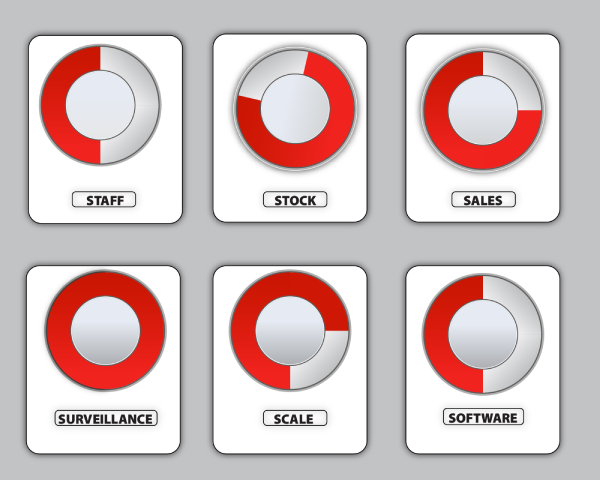
Retail Healthometer
Check the health of your business? Are you ready to organize & scale ?
Author Bio

Nikhil Agarwal
Chief Growth Officer


Get In Touch