
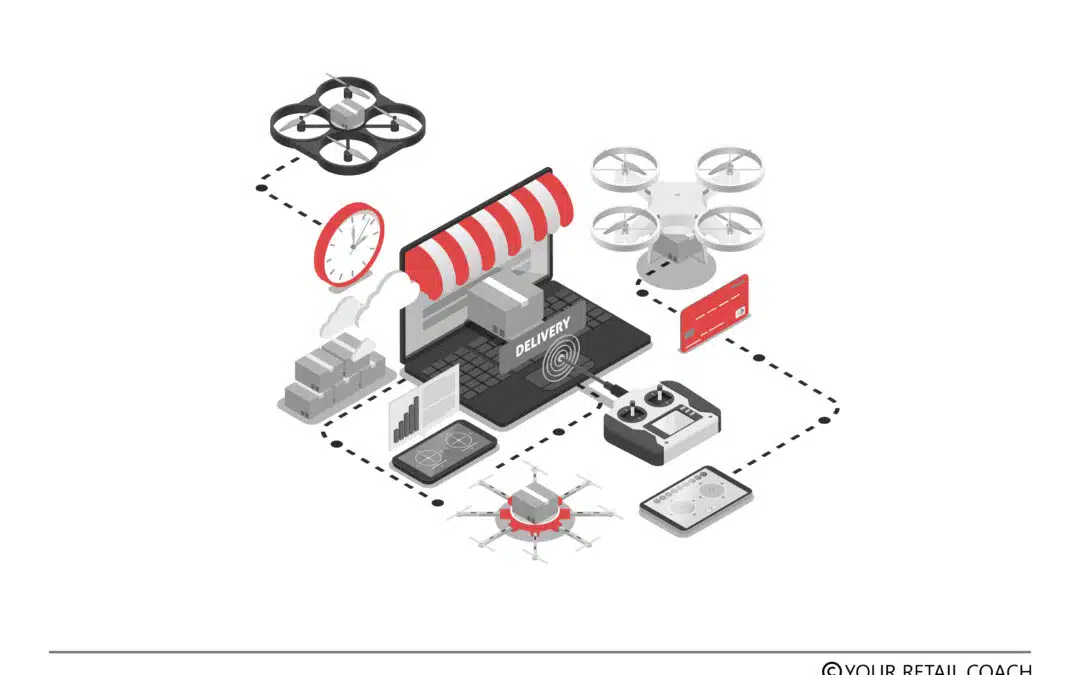
Logistics transformation in retail refers to the adoption of digital intelligence, automation, and advanced analytics to improve supply chains to be faster, smarter, and more secure. It allows retailers to better respond to changing customer demand while cutting costs and minimizing operational lead times.
Today’s supply chain retail operations leverage real-time insights, predictive analytics, and collaborative systems to achieve a seamless flow of product through the supply chain. Retailers now are not just a mechanism to move goods, but field teams that optimize every aspect of the process, from sourcing all the way through to the shelf. This transition leads to more precision, agility, and profitability.
Defining KPIs for a Retail Growth Strategy
Some key takeaways:
- Speedy replenishment while reducing out-of-stock scenarios
- Better collaboration and coordination with suppliers, the distributor and the store
- Efficient delivery for customers improving customer experience
This new customer journey of logistics transformation isn’t about technology but about creating smarter, more agile ecosystems where retail intelligence informs every decision.
What is supply chain transformation in retail?
Retail supply chain transformation involves reimagining every logistics stage for better agility and cost effectiveness. It uses process intelligence retail systems to identify inefficiencies, forecast demand, and continuously improve operations.
Today’s leading retailers are using digital platforms that track inventory, shipments and supplier performance in real-time. This proactive approach helps to avoid disruptions and effectively respond to seasonal fluctuations.
The core components are:
- Automation: the use of smart workflows to replace manual tasks.
- Integration: sharing accurate data throughout the procurement, warehousing, and stores.
- Analytics: leveraging retail intelligence tools to forecast customer demand.
Transformation in retail occurs when logistics moves from being reactive to predictive. By aligning retail supply chain systems with the goals of the business, retailers can achieve faster cycle times, better compliance and sustained profitability.
Why logistics transformation matters for retail efficiency
Efficient logistics are key to modern retail. In fact, without strong logistics transformation, even the best marketing or product strategies are likely to fail. An optimized system ensures on-time deliveries, inventory accuracies, and cost containment that are important to retail operations effectiveness.
Here’s the benefit of logistics transformation:
- Cost: Reduced costs from automated route planning and transport optimization.
- Speed: Less downtime due with real-time visibility.
- Sustainability: Collected data provides smart logistics premises where carbon footprint is reduced via optimal route planning.
Retailers that are implementing digital logistics tools such as Signavio supply chain modeling are better prepared to anticipate delays, monitor logistics performance, and collaborate with their supply chain partners. Efficient supply chain retail processes allow all of the processes from store replenishment to online order delivery to be orderly and manageable.
In short, logistics transformation provides the bridge between demand and fulfillment to ensure that businesses remain competitive in the fast-paced retail environment.
Role of process intelligence in retail logistics
Retail tools powered by process intelligence assess how each step in the logistics process is performing, from onboarding suppliers to delivering the last mile. By mapping processes and diagnosing delays, retailers use process intelligence to eliminate wasted time and effort, which in turn can improve margins and asset speed.
This effectively operates like a “health check” of your supply chain in real time. The data generated through process mining give clear visibility into how the logistics systems are actually functioning, against how they should be functioning.
The advantages of process intelligence include:
- Uncover delays in the process that might not be seen
- Compare actual vs. planned processes
- Continuously improve logistics performance
Retailers that implement process intelligence-driven retail tools are positioned to mobilize quickly to changing demand or market conditions. This enables logistics transformation to be data-determined rather than guesswork. As a result, retail operations become a measurable and scalable source of efficiency across multiple physical locations.
Using Signavio supply chain modeling for better decision-making
Supply chain modeling with Signavio provides retailers with a visual, simulation-based, and interactive way to model logistics networks. It can be helpful to teams that want to test scenarios before making change, helping to minimize risk when making decisions.
The primary advantages include the ability to:
- Simulate proposed change: either to suppliers or transportation
- Predict the impact of demand spikes or shortages
- logistics network aligns to customer experience measures
By adding a layer of retail intelligence to Signavio models, it can now predict disruptions and offer suggestions instantly. For example, if one supplier is late in shipping, Signavio supply chain modeling can automatically offer a different routing or vendor.
This smart way of working ensures decisions are made on real data, which increases responsiveness and accuracy. Retailers employing modeling tools will have more supply chain agility, and greater success in transforming logistics overall than competitors.
Retail intelligence and data-driven logistics optimization
Retail intelligence translates data into action. It brings clarity into customer behavior, product churn and supplier effectiveness; in logistics transformation retail intelligence supplies an assurance that the product is in the right place at the retail shelf, at the right time.
Uses of retail intelligence include:
- Anticipating sales peaks
- Managing inventory at a store level based on demand
- Identifying slow-moving products to convert to profit like reducing waste
Retailers that deploy retail intelligence significantly improve the retail efficiency of their supply chain. When tied together, predictive analytics and real-time dashboards give managers the ability to act when necessary without waiting for issues to arise.
Ultimately, retail intelligence connects the dots of demand signals and supply capability, and supports companies to deliver more value with fewer resources.
Inventory optimization through Signavio and automation tools
Retailers who use Signavio solutions for inventory optimization are able to maintain stock levels throughout distribution centers and retail locations. Optimizing inventory is important because excess inventory ties up cash resources unnecessarily, while low inventory leads to missed sales. Signavio’s modeling ensures a sufficient volume of inventory will be maintained.
The benefits of inventory optimization include:
- Able to lower carrying costs
- Increased accuracy in order fulfillment
- Better inventory turnover rates
The automation of these results also improves the order management chain with items being triggered for replenishment as a result of predictive analytics. Meaning that process intelligence retail systems can identify slow-moving inventories in time for retail teams to be able to adjust their buying and pricing strategies before losing profit.
Retailers and/or manufacturers who have designed inventory optimization into their signavio product are reporting enhanced visibility assurance across their entire supply chain, providing significant overall value towards achieving logistics transformation. Products move through the chain quicker and with little waste or delays.
How logistics transformation improves retail operations efficiency
Efficiency in retail operations is enhanced when logistics systems are both intelligent and automated, as well as integrated. By eliminating silos between the departments, retailers are able to exert control over every moving part of the supply chain.
Here’s what integrated logistics transformation provides:
- One view of procurement, transportation, and sales visibility.
- Faster decision-making through timely data connectivity.
- An improved customer experience with accurate visibility into the order fulfillment process.
Tools for process intelligence retail and Signavio supply chain modeling environments and associated modeling software, will continuously improve your performance lifecycle based on historic and ongoing performance patterns. This will build resilience over time to ensure retailers can manage disruption or demand such as seasonal spikes in orders or a supplier shortage.
In conclusion, logistics transformation is not simply about optimization to get things done faster, and into the consumers’ hands, but is much more about future-proofing a retail business with both precision and excellence.
Future of supply chain retail – trends driving transformation
Automation, predictive analytics, and sustainability will shape the future of retail supply chains. As customer demands evolve, retailers need to enhance the pace and flexibility of their logistics networks.
Up-and-coming trends include:
- AI-based forecasting for improved inventory management.
- Robotic process automation (RPA) for order fulfillment.
- Internet of things (IoT) sensors to track shipments in real-time.
- Sustainable logistics to reduce carbon footprints with route optimization and environmentally-friendly packaging.
The expansion of retail intelligence and process intelligence retail distributed platforms will build increasingly smarter ecosystems of commerce where every decision will be based on data. Technologies like Signavio supply chain modeling will be instrumental in crafting agile logistics networks that can manage disruption before it happens.
The next wave of logistics transformation will reward retailers that can utilize technology, intelligence, and efficiency to bring value to every transaction.
Retail Healthometer
Check the health of your business? Are you ready to organize & scale ?
Author Bio

Nikhil Agarwal
Chief Growth Officer
Nikhil is a calm and composed individual who has a master’s degree in international business and finance from the United Kingdom. Nikhil Agarwal has worked with 300+ retail e-commerce brands and companies from various sectors, since 2012, to define their growth strategy and achieve operational excellence. Nikhil & his team have remarkable success stories of helping brands achieve 10X growth.