
Retail success is not about having great products. A good plan is needed for a store to make money. This plan helps the store run well. Effective retail store management helps retailers to keep things consistent and adjust to what customers want and changes in the market. It is about having a system that works well for the store.
Whether you are running one store or many stores your business needs systems in place. Situations like these require the businesses to make decisions wisely based on the data and numbers.
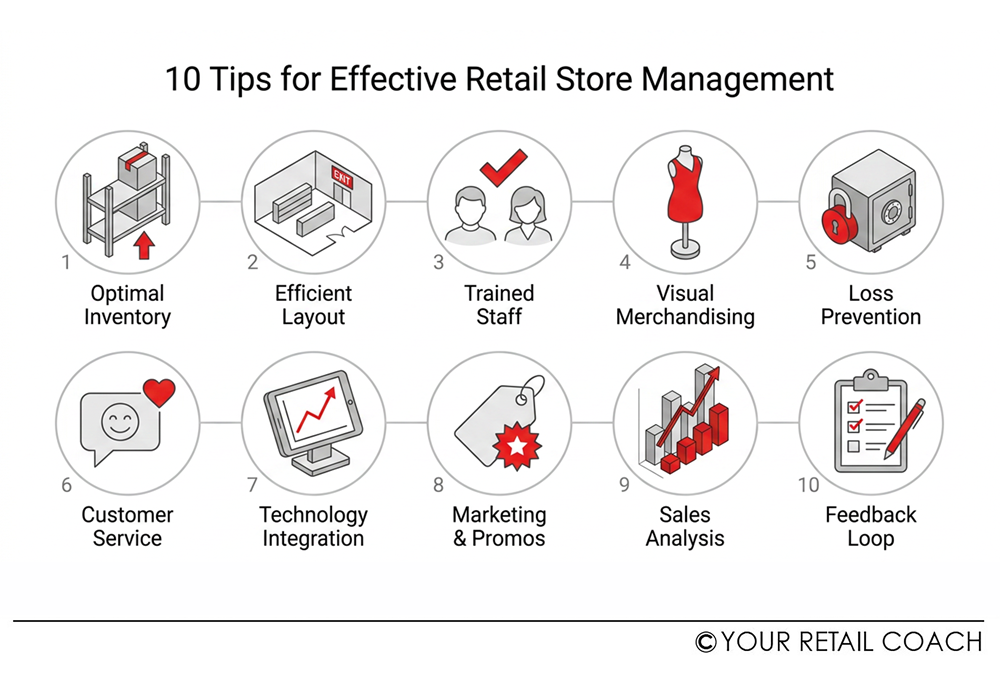
This article walks us through 10 practical tips that can strengthen operations management in retail stores.
1. Clear Standard Operating Procedures
Managing a store is a big job and it starts with making sure everyone knows what to do. You need to write down all the steps for things like taking care of inventory, billing, helping customers and opening and closing the store.
When you have steps to follow people get less confused and they can work faster. They also make mistakes. This is really helpful when you have employees because it is easier for them to learn what to do. If you have stores in many places you can make sure everything is done the same way at every store. Retail store management is about having good systems in place like these steps so your retail store runs smoothly.
2. Accurate Inventory Visibility
Inventory is really important for stores. If you do not manage your inventory well you will run out of things to sell or have much of something. This means you will lose sales. Retail stores should use systems that show them what they have in stock at all times. They should also check their stock regularly, try to figure out what people will want to buy and automatically order things when they are running low. This will make their inventory work a lot better.
3. Employee Training
Employees have an impact on how customers feel about a store and how well it does. When employees get training all the time they get better at knowing about the products helping customers and doing their jobs right. Employees who are well trained feel more sure of themselves, get work done and can handle problems with customers in a good way.
Training should not just happen when someone is new. It should keep going on so that teams can keep learning about things like technology and products. Employees need this training to stay up, to date and do their jobs well.
Retail and sales management becomes more effective when employees understand business goals and their role in achieving them.
4. Set Measurable Performance KPIs
If you do not have goals that you can measure it is hard to figure out how well a store is doing. Retailers use performance indicators to see how well they are doing with things like selling stuff making customers happy and running the store smoothly. Some important things retailers like to keep track of are:
- how much each employee sells
- how much people spend when they buy something
- how often people buy things
- how fast they sell their products.
- what makes the customers come back to the store
Key performance indicators, like these help retailers understand their store performance.
5. Customer Experience
Customer experience remains a key selling point in today’s retail. Consumers want convenience. Retailers should hence assess each customer touchpoint. All care should be taken to ensure a smooth experience of the customers.
Customers who have an enjoyable experience in a store are more likely to come back and buy more. If the businesses know what their customers expect from them, this is half the battle won.
6. Store Layout and Visual Merchandising
A good and decent store design contributes to customer behavior. The way a store is presented is instrumental in influencing their buying decisions. Good visual merchandising helps to highlight key products. A good store layout also helps the store team to place products in a specific and strategic way. This eventually helps increase product visibility.
Things like product placement and signs can grab their attention. Lighting and special displays can also make a difference. We need to check the store layout all the time to make sure it is what the customers want. It is helping us sell things. This way the store will always look nice.
7. Technology and Automation
Technology is really important for stores and retailers. They can use technology to do things on their own quickly. When things are automated it means people do not have to do everything by themselves. Advanced systems really help stores work better every day. Some are listed as:
- point-of-sale systems
- inventory management software
- workforce scheduling tools
- customer relationship management platforms
8. Data to Drive Decisions
Successful retailers look to data to make operational decisions. There are various aspects of a business that can help business owners make informed decisions. These include:
- Sales trends
- customer preferences
- inventory performance metrics
- employee productivity metrics
9. Omnichannel Integration
Omnichannel integration makes the shopping process much simpler for customers. They can browse, purchase or return the products across all channels of the company.
This coordination between online and offline operations is the responsibility of your retail store management. A sound management is known to provide:
- Consistent brand experiences
- unified customer data
- inventory synchronization
All these will ultimately lead to a better customer engagement.
10. Regular Operational Audits
Regular checks on how things are working help stores find problems before they get really bad. These checks give us ideas on what needs to be fixed and help keep things the same at all stores.
Stores need to do these checks to make sure everything is running smoothly and to find any issues, with inventory accuracy, employee compliance, customer service standards, store presentation and overall operational effectiveness of the stores.
Managing a store properly means you have to keep an eye on things all the time and make changes as needed. If you want your store to run well you have to keep looking at what you are doing and make it better. Retailing operations need to be checked all the time to make sure they are working correctly. This is how you get retailing operations to be the best they can be.
Why YRC
Retail businesses operate in an increasingly competitive environment where efficiency, customer experience, and profitability must work together. YRC helps retailers strengthen retail store management through practical consulting solutions focused on operational excellence and sustainable growth.
With expertise in operations management in retail stores, YRC supports businesses in all these areas:
- improving inventory control
- optimizing store performance
- enhancing customer experiences
- implementing retail strategies
The team combines industry knowledge with data-driven insights to address real-world retail challenges. Whether supporting a growing retailer or an established enterprise, YRC helps businesses create stronger operational foundations that drive measurable results.
About YRC
YRC is a global retail and eCommerce consulting firm that helps businesses improve operational efficiency, strengthen customer experiences, and achieve growth. With deep expertise in retail store management, retail transformation, and management of retailing operations, YRC works closely with retailers to develop practical strategies.
- Expertise in retail, eCommerce, and omnichannel business consulting.
- Proven capabilities in operations management in retail stores and process optimization.
- Strategic support for retail and sales management improvement.
- Customized solutions tailored to business size, industry, and growth stage.
- Focus on measurable outcomes, operational excellence, and long-term scalability.
Retail Healthometer
Check the health of your business? Are you ready to organize & scale ?
Author Bio

Nikhil Agarwal
Chief Growth Officer
Nikhil is a calm and composed individual who has a master’s degree in international business and finance from the United Kingdom. Nikhil Agarwal has worked with 300+ retail e-commerce brands and companies from various sectors, since 2012, to define their growth strategy and achieve operational excellence. Nikhil & his team have remarkable success stories of helping brands achieve 10X growth.