
10 Steps to Set Up an Apparel Brand/Store: Merchandising, SOPs & Scale-up
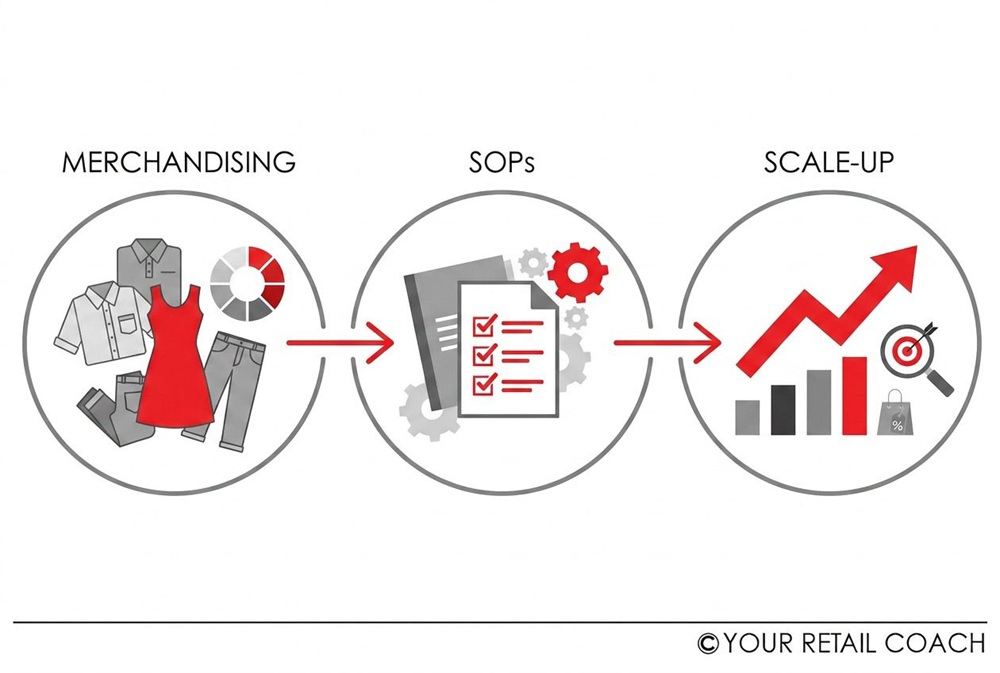
Typically, the conception of an apparel brand does not start off with spreadsheets or standard operating procedures, but rather with the initial idea of the brand. The first idea may simply be a fabric that has inspired you, an understanding of a subculture, or a difficulty you see with fit or sizing. There is a long and complicated path from the sketch on paper to opening your first store; this journey will include merchandising, operations, teams, and growing your business.
The story of Zara shows the journey of an aspiring fashion entrepreneur who wanted to be a globally successful fashion brand from day one; as she progresses through her journey, she finds out that process and procedures have just as much importance as the design of her products and therefore that standard operating procedure consulting can help bridge the gap between her passions and sustainable growth.
Step 1: Begin with a clear concept
Zara’s formative years were not pre-occupied with how to source stock, but rather determining the nature of whom she will be dressing. By providing an answer to that query (age, lifestyle, income, and style preferences of her ideal customer), she was able to develop the clarity required to navigate through each of the many decisions made later on as less guessing and more as meeting the final outcome.
- Define your niche: occasion-wear, athleisure, streetwear, or workwear.
- Decide your price band and the regions you will be serving.
- List your company’s 3-5 core values to use in guiding every choice you make.
Step 2: Turn vision into a business model
To develop a successful concept, Zara built herself a strong business model. Working with a consultant, she quickly determined whether the business should operate as a pure retail, eCommerce, or omni-channel business. This provides analysis of how revenue would flow and what margins could be anticipated
The business model also provided Zara with complete financial analysis with key components including fixed costs, variable costs, and breakeven forecasts. Completing this step forced Zara to answer very tough questions such as how many pieces she wishes to carry for each style; what is the minimum amount of product she can carry for viability, and so on.
Step 3: Design merchandising that tells a story
Zara quickly learned that merchandising is not about stuffing racks; it is about storytelling in fabric. Her first merchandising calendar aligned drops with seasons and micro-trends, but also with local festivals and payday cycles. She grouped products into coherent stories—“Airport Athleisure,” “Power Monday,” “Weekend Minimal”—making it easier for customers to build complete looks.
Step 4: Build the back-end supply engine
Zara’s designs meant nothing if suppliers failed on timelines or quality. She shortlisted factories based on compliance, MOQs, cost, and their ability to scale. Clear vendor SOPs meant everyone knew what an acceptable seam, print, or wash looked like. To avoid dead stock, she tested smaller batches first, using learnings to commit to larger repeats.
Step 5: Write SOPs for store operations
Zara noticed on the day of her first shop opening that since there were no standard operating procedures (SOP’s) in place, that everyone would be doing things their own way. Thus, she created specific procedures related to the shop’s operations
- checklists for opening and closing,
- guidelines for visual merchandising (VM),
- procedures for cash management,
- procedures for customers to be handled, and
- procedures for receiving stock
This allowed expectations to be turned into concrete, repeatable actions.
Step 6: Digitize processes early
Instead of letting spreadsheets multiply, Zara adopted basic retail tech early. She has a POS integrated with inventory, a simple ERP, and later, an eCommerce platform. Each system came with its own workflows, but she aligned them with her SOPs so that tech would support the process, not dictate it. She ensured SKUs, barcodes, and categories were standardized across channels. This reduced stock mismatches and made omnichannel features possible later.
Step 7: Build a people and training ecosystem
Through the development of job descriptions, KPIs, and training programs for store associates, warehouse employees, and planners, Zara recognized that people are the most important asset of a branded retailer. New employees were trained not only on product knowledge but also on SOPs, grooming, communication, and upselling.
The use of both internal trainers and e-learning modules provided an opportunity for training to be carried out in a scalable manner across multiple locations. As her company grew, the design of the organizational structure facilitated clarity in terms of reporting responsibilities.
Step 8: Use data to refine merchandising and CX
Within a short time frame, Zara was able to answer questions that had previously been based on her assumptions: which styles were the fastest selling, which colours were the slowest selling, which stores were achieving the highest conversion rates.
The use of data from point-of-sale (POS) transactions, web analytics, and customer feedback created both weekly and monthly review processes. The identification of slow-selling items allowed for the systematic reduction of those items, while the performance of fast-selling items facilitated the creation and expansion of additional fast-selling items.
Step 9: Prepare for scale with franchising and multi-store
When Zara’s first two locations were successful, she looked into franchising. She learned that without SOPs, expansion could create chaos on a much larger scale than the original business. So, before she agreed to any franchise partners, she developed comprehensive Franchise Kits containing brand and procedural standards for each of the franchise locations.
By focusing on a process-driven operation, the franchisee could replicate the brand experience rather than create it from scratch. Additionally, clearly documented expectations made the negotiation process smoother since both parties had something to refer back to in case of a dispute.
Step 10: Make the brand global-ready
Zara had always wanted to expand internationally and had thoroughly researched things like sizing, climate, culture, pricing, and regulations before entering any market. Each region received their own assortment of products. However, the products in question maintained the integrity of the brand’s core identity.
In order to facilitate cross-border shipping, Zara improved her supply chain, set up regional warehouses where appropriate, and upgraded her eCommerce platform to accommodate currency and tax differences when selling to local shoppers. Additionally, as a result of her franchise operation’s focus on processes, she now had SOPs concerning international logistics, returns, and selling through global marketplaces.
Why SOP consulting becomes the hidden superpower
Zara’s experience demonstrates how creative work can bring you fame while structured processes provide an ongoing lifespan. Had she not utilized consulting services to gain SOPs, Zara would likely have developed territory chaos due to having multiple stores.
As Zara opened many stores in many parts of the world, her operating procedures helped to ensure that all customers, regardless of being in Dubai, Mumbai or Berlin, would receive the same experience/brand promise. The use of SOP’s did not limit Zara’s creativity; it acted as an operating sound between her creativity and staying above the chaos of day-to-day operations.
Why YRC (Your Retail Coach)
YRC has been helping retailers to become process-oriented from the beginning of operations since it started over ten years ago in several different countries and across many different types of retail sectors.
With immense experience with market research, merchandising, designing and implementing SOPs and YRC also provide the structure that retailers need for successful operations and continued growth.
YRC consultants assist business owners in validating their business concept, defining the appropriate organizational structure, and developing the appropriate scalable SOP Manual for the stores, warehouses and eCommerce to allow them to be ready for multiple store franchise growth.
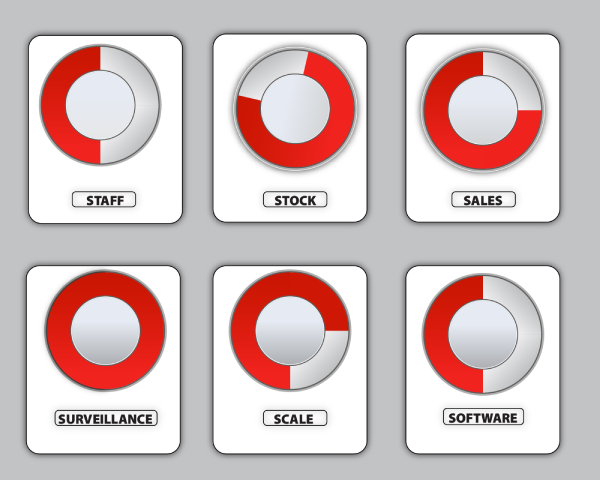
Retail Healthometer
Check the health of your business? Are you ready to organize & scale ?
Author Bio

Nikhil Agarwal
Chief Growth Officer
Nikhil is a calm and composed individual who has a master’s degree in international business and finance from the United Kingdom. Nikhil Agarwal has worked with 300+ retail e-commerce brands and companies from various sectors, since 2012, to define their growth strategy and achieve operational excellence. Nikhil & his team have remarkable success stories of helping brands achieve 10X growth.